

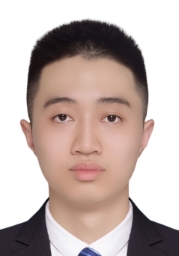
 Junzhi Ning
· 6 previous affiliations
- Research Assistant · Since 2024
- GMAI GroupSince 2024
- Research Assistant · Since 2024
- Imperial College London2023–2024
- Master of Research, Artificial intelligence and Machine Learning · 2023–2024
- The University of Sydney2022–2023
- Undergrad student · 2022–2023
- Junrui Kang Biotechnology Co. Ltd2022–2023
- Bioinformatics Analyst Intern · 2022–2023
- The University of Melbourne2019–2022
- Junior Research Assistant · 2021–2022
- Undergrad student · 2019–2022
Research Overview
Junzhi Ning focuses on generative medical artificial intelligence, multimodal learning, and large-scale synthetic data generation for healthcare applications. His trajectory spans the development of deep generative models for medical image translation to the creation of unified vision-language architectures. Currently, his work addresses multimodal medical reasoning and the synthesis of high-fidelity clinical training data to overcome domain scarcity.
Research Trajectory
The early phase of this research arc in 2024 centered on foundational challenges in medical image analysis and clinical report generation. With collaborators, he explored how generative structures could be conditioned on hybrid clinical data and segmentation masks in Deep Generative Models Unveil Patterns in Medical Images Through Vision- “Language” Conditioning. By transforming tabular clinical data into textual descriptions, this approach facilitated the use of pre-trained vision-language models, contributing to the research direction of Tabular Serialization for Large Language Models. During this period, he also participated in the development of Anatomy-Guided Radiology Report Generation with Pathology-Aware Regional Prompts. This framework mimicked a radiologist's workflow by mapping global pathologies directly to specific anatomical regions, advancing work in the area of Longitudinal Multimodal Reasoning for Clinical Diagnosis.
Moving into 2025, a major focus emerged around generative synthesis to overcome medical data scarcity. He introduced RetinaLogos: Fine-Grained Synthesis of High-Resolution Retinal Images Through Captions, a text-to-image framework capable of generating 1.4 million captioned retinal images with precise control over anatomical details and disease progression. This work aligns with the broader research direction of Multi-modal Diffusion for Medical Synthesis and Simulation. Continuing with generative approaches, he investigated how latent conditional diffusion models, when conditioned on radiology reports, could be leveraged for lung disease classification in Unveiling the Capabilities of Latent Diffusion Models for Classification of Lung Diseases in Chest X-Rays. He further developed techniques for Unpaired translation of chest X-ray images for lung opacity diagnosis via adaptive activation masks and cross-domain alignment, focusing on removing lung opacities while preserving essential diagnostic features to improve interpretability and image fidelity.
In parallel, his work addressed segmentation and the transparency of automated diagnostics. He contributed to DMRN: A Dynamical Multi-Order Response Network for the Robust Lung Airway Segmentation, which integrated unsupervised and supervised learning to handle the severe label scarcity typical of 3D airway annotations. To improve the reliability of AI-generated medical reports, he collaborated on Cyclic Vision-Language Manipulator: Towards Reliable and Fine-Grained Image Interpretation for Automated Report Generation. This method generated counterfactual X-rays to pinpoint the exact image features influencing specific clinical findings.
During 2025, his research expanded into broader scientific reasoning and foundation models. He participated in the development of Intern-S1: A Scientific Multimodal Foundation Model, a large-scale Mixture-of-Experts model explicitly engineered for complex disciplines like chemistry and physics. He also contributed to THE-Tree: Can Tracing Historical Evolution Enhance Scientific Verification and Reasoning?, a computational framework that builds causally-linked evolutionary trees of scientific literature, supporting the research direction of Closed-Loop Iterative Scientific Discovery with Language Models. Additionally, he explored cognitive frameworks for digital agents in Learning, Reasoning, Refinement: A Framework for Kahneman's Dual-System Intelligence in GUI Agents.
Returning to medical AI, he collaborated on MedITok: A Unified Tokenizer for Medical Image Synthesis and Interpretation, which facilitates both high-fidelity image reconstruction and deep clinical interpretation within a shared token space, advancing the area of Bridging Visual Reconstruction and Semantic Understanding. He also contributed to GMAI-VL-R1: Harnessing Reinforcement Learning for Multimodal Medical Reasoning, applying reinforcement learning tuning to improve out-of-distribution generalization in complex clinical tasks. Further extending generative capabilities to the video domain, he was part of the team behind Ophora: A Large-Scale Data-Driven Text-Guided Ophthalmic Surgical Video Generation Model, which utilized progressive tuning to transfer knowledge from general video models to specialized surgical synthesis.
In 2026, these threads culminated in unified architectures and robust concept learning. He introduced UniMedVL: Unifying Medical Multimodal Understanding and Generation through Observation-Knowledge-Analysis, demonstrating that understanding tasks (like visual question answering) and generation tasks (like virtual staining) mutually reinforce each other when trained together. This work is central to the research direction of Generalist Medical AI via Multimodal Foundation Models. He contributed to Escaping Low-Rank Traps: Interpretable Visual Concept Learning via Implicit Vector Quantization, introducing regularizers to prevent representation collapse in concept bottleneck models and ensure features remain anchored to semantic prototypes. Expanding tokenization across dimensions and modalities, Ning also collaborated on MedVTok: A General-Purpose Medical Visual Tokenizer, which leverages slice differential regularization and multi-expert alignment to map 2D images and 3D volumes into a unified token space. Additionally, they co-authored SIVA-RL: Sensitivity-Invariance Visual Alignment for Multimodal Reinforcement Learning, exploring visual alignment strategies for reinforcement learning agents.
Current Directions
The most recent papers in the evidence address the convergence of multimodal understanding and generative synthesis within unified medical architectures. Recent work investigates how distinct clinical tasks—ranging from diagnostic report generation to high-fidelity image synthesis—can mutually reinforce one another when integrated into a single, shared token space. By training on massive, multi-task medical datasets, this direction aims to close the performance gap in generalist multimodal models. Additionally, ongoing research explores interpretable visual concept learning, specifically focusing on methods like implicit vector quantization to prevent representation collapse in concept bottleneck models. This ensures that internal model features remain accurately aligned with distinct, human-understandable semantic prototypes, a critical requirement for deploying transparent AI systems in healthcare.
Profile updated
Loading new papers…
Other researchers whose papers cluster into the same research directions — a proxy for overlapping technical interests and shared intellectual neighborhoods.
See something wrong? Report a mistake