

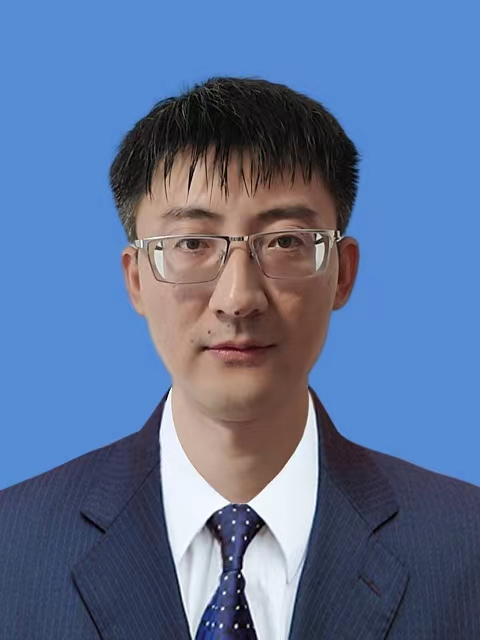
 Junyi Wang
3 previous affiliations
- Shandong University2023–2026
- Assistant Professor · 2023–2026
- Beihang University2013–2023
- PhD student · 2018–2023
- MS student · 2013–2016
- Chongqing University2009–2013
- Undergrad student · 2009–2013
Research Overview
Junyi Wang focuses on visual camera localization, object pose estimation, and 3D scene reconstruction. His early work explored hybrid feature representations and scene-independent frameworks for spatial perception in robotics and augmented reality. Recently, he has concentrated on integrating 3D Gaussian Splatting into dense mapping and real-time relocalization systems to improve efficiency and rendering fidelity in unconstrained environments.
Research Trajectory
His early research in robotic perception explored object detection and localization using multi-modal sensor data. This is demonstrated in Transparent object detection and location based on RGB-D camera, where he utilized active depth sensors and SIFT features to identify and locate transparent objects for robotic grasping. Expanding into broader visual localization, he developed frameworks that bridged the gap between learning-based and traditional methods. In Camera Relocalization using Deep Point Cloud Generation and Hand-crafted Feature Refinement, he introduced a two-stage approach that first generates a coarse pose via a neural network and then refines it using hand-crafted features.
The challenge of generalizing localization models to new environments became a central theme in his subsequent research. To address the limitations of models that require scene-specific training, he proposed a residual coordinate map representation in Scene-independent Localization by Learning Residual Coordinate Map with Cascaded Localizers. Recognizing that camera localization and object pose estimation are geometrically intertwined, he then developed unified learning frameworks to tackle both simultaneously. This approach is detailed in Simultaneous Scene-independent Camera Localization and Category-level Object Pose Estimation via Multi-level Feature Fusion. He continued to refine hybrid feature approaches for these tasks, publishing extended methodologies in Visual camera relocalization using both hand-crafted and learned features. Further exploring the synergy between spatial tasks, he presented Multi-task learning and joint refinement between camera localization and object detection. To support this research, he constructed a new dataset of an aviation exhibition hall, advancing work in several broader areas including the research direction of Scene Agnostic Neural Camera Relocalization, the area of Hybrid 2D and 3D Representations for Spatial Perception, and the domain of Semantic Masking for Static Scene Reconstruction.
Concurrently, his research expanded into neural implicit representations, focusing on the editability and scalability of Neural Radiance Fields (NeRFs). With collaborators, he addressed the degradation of rendering quality during fine-grained editing by combining implicit NeRFs with explicit point-based scaffolds in RIP-NeRF: Learning Rotation-Invariant Point-based Neural Radiance Field for Fine-grained Editing and Compositing. This line of inquiry into editable and scalable neural fields continued with SCARF: Scalable Continual Learning Framework for Memory-efficient Multiple Neural Radiance Fields and the development of interactive segmentation techniques in RISE-Editing: Rotation-invariant neural point fields with interactive segmentation for fine-grained and efficient editing.
Most recently, he has heavily integrated 3D Gaussian Splatting (3DGS) into his spatial perception and mapping pipelines to achieve real-time, high-fidelity rendering. In the context of online dense mapping, he co-developed OG-Mapping: Octree-based Structured 3D Gaussians for Online Dense Mapping. By combining sparse octrees with 3DGS, this framework maintains real-time performance while producing compact map sizes, contributing to the research areas of Adaptive Density Control for 3D Gaussian Splatting, Dense Visual SLAM with 3D Gaussian Splatting, and Neural Attribute Decoding for Compact 3D Gaussian Splatting. He also adapted 3DGS for unconstrained, "in-the-wild" photo collections. WE-GS: An In-the-wild Efficient 3D Gaussian Representation for Unconstrained Photo Collections introduced a residual-based spherical harmonic coefficients transfer module to handle varying lighting conditions, while Look at the Sky: Sky-Aware Efficient 3D Gaussian Splatting in the Wild further refined outdoor scene reconstruction. Bringing his expertise in relocalization and 3DGS together, he introduced 3D Gaussian Splatting based Scene-independent Relocalization with Unidirectional and Bidirectional Feature Fusion. This framework utilizes a 2D-3D correspondence network and bidirectional feature fusion to achieve real-time relocalization without scene-specific training.
Current Directions
The most recent papers in the evidence point to a strong focus on optimizing 3D Gaussian Splatting for complex, real-world environments. Current work investigates how to make 3DGS representations more robust to unconstrained lighting and dynamic outdoor elements—such as sky modeling—while maintaining the efficiency required for real-time applications. Additionally, there is an ongoing emphasis on unifying scene-independent camera relocalization with dense visual SLAM, leveraging structured representations like octrees and hybrid feature fusion to build scalable, memory-efficient spatial perception systems for augmented reality and robotics.
Profile updated
Loading new papers…
Other researchers whose papers cluster into the same research directions — a proxy for overlapping technical interests and shared intellectual neighborhoods.
See something wrong? Report a mistake