

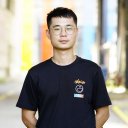
 Junwu Chen
· 2 previous affiliations
- École Polytechnique Fédérale de LausanneSince 2022
- PhD student · Since 2022
- MS student · 2019–2022
Research Overview
Junwu Chen focuses on machine learning for materials discovery, molecular property prediction, and the development of autonomous scientific agents. His trajectory spans from graph transformer architectures for catalyst and chiral molecule analysis to reinforcement learning frameworks for crystal generation. Most recently, his work explores self-evolving agentic systems to accelerate chemistry and materials research.
Research Trajectory
The research trajectory of Junwu Chen begins with the application of advanced graph neural networks to fundamental problems in physical chemistry and catalysis. In 2023, he introduced AdsGT: Graph Transformer for Predicting Global Minimum Adsorption Energy. This architecture was designed to predict the global minimum adsorption energy of molecules on catalyst surfaces. By utilizing graph representations of surfaces alongside feature vectors of adsorbates, the model bypassed the need for computationally expensive structural optimization, thereby accelerating catalyst discovery. This work contributed to the area of Machine Learning for Small Data Material Discovery as well as the research direction Graph Neural Networks for Molecular and Materials Representation.
Building on the use of graph-based architectures for molecular analysis, his subsequent research incorporated spatial and geometric priors. In 2024, he collaborated on Pretrained Graph Transformers for Chirality-related Tasks, a model named ChiPGT that captures molecular chirality by integrating 3D conformational information. Pre-trained on a large dataset of molecular geometries, the approach improved performance on tasks requiring the differentiation of chiral molecules and their enantiomers, advancing the broader area of Bridging the Molecular Geometric Representation Gap.
By 2025, his focus expanded to generative models and autonomous systems for materials design. He developed MatInvent: Reinforcement Learning for 3D Crystal Diffusion Generation, a framework that optimizes diffusion models for goal-directed crystal generation. Formulating equivariant denoising as a multi-step decision-making problem, the approach leveraged policy optimization with reward-weighted Kullback-Leibler regularization, experience replay, and diversity filters to improve sample efficiency in inverse materials design. Concurrently, he contributed to SkillPuzzler: A Self-Evolving Agentic Framework for Materials and Chemistry Research with Minimal Reliance on Predefined Tools. This project advocated for a dynamic "large language model plus skill-acquisition" paradigm over static tool-use. By combining specialized agents and general-purpose tools driven by prompt-encoded mindsets tailored to customized Model Context Protocol servers, the system tackled diverse research tasks in materials science.
In 2026, this intersection of reinforcement learning, generative modeling, and agentic systems matured further. He collaborated on Synthesizability-Aware Materials Generation with Target Properties via Reinforcement Learning, which addressed the gap between computationally generated materials and laboratory viability. The framework fine-tuned diffusion models to favor crystal structures synthesizable from a curated list of inexpensive, non-toxic precursors while maintaining high performance in properties like bulk modulus and magnetic density. Additionally, he participated in the development of Accelerating Scientific Discovery with Autonomous Goal-evolving Agents (SAGA). This framework automated the design of scientific discovery agents by allowing them to dynamically evolve their own objectives through a bi-level architecture—where an outer loop proposes objectives and an inner loop optimizes solutions—intersecting with work in Mitigating Reward Hacking in Large Reasoning Models.
Current Directions
The most recent papers in the evidence indicate a dual focus on practical generative materials design and autonomous scientific agents. A primary current direction involves applying reinforcement learning to diffusion models to ensure that computationally generated materials are not only optimized for specific physical properties but are also experimentally synthesizable from accessible precursors. Simultaneously, recent work investigates the deployment of large language models as dynamic research copilots. Rather than relying on static, predefined tool interfaces, these agentic frameworks are designed to autonomously acquire skills and evolve their own objectives, aiming to accelerate discovery pipelines across chemistry, materials science, and related domains.
Profile updated
Loading new papers…
Other researchers whose papers cluster into the same research directions — a proxy for overlapping technical interests and shared intellectual neighborhoods.
See something wrong? Report a mistake