

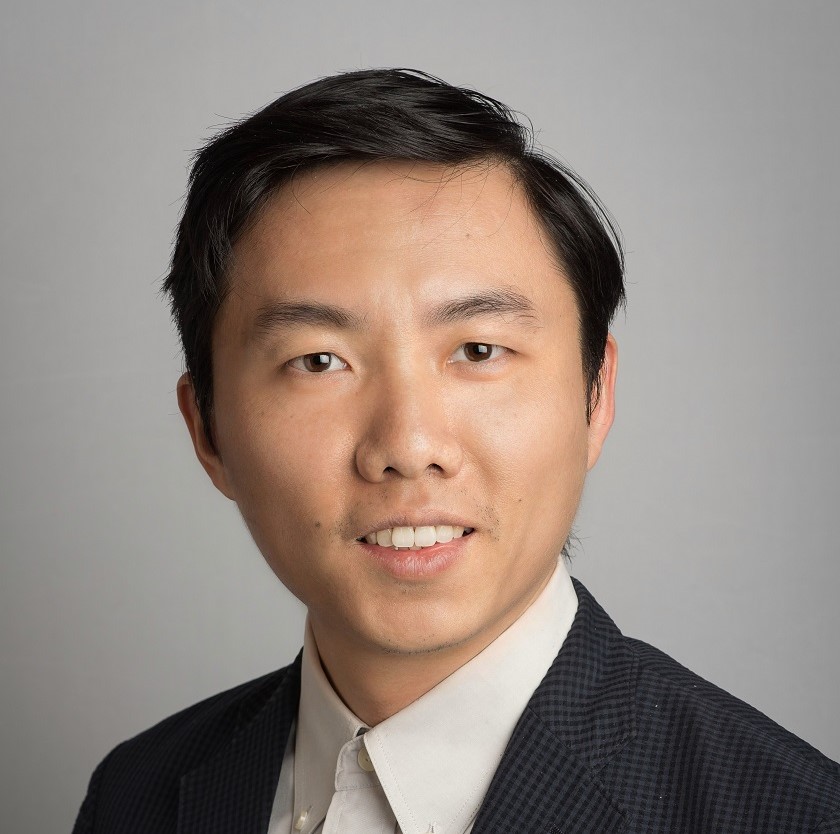
 Junsong Yuan
· 2 previous affiliations
- Full Professor · 2021–2030
- Current
- Associate Professor · 2018–2021
- Nanyang Technological University2009–2018
- Associate Professor · 2015–2018
- Assistant Professor · 2009–2015
Research Overview
Junsong Yuan focuses on computer vision, video understanding, and 3D visual computing. His research trajectory spans from early work in spatio-temporal pattern discovery for action recognition to recent advancements in high-fidelity 3D shape reconstruction and generative media processing. Currently, he investigates comprehensive reasoning in vision-language models and hierarchical 3D scene parsing for autonomous systems.
Research Trajectory
Junsong Yuan’s early research established foundational methods for discovering meaningful visual patterns in image and video data. Moving beyond simple "bag-of-words" models, he introduced techniques to construct higher-level lexicons by clustering primitive features into spatially co-occurrent patterns, as detailed in Discovery of Collocation Patterns: from Visual Words to Visual Phrases and From frequent itemsets to semantically meaningful visual patterns. This expertise in pattern mining naturally extended to video analysis. He developed discriminative pattern matching techniques for efficient 3D video search in Discriminative subvolume search for efficient action detection. He also contributed to anomaly detection by measuring the sparse reconstruction cost of testing samples over normal bases in Sparse reconstruction cost for abnormal event detection.
Around this time, his work began to heavily emphasize the area of Spatio-Temporal Path Optimization for Video Object Tubes. He formulated video event detection as an optimal path discovery problem, allowing for accurate localization of events across video frames in Optimal spatio-temporal path discovery for video event detection. Building on this framework, he introduced Max-Margin Structured Output Regression for Spatio-Temporal Action Localization to track deforming objects and human actions across extended video sequences. As depth sensors became more prevalent, his lab expanded into 3D human action recognition, developing an actionlet ensemble model to characterize complex human-object interactions and highly articulated motions in Learning Actionlet Ensemble for 3D Human Action Recognition..
As his research progressed, he explored the broader direction of Hierarchical Feature Alignment for Domain Adaptation. His group proposed methods to align local feature patterns alongside holistic features, achieving fine-grained domain invariance for unsupervised domain adaptation in Exploiting Local Feature Patterns for Unsupervised Domain Adaptation.. This interest in generalization extended to the area of Open Vocabulary Recognition for Unseen Human Interactions. He collaborated on Discovering Human Interactions With Novel Objects via Zero-Shot Learning, which leveraged semantic word embeddings to recognize human interactions with object categories never seen during training.
In recent years, his lab has tackled complex challenges in 3D point clouds, depth estimation, and transformer-based video architectures. To address unsupervised domain adaptation in 3D point clouds, he developed synthetic data generation techniques that mimic target sensor patterns in Generation for Adaption: A GAN-Based Approach for 3D Domain Adaption with Point Cloud Data. To improve monocular depth estimation, he introduced a teacher-student framework trained on unsupervised stereo pairs to generate high-quality pseudo-labels in Pseudo Supervised Monocular Depth Estimation with Teacher-Student Network. In video understanding, his group advanced transformer architectures by proposing MixSTE: Seq2seq Mixed Spatio-Temporal Encoder for 3D Human Pose Estimation in Video to model inter-joint spatial correlations and temporal motions. They also developed an attention-in-attention module to suppress erroneous correlation weights in AiATrack: Attention in Attention for Transformer Visual Tracking. Additionally, they addressed the redundancy of 2D CNN kernels across video frames by designing a progressive enhancement module to excite discriminative channels in Temporal Distinct Representation Learning for Action Recognition.
Most recently, his research has focused heavily on high-fidelity 3D reconstruction and generative editing. To capture personalized hand details, his group designed a frequency split network in High Fidelity 3D Hand Shape Reconstruction via Scalable Graph Frequency Decomposition. They extended this to self-supervised learning from monocular video, utilizing 2D keypoints and continuous motion cues to jointly estimate pose, shape, and texture in Consistent 3d hand reconstruction in video via self-supervised learning. In the realm of generative image editing, his team introduced GeoRemover: Removing Objects and Their Causal Visual Artifacts, a two-stage framework that erases objects from a scene's 3D geometry to naturally eliminate shadows and reflections. Finally, advancing 3D scene understanding, his lab formulated a probabilistic representation for Deep Hierarchical Learning for 3D Semantic Segmentation, mirroring the hierarchical organization of human cognition to simplify the visual world into manageable semantic layers.
Current Directions
Recent work investigates the intersection of generative models, 3D scene understanding, and vision-language reasoning. The most recent papers in the evidence address the challenges of high-fidelity 3D reconstruction from monocular video and the hierarchical semantic segmentation of 3D point clouds. Additionally, his lab is exploring advanced generative media processing, developing geometry-aware frameworks that can seamlessly remove objects and their environmental side effects—such as shadows and reflections—by reasoning about the underlying 3D structure of the scene.
Profile updated
Loading new papers…
Other researchers whose papers cluster into the same research directions — a proxy for overlapping technical interests and shared intellectual neighborhoods.
See something wrong? Report a mistake