

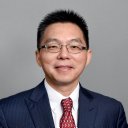
 Junshan Zhang
· 1 previous affiliation
- Deloitte (United States)Since 2021
- Full Professor · Since 2021
Research Overview
Junshan Zhang focuses on edge artificial intelligence, reinforcement learning, and autonomous systems. His early work addressed network optimization and resource allocation in wireless communications before expanding into multi-agent coordination and continual learning. Recently, his research emphasizes world models and cooperative perception for connected autonomous driving and robotic control.
Research Trajectory
Zhang's early research addressed resource allocation and control in wireless networks. For example, he investigated market-based mechanisms in Pricing-Based Decentralized Spectrum Access Control in Cognitive Radio Networks, developing decentralized pricing models for secondary users competing for spectrum access. Building on his expertise in network connectivity, he co-founded Smartiply Inc. in 2015.
As his focus expanded toward machine learning, he began addressing fundamental challenges in reinforcement learning (RL) and distributed systems. In the research direction of Overestimation Bias in Value-Based Reinforcement Learning, his group developed Adaptive Ensemble Q-learning: Minimizing Estimation Bias via Error Feedback, which dynamically adjusts ensemble sizes to drive estimation bias near zero. He also explored networked control through Distributed Q-Learning with State Tracking for Multi-agent Networked Control. To tackle catastrophic forgetting in sequential task learning, he introduced TRGP: Trust Region Gradient Projection for Continual Learning, a method that uses trust regions to facilitate forward knowledge transfer without interfering with previously learned tasks. Concurrently, he contributed to the broader area of Resource Efficient Machine Learning for Constrained Edge Devices, synthesizing approaches from federated learning to semi-supervised personalization in Towards Resource-Efficient Edge AI: From Federated Learning to Semi-Supervised Model Personalization.
A major theme in Zhang's recent trajectory is the application of advanced AI to autonomous vehicles (AVs) and cooperative perception. He addressed the physical realities of autonomous navigation in Impact of Sensing Errors on Headway Design: From $\alpha$-Fair Group Safety to Traffic Throughput, proposing a multi-objective RL framework that balances traffic throughput with individual vehicle safety under sensor noise. To support lifelong learning in such dynamic settings, he developed Algorithm Design for Online Meta-Learning with Task Boundary Detection, relaxing standard assumptions to allow for task-agnostic adaptation in non-stationary environments.
Recognizing the need for robust simulation tools, Zhang's lab released several open-source platforms. In the area of Overcoming Sensor Occlusion Through Collaborative Perception, he led the development of EI-Drive: A Platform for Cooperative Perception with Realistic Communication Models, which integrates transmission latency and packet errors to test how network instability affects shared sensor data. He also introduced CarDreamer: Open-Source Learning Platform for World Model based Autonomous Driving, bridging high-fidelity simulators with imagination-based AI to evaluate complex traffic scenarios.
His work on world models deepened significantly in 2025. He explored the theoretical underpinnings of these systems in Towards Unraveling and Improving Generalization in World Models, using stochastic differential equations to show how unbiased latent representation errors can act as an implicit regularizer, and proposed Jacobian regularization to stabilize training. Applying these concepts to autonomous driving, he co-authored Ego-centric Learning of Communicative World Models for Autonomous Driving to handle split-second decision-making in crowded environments, and developed AdaWM: Adaptive World Model based Planning for Autonomous Driving to accelerate the adaptation of pre-trained world models to specific, complex traffic scenarios. He further modeled the interactions between AVs and human drivers in Heterogeneous Decision Making in Mixed Traffic: Uncertainty-aware Planning and Bounded Rationality.
Expanding into distributed intelligence, Zhang contributed to the research direction of Decentralized Coordination Under Partial Observability. He outlined a roadmap for proactive, generative AI-driven agents in GenAI-based Multi-Agent Reinforcement Learning towards Distributed Agent Intelligence: A Generative-RL Agent Perspective. In the robotics domain, he addressed policy fine-tuning with IN-RIL: Interleaved Reinforcement and Imitation Learning for Policy Fine-Tuning, a strategy that periodically injects imitation learning updates to prevent performance collapse during RL training. Most recently, he collaborated on VITA: Vision-to-Action Flow Matching Policy, a generative policy that directly maps visual features to actions, achieving faster inference and higher precision for complex robotic control. Building on this line of work, Zhang led the development of VITA-WAM: Manifold-Aligned World-Action Modeling for Real-Time Robot Control, which aligns observation and action manifolds via flow matching to substantially speed up real-time action generation without distillation. In multi-robot systems within Decentralized Coordination Under Partial Observability, Zhang supervised DuoMind: Enabling Distributed Multi-Robot Coordination with Semantic Communication, introducing a hierarchical architecture pairing VLM orchestrators with VLA low-level execution models. Zhang has also contributed to alignment and safety in language models, collaborating on Adversarial Reward Auditing for Active Detection and Mitigation of Reward Hacking to detect proxy reward hacking from internal reward-model activations during RLHF, and participating in ShallowDefend: Harnessing Shallow Safety Alignment for Multi-Turn Defender to defend multi-turn dialogues by committing early to explicit safety decisions.
Current Directions
Recent work investigates the intersection of generative AI, world models, and physical robotics. A primary focus is the development of adaptive and communicative world models that allow autonomous vehicles to anticipate environmental changes and interact safely in mixed traffic scenarios. Additionally, Zhang is exploring new paradigms in multi-agent reinforcement learning, shifting from reactive systems to proactive, generative-driven agents. In robotics, recent efforts emphasize efficient manifold-aligned world-action modeling and semantic communication for distributed multi-robot coordination, alongside investigations into reward auditing and safety alignment in language models.
Profile updated
Loading new papers…
Other researchers whose papers cluster into the same research directions — a proxy for overlapping technical interests and shared intellectual neighborhoods.
See something wrong? Report a mistake