

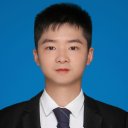
 Junjue Wang
· 3 previous affiliations
- The University of TokyoSince 2024
- Assistant Professor · Since 2026
- Postdoc · 2024–2025
- Wuhan University2019–2024
- PhD student · 2019–2024
- China University of Geosciences2015–2019
- Undergrad student · 2015–2019
Research Overview
Junjue Wang focuses on multi-modal remote sensing, computer vision, and the construction of large-scale datasets for Earth observation. His trajectory spans from foundational high-resolution image segmentation and domain adaptation to the development of vision-language models tailored for geospatial analysis. Currently, his work addresses artificial intelligence applications for disaster response and sustainable urban development.
Research Trajectory
In 2020, Wang's research addressed the specific challenges of high spatial resolution (HSR) remote sensing imagery. He participated in the development of the Foreground-Aware Relation Network for Geospatial Object Segmentation in High Spatial Resolution Remote Sensing Imagery, which tackled scale variation and foreground-background imbalance in Earth observation data. Recognizing that standard convolutional neural networks derived from natural image processing were often suboptimal for these complex scenes, he introduced RSNet: The Search for Remote Sensing Deep Neural Networks in Recognition Tasks, a framework utilizing automated search strategies to design architectures specifically for remote sensing recognition. Around this time, he also contributed to early frameworks for Building damage assessment for rapid disaster response with a deep object-based semantic change detection framework: From natural disasters to man-made disasters.
A major theme in Wang's subsequent work is the challenge of transferring learned models across different geographic regions and sensor types. He led the creation of LoveDA: A Remote Sensing Land-Cover Dataset for Domain Adaptive Semantic Segmentation, a benchmark designed to push the boundaries of transferable learning between urban and rural environments. This work contributed significantly to the research direction of Overcoming the Geographic Generalization Gap in Remote Sensing and the broader area of Iterative Pseudo-Labeling for Unsupervised Domain Adaptation. Continuing this focus on domain adaptation, he developed methods for Cross-sensor domain adaptation for high spatial resolution urban land-cover mapping: From airborne to spaceborne imagery and collaborated on a Progressive Label Refinement-Based Distribution Adaptation Framework for Landslide Detection, which advanced techniques in the area of Domain Specific Normalization for Multi Source Learning.
Alongside domain adaptation, Wang began exploring sequence-to-sequence models for Earth observation. He proposed Capformer: Pure Transformer for Remote Sensing Image Caption, utilizing multi-head self-attention to capture global context for summarizing complex geospatial scenes. His work on segmentation also evolved; he contributed to dynamic scale perception frameworks in Seeing Beyond the Patch: Scale-Adaptive Semantic Segmentation of High-resolution Remote Sensing Imagery based on Reinforcement Learning and further refined foreground modeling in FarSeg++: Foreground-Aware Relation Network for Geospatial Object Segmentation in High Spatial Resolution Remote Sensing Imagery. Returning to network architecture search, he later introduced LoveNAS: Towards multi-scene land-cover mapping via hierarchical searching adaptive network.
By 2024, Wang's trajectory shifted prominently toward vision-language multi-modal learning for remote sensing. Recognizing that traditional Earth vision research often neglected relational reasoning, he developed the EarthVQA series. This included EarthVQA: Towards Queryable Earth via Relational Reasoning-Based Remote Sensing Visual Question Answering, which introduced a large-scale dataset embedding urban and rural governance requirements, and EarthVQANet: Multi-task visual question answering for remote sensing image understanding.
Currently a Project Researcher at The University of Tokyo with an affiliation at Film Independent, Wang's recent work grounds these AI techniques in critical Earth observation applications. He led the development of DisasterM3: A Remote Sensing Vision-Language Dataset for Disaster Damage Assessment and Response, a comprehensive multi-hazard, multi-sensor dataset that benchmarks vision-language models for disaster reasoning. He also proposed CityVLM: Towards sustainable urban development via multi-view coordinated vision–language model. His expertise in cross-domain challenges continued with his supervision of Adaptive Smooth Adversarial Learning for Cross-Domain Hyperspectral Image Classification. Furthermore, his collaborative efforts have expanded into evaluating foundation models, participating in the creation of MMLU-ProX : A Multilingual Benchmark for Advanced Large Language Model Evaluation, which highlights issues in the research direction of Multilingual Performance Disparity across Linguistic Resource Tiers. Finally, his involvement in global disaster response initiatives is reflected in his contribution to Artificial Intelligence for Earthquake Response: Outcomes and insights from a global spaceborne rapid mapping challenge.
Current Directions
The most recent papers in the evidence indicate a strong focus on applying multi-modal large language models to critical Earth observation challenges, often framed as AI4Earth. Recent work investigates how vision-language models can be adapted for rapid disaster damage assessment and multi-sensor alignment, utilizing both optical and synthetic aperture radar (SAR) imagery to improve disaster reasoning. Additionally, Wang is exploring multi-view coordinated vision-language models to support sustainable urban development and city planning.
Alongside these multi-modal applications, he continues to address fundamental remote sensing challenges, such as improving interclass discriminability and robustness in cross-domain hyperspectral image classification through adversarial learning techniques. His recent collaborative work also touches upon the rigorous evaluation of large language models across diverse linguistic resources, aiming to bridge performance gaps in low-resource languages.
Profile updated
Loading new papers…
Other researchers whose papers cluster into the same research directions — a proxy for overlapping technical interests and shared intellectual neighborhoods.
See something wrong? Report a mistake