

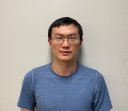
 Junjie Yang
· 3 previous affiliations
- Xiaohongshu (Little Red Book) (China)Since 2024
- Researcher · Since 2024
- The Ohio State UniversityCurrent
- Current
- PhD student · 2019–2024
- Undergrad student · 2015–2019
7 other authors named Junjie Yang: Junjie Yang (Sorbonne Université · Telecom Paris · 8 papers), Junjie Yang (1 paper), Junjie Yang (1 paper), Junjie Yang (1 paper), Junjie Yang (ShanghaiTech University · 1 paper), and 2 more
Research Overview
Junjie Yang focuses on the theoretical foundations and algorithmic scaling of optimization, meta-learning, and large-scale model alignment. His work spans the development of Non-asymptotic Convergence Analysis for Optimization and Sampling, the design of efficient first-order methods for Differentiating Through the Equilibrium of Nested Optimization Tasks, and recent advancements in self-adaptive reasoning and scalable oversight for large language models (LLMs). By bridging the gap between rigorous convergence theory and practical machine learning challenges—such as hyperparameter tuning, neural architecture search, and automated optimizer design—Yang’s research addresses the computational and generalization bottlenecks inherent in modern deep learning systems.
Research Trajectory
Yang’s early research, beginning around 2020, was primarily concerned with the empirical and theoretical properties of deep neural network (DNN) optimization. During this period, he investigated how common training techniques like batch normalization and skip-connections regularize optimization trajectories, contributing to the understanding of Global Convergence in Nonconvex Optimization Landscapes. This foundational work established a focus on the regularity principles that govern successful model updates.
In 2021, Yang shifted toward the complexities of bilevel optimization (BLO), a hierarchical framework essential for meta-learning. His work during this time focused on First-Order Methods for Scalable Bilevel Optimization, where he developed algorithms that moved beyond asymptotic guarantees to provide explicit non-asymptotic convergence rates. This period was characterized by a transition from general optimization theory to the specific challenges of Scaling Bilevel Optimization to Large-Scale Stochastic Settings, resulting in the development of variance-reduced and momentum-based methods that significantly lowered computational complexity.
By 2022 and 2023, Yang’s focus expanded into Learning to Optimize (L2O) and the generalization capabilities of meta-learned models. He addressed the "optimizer generalization" problem—ensuring that learned optimizers perform well on unseen tasks—and the "optimizee generalization" problem, which concerns the test-time performance of models trained by these optimizers. During this phase, he also explored the intersection of meta-learning and generative modeling, applying adaptation techniques to diffusion-based synthesis in the context of Iterative Generative Refinement for Visual Reconstruction.
Most recently, from 2024 to 2026, Yang has pivoted toward the alignment and reasoning capabilities of large language models. His current work investigates self-adaptive reasoning chains and scalable oversight mechanisms. This involves developing frameworks where models can recursively critique their own outputs or adapt their reasoning depth based on task complexity, addressing the limitations of traditional reinforcement learning from human feedback (RLHF) when AI capabilities exceed human oversight thresholds.
Current Directions
Yang’s recent research is centered on three primary areas:
- Self-Adaptive Reasoning: Developing methods for language models to dynamically adjust their "Chain-of-Thought" (CoT) reasoning. This work aims to balance solution correctness with computational efficiency, preventing "overthinking" on simple tasks while maintaining depth for complex problems.
- Scalable Oversight and Alignment: Investigating recursive self-critiquing as a means to align superhuman AI systems. This research operates on the hypothesis that verifying a critique is easier than generating one, and that this relationship can be leveraged recursively to provide oversight in domains where direct human evaluation is no longer feasible.
- Data-Efficient Continual Training: Exploring reweighting strategies for continual training of LLMs. By focusing on "hard" but informative samples and discarding noisy, high-loss data, this work seeks to improve model generalization despite potential shortages of high-quality training data.
Representative Work
Provably Faster Algorithms for Bilevel Optimization In this work, Yang addresses the computational bottlenecks of bilevel optimization, which is frequently used in hyperparameter optimization and meta-learning. While previous SGD-based algorithms were limited by a specific computational complexity, Yang introduces two new algorithms utilizing momentum-based recursive iterations and recursive gradient estimation in nested loops. These methods are shown to decrease variance and achieve provably better computational complexity, providing a more efficient framework for solving nested optimization problems.
Learning to Generalize Provably in Learning to Optimize Yang investigates the generalization failures of Learning to Optimize (L2O) methods. He distinguishes between the generalization of the learned optimizer to new tasks and the generalization of the resulting optimizee (the model being trained) to new data. The paper provides a theoretical framework to ensure both types of generalization, moving L2O from a purely data-driven heuristic toward a provably robust methodology for automated algorithm design.
M-L2O: Towards Generalizable Learning-to-Optimize by Test-Time Fast Self-Adaptation Addressing the sensitivity of learned optimizers to task distribution shifts, Yang proposes M-L2O. This approach incorporates a test-time self-adaptation mechanism, allowing the optimizer to adjust its parameters when encountering problems that deviate significantly from the training distribution. This work enhances the practical utility of L2O in dynamic environments where the task characteristics are not known a priori.
Think When You Need: Self-Adaptive Chain-of-Thought Learning In the domain of LLM reasoning, Yang introduces a self-adaptive framework for Chain-of-Thought (CoT) processing. Recognizing that fixed-length reasoning often leads to inefficiency, he develops a reward-based system that encourages conciseness without sacrificing quality. The methodology is designed to work across both verifiable tasks (with ground truth) and fuzzy tasks (requiring subjective evaluation), improving the efficiency of large-scale inference.
Bilevel Optimization: Convergence Analysis and Enhanced Design As a second author, Yang contributed to the theoretical advancement of iterative differentiation (ITD) methods within bilevel optimization. The paper establishes the first non-asymptotic convergence rates for these methods and introduces stocBiO, a stochastic algorithm. The work demonstrates that stocBiO can outperform existing state-of-the-art methods by orders of magnitude in terms of computational complexity, particularly in large-scale machine learning applications.
Meta ControlNet: Enhancing Task Adaptation via Meta Learning Yang applies meta-learning principles to diffusion-based image synthesis. While ControlNet allows for image-based prompting, it typically requires extensive task-specific training. Yang proposes Meta ControlNet to enable faster adaptation and zero-shot control across various image tasks. By framing the adaptation as a meta-learning problem, the work reduces the training steps required to achieve desirable control, extending the flexibility of generative models in visual reconstruction tasks.
Profile updated
Loading new papers…
Other researchers whose papers cluster into the same research directions — a proxy for overlapping technical interests and shared intellectual neighborhoods.
See something wrong? Report a mistake