

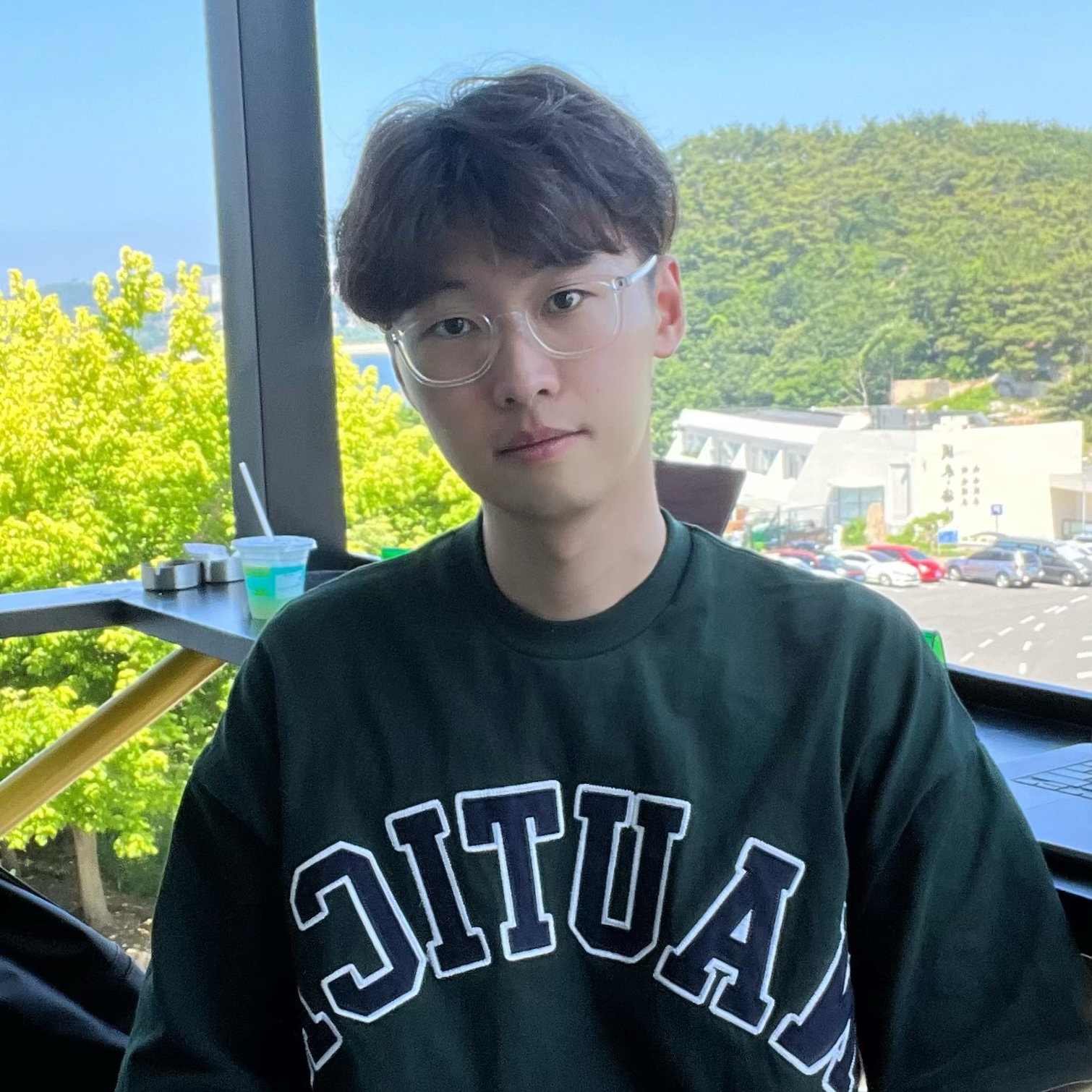
 Junjie Xu
· 4 previous affiliations
- Pennsylvania State UniversitySince 2021
- Research Assistant · Since 2021
- Current
- Doctor of Philosophy - PhD, Informatics · 2021–2026
- Machine Learning Intern · 2025
- Machine Learning Research Intern · 2024
- Undergrad student · 2017–2021
3 other authors named Junjie Xu: Junjie Xu (Nanjing University of Information Science and Technology · 1 paper), Junjie Xu (1 paper), Junjie Xu (0 papers)
Research Overview
Junjie Xu focuses on graph learning, geometric deep learning, and artificial intelligence for scientific applications. His trajectory spans foundational work in graph neural network trustworthiness and heterophily to recent advancements in modeling large biomolecules. Currently, his research emphasizes scalable equivariant architectures and hierarchical geometric learning for RNA and protein property prediction.
Research Trajectory
Junjie Xu’s early research addressed foundational challenges in anomaly detection before transitioning deeply into graph representation learning. In 2021, he participated in establishing rigorous evaluation standards for anomaly detection algorithms, co-developing a behavior-driven taxonomy in Revisiting Time Series Outlier Detection: Definitions and Benchmarks. This work categorized point and pattern anomalies to provide a general synthetic criterion for benchmarking time series models, addressing the ambiguity often found in outlier definitions.
Moving into graph learning, he focused on the challenge of heterophily—networks where connected nodes tend to have different labels or features. He introduced a novel memory-based architecture to capture these complex relational patterns in HP-GMN: Graph Memory Networks for Heterophilous Graphs. This marked the beginning of a sustained focus on improving the reliability, interpretability, and performance of Graph Neural Networks (GNNs). In 2023, he contributed to Self-Explainable Graph Neural Networks for Link Prediction, a framework known as ILP-GNN that identifies relevant "bridge" neighbors using both structural and feature-based similarity. This work provided built-in, human-readable rationales for why two nodes should be connected, advancing the area of Rigorous Evaluation of Graph Neural Network Explanations and touching upon the broader domain of Interpreting Temporal Graph Neural Networks.
By 2024, his work on GNN reliability expanded into a comprehensive mapping of the field's vulnerabilities and defenses. He co-authored A Comprehensive Survey on Trustworthy Graph Neural Networks: Privacy, Robustness, Fairness, and Explainability, which provided a rigorous taxonomy of the four critical pillars of trustworthy graph learning. This survey synthesized literature across several key research directions, including Protecting Structural Privacy in Graph Neural Networks and the area of Adversarial Removal of Protected Attributes from Neural Embeddings. Alongside this theoretical mapping, he directed a project addressing label scarcity in practical graph applications. In Enhancing Graph Neural Networks with Limited Labeled Data by Actively Distilling Knowledge from Large Language Models, he and his collaborators developed a framework that leverages large language models as teachers to actively distill knowledge into GNNs, significantly improving node classification performance when labeled examples are sparse.
In 2025, Xu continued to develop concrete methods for GNN fairness and robustness. He contributed to Let's Grow an Unbiased Community: Guiding the Fairness of Graphs via New Links, proposing the FairGuide framework. Rather than relying on impractical edge removals, FairGuide mitigates algorithmic bias by strategically adding a budgeted number of new links, utilizing a task-agnostic community detection proxy and meta-gradients to break down structural barriers between demographic subgroups. Concurrently, he participated in developing defense mechanisms against adversarial threats in Robustness Inspired Graph Backdoor Defense. This framework, RIGBD, identifies poisoned nodes by measuring prediction fluctuations under random edge removals and employs a specialized robust training loss to neutralize hidden triggers without degrading clean data accuracy.
Most recently, Xu’s trajectory has expanded significantly into AI for Science, specifically applying geometric deep learning to biomolecular modeling. He led an investigation into the comparative advantages of 1D (sequence), 2D (topological), and 3D (atomic) representations for RNA in Beyond Sequence: Impact of Geometric Context for RNA Property Prediction. The study demonstrated that while spectral GNNs operating on 2D structures offer superior sample efficiency, 1D sequence models remain highly robust to sequencing noise. This evaluation contributed directly to the research direction of Hierarchical Molecular Representations.
Building on these insights, he introduced DualEqui: A Dual-Space Hierarchical Equivariant Network for Large Biomolecules. DualEquiNet operates simultaneously in Euclidean space to capture local atomic detail and in Spherical Harmonics to model global structural patterns. By bridging these spaces with bidirectional message passing, the architecture maintains essential physical symmetries while achieving high performance on RNA and protein benchmarks. To address the computational bottlenecks of such large-scale modeling, he collaborated on Geometric Hyena Networks for Large-scale Equivariant Learning. This work introduced G-Hyena, an equivariant long-convolutional model that replaces quadratic-complexity self-attention with an efficient vector long convolution. Achieving substantial speedups and memory reductions, the model enables the processing of sequences with millions of tokens, advancing the field of Global Self-Attention for Molecular and Biological Sequences.
Current Directions
The most recent papers in the evidence indicate a strong focus on geometric deep learning for large-scale scientific applications, particularly the modeling of complex biomolecules like RNA and proteins. This work investigates how to balance the need for expressive, multi-scale structural representations with the computational constraints of processing massive biological sequences.
Current efforts center on designing hierarchical and dual-space architectures that can simultaneously capture local atomic interactions and global geometric contexts. A major theme is the development of scalable equivariant networks—exploring sub-quadratic operators, such as vector long convolutions, to replace traditional self-attention mechanisms. By maintaining necessary physical symmetries while drastically reducing memory and computational overhead, these approaches aim to make the structural analysis of extremely large biomolecular systems both feasible and highly accurate.
Profile updated
Loading new papers…
Other researchers whose papers cluster into the same research directions — a proxy for overlapping technical interests and shared intellectual neighborhoods.
See something wrong? Report a mistake