

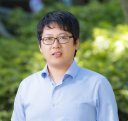
 Junhui Hou
· 1 previous affiliation
- City University of Hong KongSince 2017
- Full Professor · Since 2026
- Associate Professor · 2023–2026
- Assistant Professor · 2017–2023
Research Overview
Junhui Hou focuses on 3D computer vision, computational photography, and efficient generative modeling. His trajectory spans early work in light field imaging and point cloud processing to advanced techniques for neuromorphic event streams and high dynamic range restoration. Recently, his research emphasizes accelerating 3D diffusion models and optimizing implicit neural representations for complex geometric structures.
Research Trajectory
The early phase of his research centered on the efficient representation and processing of complex visual data, beginning with Dynamic 3-D facial compression using low rank and sparse decomposition (2012). This interest in high-dimensional visual structures evolved into a sustained focus on light field photography. In Accurate Light Field Depth Estimation With Superpixel Regularization Over Partially Occluded Regions (2018), he addressed the persistent challenge of depth estimation in scenes with intricate occlusions by regularizing initial label confidence maps. He further advanced light field processing with Light Field Spatial Super-Resolution Using Deep Efficient Spatial-Angular Separable Convolution (2019), developing an end-to-end convolutional neural network that leverages spatial-angular separable convolutions to super-resolve light field images while managing computational and memory costs.
By 2020, his research broadened to encompass both computational photography and 3D point cloud processing. With collaborators, he explored low-light image enhancement in Zero-Reference Deep Curve Estimation for Low-Light Image Enhancement, reformulating the enhancement process as an image-specific curve estimation task that trains entirely without paired reference data. Concurrently, he introduced PUGeo-Net: A Geometry-Centric Network for 3D Point Cloud Upsampling, a framework that incorporates discrete differential geometry—specifically the first and second fundamental forms—to upsample sparse 3D point clouds, improving both geometric fidelity and the generation of accurate surface normals.
Moving into dynamic and asynchronous visual data, his work expanded into the research area of Learning Representations from Asynchronous Event Streams. In Learning Graph-embedded Key-event Back-tracing for Object Tracking in Event Clouds (2022), he and his co-authors proposed an end-to-end learning paradigm tailored to the sparse, high-temporal-resolution structure of raw event data, bypassing the traditional bottleneck of converting events into frames. That same year, his contributions to the broader area of Deghosting Multi Exposure Images in Dynamic Scenes yielded Attention-Guided Progressive Neural Texture Fusion for High Dynamic Range Image Restoration. This framework combined multi-scale neural texture transfer with specialized attention mechanisms to reconstruct high-quality HDR images from dynamic sequences while mitigating motion-induced ghosting and saturation artifacts.
His focus on 3D geometry deepened with GeoUDF: Surface Reconstruction from 3D Point Clouds via Geometry-guided Distance Representation (2023). This work utilized Unsigned Distance Fields (UDFs) alongside a custom edge-based marching cube algorithm to reconstruct complex 3D surfaces with open boundaries and interior structures, overcoming the limitations of traditional watertight mesh methods.
In 2025, his research shifted toward optimizing machine learning frameworks and accelerating generative models. He addressed the adaptation of pre-trained models in Optimizing Multi-Modal Trackers via Sensitivity-aware Regularized Tuning, introducing a regularization scheme to balance stability and adaptability when fine-tuning RGB models for thermal or depth tracking. He also contributed to partial label learning with Mixed Blessing: Class-Wise Embedding guided Instance-Dependent Partial Label Learning, leveraging instance-dependent noisy labels for fine-grained classification. In the generative space, he developed Acc3D: Accelerating Single Image to 3D Diffusion Models via Edge Consistency Guided Score Distillation, a framework that significantly reduces the inference steps required to generate 3D assets from single images by combining edge consistency distillation with disentangled adversarial training.
The most recent phase of his trajectory includes diverse contributions to clustering, neural compression, and diffusion models. In Mini-cluster Guided Long-tailed Deep Clustering (2026), he addressed the challenge of deep clustering on imbalanced datasets by estimating class importance without labels. He also tackled graph clustering limitations in EGRC-Net: Embedding-induced Graph Refinement Clustering Network, which dynamically refines graph structures using learned embeddings to correct latent geometry noise. Returning to 3D data compression, he introduced Neural Compression of 3D Meshes using Sparse Implicit Representation, achieving significant bitrate reductions by focusing on Signed Distance Field values near the mesh surface. Finally, he advanced image restoration with Energy-oriented Diffusion Bridge for Image Restoration with Foundational Diffusion Models, streamlining the restoration process by finding optimal, low-energy geodesic paths between degraded and clean images.
Current Directions
Recent work investigates the acceleration of generative models and the optimization of representations for complex, imbalanced data. A major focus is on streamlining diffusion models for practical applications, such as reducing the inference steps required for single-image-to-3D generation and finding optimal, low-energy trajectories for image restoration. Concurrently, ongoing research addresses the challenges of real-world data distributions, developing techniques for long-tailed deep clustering, dynamic graph refinement, and partial label learning. Additionally, there is a continued emphasis on 3D geometry, specifically through the use of sparse implicit representations for highly efficient neural compression of 3D meshes.
Profile updated
Loading new papers…
Other researchers whose papers cluster into the same research directions — a proxy for overlapping technical interests and shared intellectual neighborhoods.
See something wrong? Report a mistake