

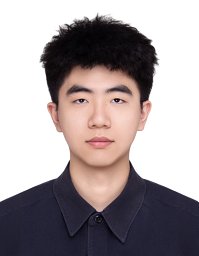
 Junhao He
· 4 previous affiliations
- Intern · Since 2023
- Master of Philosophy - MPhil, 3D Vision, Physics Intelligence, Deep Learning, Robotics · 2024–2026
- Research Assistant · Since 2023
- Washington University in St. Louis2021–2023
- MS student · 2021–2023
- Research Assistant · 2018–2021
- Undergrad student · 2017–2021
1 other author named Junhao He: Junhao He (Southeast University · 1 paper)
Research Overview
Junhao He focuses on 3D scene reconstruction, event-based vision, and physics-informed neural rendering. His trajectory spans from early work in environmental data modeling to advanced frameworks for generalizable Gaussian splatting and neural radiance fields. Most recently, his research addresses the real-to-sim gap in continuum dynamics by integrating physical priors with deep learning techniques.
Research Trajectory
He began his published research applying data-driven modeling to environmental and ecological systems. In 2022, he published Evaluate Ecosystem Values of the Saihanba Based on Fuzzy Comprehensive Evaluation and Cluster Analysis, which provided a quantitative evaluation of the world's largest artificial forest. This work contributed to the area of Fuzzy Comprehensive Evaluation for Subjective Decision Support and the domain of Information Entropy for Objective Indicator Weighting, offering a strategic roadmap for replicating ecological success across China. The methodology also touched upon research directions such as Spatial Targeting for High-Impact Land Management.
By 2024, his focus shifted significantly toward computer vision, specifically tackling the challenges of reconstructing 3D environments from sparse and unconventional sensor data. A major theme became the use of event cameras for robust visual modeling. In Physical Priors Augmented Event-Based 3D Reconstruction, he and his collaborators addressed the difficulty of training Neural Radiance Fields (NeRFs) from realistic event streams, which often suffer from sparsity and missing information. By utilizing motion, geometry, and density priors, they imposed strong physical constraints to augment NeRF training without requiring additional inputs. The project also introduced a density-guided patch-based sampling strategy to accelerate and stabilize the learning process.
Continuing the focus on event-based vision and rapid rendering, he contributed to the research direction of Feed-Forward 3D Scene Reconstruction with EvGGS: A Collaborative Learning Framework for Event-based Generalizable Gaussian Splatting. This framework was the first to reconstruct 3D scenes as Gaussians directly from sparse event camera data in a feedforward manner. By jointly optimizing depth, intensity, and Gaussian parameters through a collaborative learning approach, the system achieved high-fidelity, real-time rendering at 195 frames per second and successfully generalized to unseen scenes without the need for retraining.
Alongside event-based methods, he also investigated point cloud rendering techniques. In PFGS: High Fidelity Point Cloud Rendering via Feature Splatting, he participated in developing a novel framework that bridges 3D Gaussian Splatting with point cloud rendering to generate high-fidelity images from sparse point clouds. The method utilizes a multiscale feature extractor and a Gaussian regressor to produce 3D-aware features, which are then progressively decoded to resolve common rendering issues like hole artifacts and missing details.
Later in 2024 and moving into 2026, his work increasingly integrated physical dynamics with neural rendering, contributing to the broader area of Learning Simulation Ready Physical Properties from Visual Data. He participated in the development of DEL: Discrete Element Learner for Learning 3D Particle Dynamics with Neural Rendering, a framework designed to capture and simulate 3D particle dynamics using neural rendering techniques.
Building on this intersection of physics and vision, he helped develop MoSA: Motion-constrained Stress Adaptation for Mitigating Real-to-Sim Gap in Continuum Dynamics via Learning Residual Anisotropy. This work addresses the "real-to-sim" gap in continuum dynamics by maintaining a standard isotropic physical model as a backbone and employing a specialized neural network to learn residual anisotropy—the subtle deviations of real materials from perfect theoretical models. Supervised by motion cues extracted from 3D video reconstructions, the approach improves the prediction of complex deformations and facilitates more reliable sim-to-real transfer for robotic manipulation.
In 2026, He led the development of DEGS: Deformable Event-Based 3D Gaussian Splatting From RGB and Event Stream, combining RGB frames and event streams to reconstruct deformable 3D scenes. Furthermore, He contributed to ECHO: Event-Augmented Context with Hindsight and Outlook for Wrist-Only Manipulation, which presents a wrist-only latent world action model encoding event streams into spatial and temporal context to guide robotic manipulation under challenging lighting and dynamic camera motion.
Current Directions
Recent work investigates the intersection of neural rendering, physical simulation, and robotics. The most recent papers in the evidence address the challenge of bridging the gap between simulated physics and real-world material behavior. By combining traditional isotropic physical models with neural networks that learn residual effects from visual data, this research aims to improve the accuracy of continuum dynamics and particle simulations. A key ongoing theme is combining event streams with visual data for dynamic 3D reconstruction and wrist-only robotic manipulation under adverse visual conditions, alongside physics-informed neural rendering.
Profile updated
Loading new papers…
Other researchers whose papers cluster into the same research directions — a proxy for overlapping technical interests and shared intellectual neighborhoods.
See something wrong? Report a mistake