

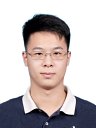
 Junda Ye
· 3 previous affiliations
- China Mobile Research InstituteSince 2026
- Researcher · Since 2026
- PhD student · 2022–2026
- MS student · 2021–2022
- Beijing Jiaotong University2017–2021
- Undergrad student · 2017–2021
Research Overview
Junda Ye focuses on graph representation learning, non-Euclidean neural network architectures, and self-supervised learning on complex networks. His trajectory centers on developing mixed-curvature and Riemannian graph neural networks to capture the complex structural properties of evolving data. His most recent work investigates highly expressive graph architectures and out-of-distribution detection for robust structural learning.
Research Trajectory
In 2022, Junda Ye's research spanned multiple domains of representation learning. His early work included DiriE: Knowledge Graph Embedding with Dirichlet Distribution, which explored probabilistic approaches to knowledge graph embeddings. During this period, he also contributed to natural language processing, developing AISFG: Abundant Information Slot Filling Generator to address the challenge of domain adaptation and label scarcity in task-oriented dialogue systems.
However, the core of his trajectory quickly established a deep focus on non-Euclidean graph learning. He co-developed A Self-Supervised Mixed-Curvature Graph Neural Network (SELFMGNN), a model that combines hyperbolic, spherical, and Euclidean geometries to capture complex graph structures—such as hierarchies and cycles—without relying on manual labels. This work significantly advanced the research directions of Multi-Manifold Attention for Mixed-Curvature Representations and Mixed Curvature and Pseudo Riemannian Graph Embeddings. Building on these geometric foundations, he introduced A Self-supervised Riemannian GNN with Time Varying Curvature for Temporal Graph Learning (SelfRGNN). By allowing the embedding space to dynamically shift geometries as graphs evolve, this framework captured complex structural changes over time, contributing to the broader area of Representation Learning in Mixed Curvature Riemannian Spaces.
In 2023, he extended these adaptive geometric approaches to new learning paradigms. He proposed Self-Supervised Continual Graph Learning in Adaptive Riemannian Spaces (RieGrace), which dynamically adjusts the curvature of the underlying geometry to match evolving graph structures, effectively preventing catastrophic forgetting in label-scarce environments. This intersected with ongoing efforts in Scaling Graph Contrastive Learning to Massive Networks. He applied similar concepts to sequential interaction networks with SINCERE: Sequential Interaction Networks representation learning on Co-Evolving RiEmannian manifolds, addressing the fundamental challenge of modeling the mutual influence and embedding trajectories of users and items in co-evolving spaces. Alongside these temporal models, he collaborated on CONGREGATE: Contrastive Graph Clustering in Curvature Spaces. By leveraging Ricci curvatures and a fully Riemannian architecture, CONGREGATE achieved robust clustering performance without complex graph augmentations, advancing the fields of Graph Representation Learning in Mixed-Curvature Product Manifolds and Learning Representations in Mixed Curvature Product Spaces.
Continuing his focus on clustering and geometry, his 2024 work included RicciNet: Deep Clustering via A Riemannian Generative Model, which further integrated generative modeling techniques with Riemannian manifolds to uncover latent graph structures.
His most recent trajectory expands into highly expressive architectures and robust structural learning. He introduced MoSE: Unveiling Structural Patterns in Graphs via Mixture of Subgraph Experts, a framework that bridges graph neural networks and random walk kernels. By dynamically extracting local subgraphs via anonymous walks and routing them to specialized experts, MoSE overcomes the expressiveness limits of standard message-passing models. He also participated in developing Trace: Structural Riemannian Bridge Matching for Transferable Source Localization in Information Propagation, which frames source localization in social networks as a generative task on a curved manifold using a Structural Schrödinger Bridge. In the context of graph robustness, he contributed to Learning to Explore: Policy-Guided Outlier Synthesis for Graph Out-of-Distribution Detection, utilizing a reinforcement learning agent to intelligently generate synthetic out-of-distribution data. Finally, his work on RoLED: Role-disentangled graph neural network for both homophily and heterophily addresses the challenge of learning representations across diverse relational structures where connected nodes may not share similar features.
Current Directions
The most recent papers in the evidence indicate a focus on enhancing the expressivity, robustness, and transferability of graph neural networks. Recent work investigates the use of Mixture of Experts (MoE) paradigms to dynamically route local subgraphs, aiming to overcome the theoretical limitations of standard graph architectures and traditional graph kernels. Additionally, current research addresses network dynamics and robustness through generative modeling on curved manifolds—such as applying Structural Schrödinger Bridges for source localization—and utilizing reinforcement learning for policy-guided outlier synthesis to improve out-of-distribution detection. He is also exploring role-disentangled architectures capable of learning effectively across both homophilic and heterophilic graph structures.
Profile updated
Loading new papers…
Other researchers whose papers cluster into the same research directions — a proxy for overlapping technical interests and shared intellectual neighborhoods.
See something wrong? Report a mistake