

 Authors
Export
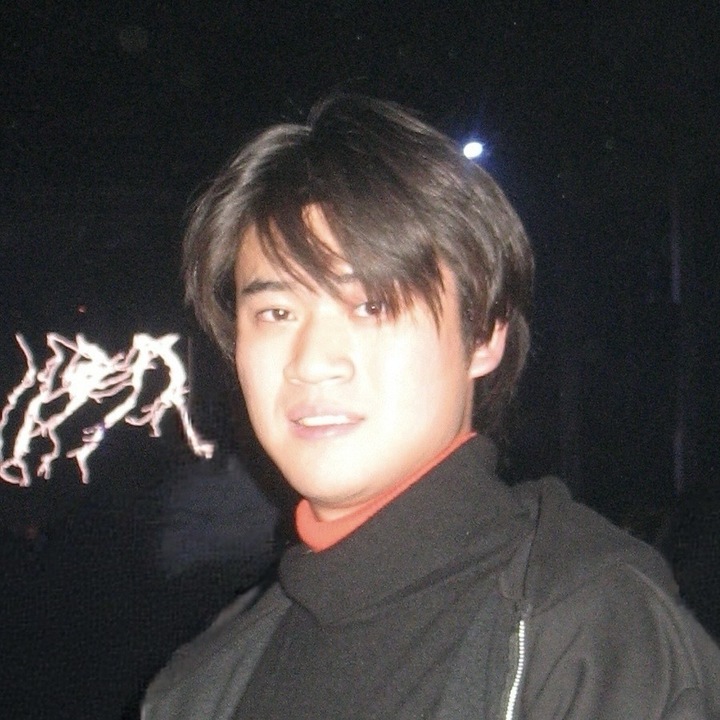
Junda Wu
· 4 previous affiliations
- Adobe Systems (United States)Since 2026
- Researcher · Since 2026
- Current
- PhD student · 2023–2026
- New York University2021–2023
- MS student · 2021–2023
- Chongqing University2016–2020
- Undergrad student · 2016–2020
Research Overview
Junda Wu focuses on the alignment, reasoning capabilities, and efficiency of large language models, as well as interactive recommender systems. His trajectory spans early work in reinforcement learning for recommendation to recent advancements in prompt tuning and chain-of-thought reasoning. Currently, he investigates methods for optimizing language model inference and aligning complex reasoning trajectories.
Research Trajectory
Wu's early research focused on interactive systems, recommendation, and mitigating biases in multimodal retrieval. In 2021, he introduced Deconfounded and Explainable Interactive Vision-Language Retrieval of Complex Scenes, addressing data selection biases caused by limited labeled queries in complex environments. Expanding into conversational recommender systems, he developed Clustering of Conversational Bandits for User Preference Learning and Elicitation to reduce human labeling efforts while capturing user preferences at varying granularities. This interest in dynamic user interaction extended to reinforcement learning frameworks, where he proposed Dynamics-Aware Adaptation for Reinforcement Learning Based Cross-Domain Interactive Recommendation to leverage logged data from source domains, reducing the need for expensive online exploration. Around the same time, he explored causal de-biasing techniques for interactive systems in Context-aware Information-theoretic Causal De-biasing for Interactive Sequence Labeling.
As large language models (LLMs) became central to natural language understanding, Wu's focus shifted toward optimizing their adaptation and application. He developed InfoPrompt: Information-Theoretic Soft Prompt Tuning for Natural Language Understanding, an information-theoretic framework that maximizes mutual information between prompts and model parameters to improve the robustness of soft prompt tuning. Bridging his expertise in recommendation with LLMs, he introduced CoRAL: Collaborative Retrieval-Augmented Large Language Models Improve Long-tail Recommendation, which aligns the complex reasoning abilities of language models with task-specific collaborative information to address data sparsity in long-tail scenarios.
In 2025, Wu's work expanded significantly into the alignment, security, and efficiency of foundational models. Contributing to the area of Differentiable Sorting and Ranking for Deep Learning, he proposed In-context Ranking Preference Optimization, a framework that optimizes LLMs for ranking tasks using sparse in-context feedback. He also addressed model security with CachePrune: Neural-Based Attribution Defense Against Indirect Prompt Injection Attacks, a lightweight defense mechanism that silences specific neurons in the KV cache to neutralize hidden instructions. Recognizing the computational constraints of massive models, he authored A Survey on Small Language Models, mapping out strategies for resource-efficient AI, which touches upon the research direction of Cross-Tokenizer Knowledge Distillation for Language Models. Further exploring model memory, he collaborated on Self-Updatable Large Language Models by Integrating Context into Model Parameters, advancing the broader area of Internalizing Context into Model Weights by allowing models to absorb new experiences via a Kullback-Leibler divergence objective without external memory modules. Additionally, he introduced OCEAN: Offline Chain-of-thought Evaluation and Alignment in Large Language Models, leveraging knowledge graphs to fine-tune factual accuracy and reasoning conciseness offline.
The most recent phase of Wu's trajectory emphasizes refining reasoning trajectories and multimodal preference optimization. He participated in developing Importance Sampling for Multi-Negative Multimodal Direct Preference Optimization, a framework that reduces hallucinations in vision-language models by training against diverse negative images, contributing to the field of Listwise Preference Optimization for LLM Alignment. Returning to chain-of-thought processes, he proposed CTRLS: Chain-of-Thought Reasoning via Latent State-Transition, which models reasoning steps as a Markov Decision Process in a latent space to enable more robust exploration. Finally, overseeing research on inference efficiency, he guided the development of WS-GRPO: Weakly-Supervised Group-Relative Policy Optimization for Rollout-Efficient Reasoning, a training framework designed to curtail LLM "overthinking" by converting final-answer correctness into step-by-step guidance, drastically reducing reasoning lengths while maintaining accuracy.
Current Directions
The most recent papers in the evidence address the efficiency and reliability of complex reasoning in foundational models. Recent work investigates how to optimize chain-of-thought processes, treating reasoning steps as latent state transitions to improve exploration and explainability. Additionally, current research focuses on mitigating computational overhead during inference by developing weakly-supervised policy optimization techniques that prevent language models from overthinking. Parallel efforts in multimodal alignment explore direct preference optimization using multi-negative sampling to systematically reduce hallucinations in vision-language models.
Profile updated
Loading new papers…
Other researchers whose papers cluster into the same research directions — a proxy for overlapping technical interests and shared intellectual neighborhoods.
See something wrong? Report a mistake