

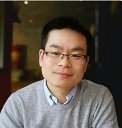
 Jun-Jie Huang
· 2 previous affiliations
- Associate Professor · Since 2023
- Current
- Lecturer · 2021–2023
- Imperial College London2015–2021
- Postdoc · 2019–2021
- PhD student · 2015–2019
Research Overview
Jun-Jie Huang focuses on sparse representation, deep dictionary learning, and image restoration. His early work bridged classical signal processing with deep neural network architectures to improve interpretability in computational imaging. More recently, his research has expanded into federated learning, causal representation learning, and multi-view clustering for complex, distributed datasets.
Research Trajectory
Huang's early research investigated sparse pattern recovery and dense correspondence for image processing. He introduced ProSparse extension: Prony's based sparse pattern recovery with extended dictionaries, focusing on signal processing techniques for pattern recovery. He also explored image completion, developing a hierarchical PatchMatch method to estimate dense correspondences for handling small deformations in Photo Realistic Image Completion via Dense Correspondence.
A major theme in his trajectory is bridging classical sparse representation with deep learning architectures. He proposed A Deep Dictionary Model for Image Super-Resolution, which utilized L-1 analysis dictionaries to extract high-level features without relying on standard back-propagation. This evolved into A Deep Dictionary Model to Preserve and Disentangle Key Features in a Signal, where he introduced a structure containing information-preserving and clustering sub-dictionaries to pass key information across layers.
He formalized these architectures in Learning Deep Analysis Dictionaries for Image Super-Resolution, optimizing a multi-layer dictionary model specifically for regression tasks in single image super-resolution. Expanding on this foundation, he published a two-part study on deep analysis dictionaries. In Learning Deep Analysis Dictionaries - Part I: Unstructured Dictionaries, he demonstrated how cascading learned analysis dictionaries can create interpretable architectures suitable for data-scarce environments. In the subsequent Learning Deep Analysis Dictionaries - Part II: Convolutional Dictionaries, he replaced unstructured dictionaries with convolutional ones using Toeplitz matrices. This work advanced the broader area of The Performance Ceiling of Ultra Lightweight Neural Networks and contributed to the research direction of Stochastic Dynamics for Wide Basin Convergence.
Also in 2020, Huang participated in research on optimization frameworks. With collaborators, he explored the area of Nonmonotone Line Search for Nonconvex Optimization in the paper Meta-learning for Multi-variable Non-convex Optimization Problems: Iterating Non-optimums Makes Optimum Possible. This work introduced an unsupervised framework using LSTM-based meta-optimizers to escape spurious local minima, intersecting with the research directions of Provable Convergence for Learned Optimization Algorithms and Evolution Strategies for Meta-Learning Long Training Horizons.
Moving into 2021 and 2022, Huang developed invertible neural networks for image denoising. He introduced LINN: Lifting Inspired Invertible Neural Network for Image Denoising, which drew on the lifting scheme from wavelet theory to produce over-complete representations for noise removal. He expanded on this with WINNet: Wavelet-Inspired Invertible Network for Image Denoising, combining the interpretability of traditional wavelet methods with deep learning to address blind denoising and image deblurring.
By 2026, Huang's research expanded into federated learning and causal representation. He participated in developing distributed frameworks for complex data structures, such as MV-FGAD: Towards Efficient and Effective Federated Graph Anomaly Detection via Multi-view Learning. This work aggregated global knowledge to repair incomplete local subgraphs for anomaly detection. Similarly, he contributed to Federated Multi-view Clustering for Remote Sensing Data, which utilized Wasserstein-based distribution alignment to cluster multi-modal datasets across institutions without sharing raw data. In the domain of robust generalization, he co-authored Do-Prompt: Causal Interventions Meet Variational Prompt Bottlenecks, introducing a framework that combines variational information bottlenecks with causal interventions to prevent multi-modal prompts from overfitting to spurious environmental cues.
Current Directions
The most recent papers in the evidence address the challenges of distributed machine learning and robust representation. Current work investigates federated learning architectures capable of handling complex, multi-modal datasets—such as remote sensing imagery and fragmented graphs—across multiple institutions while preserving privacy. A parallel focus involves causal representation learning, specifically designing intervention mechanisms and information bottlenecks that force models to rely on stable, task-relevant semantics rather than spurious correlations, thereby improving generalization across domain shifts.
Profile updated
Loading new papers…
Other researchers whose papers cluster into the same research directions — a proxy for overlapping technical interests and shared intellectual neighborhoods.
See something wrong? Report a mistake