

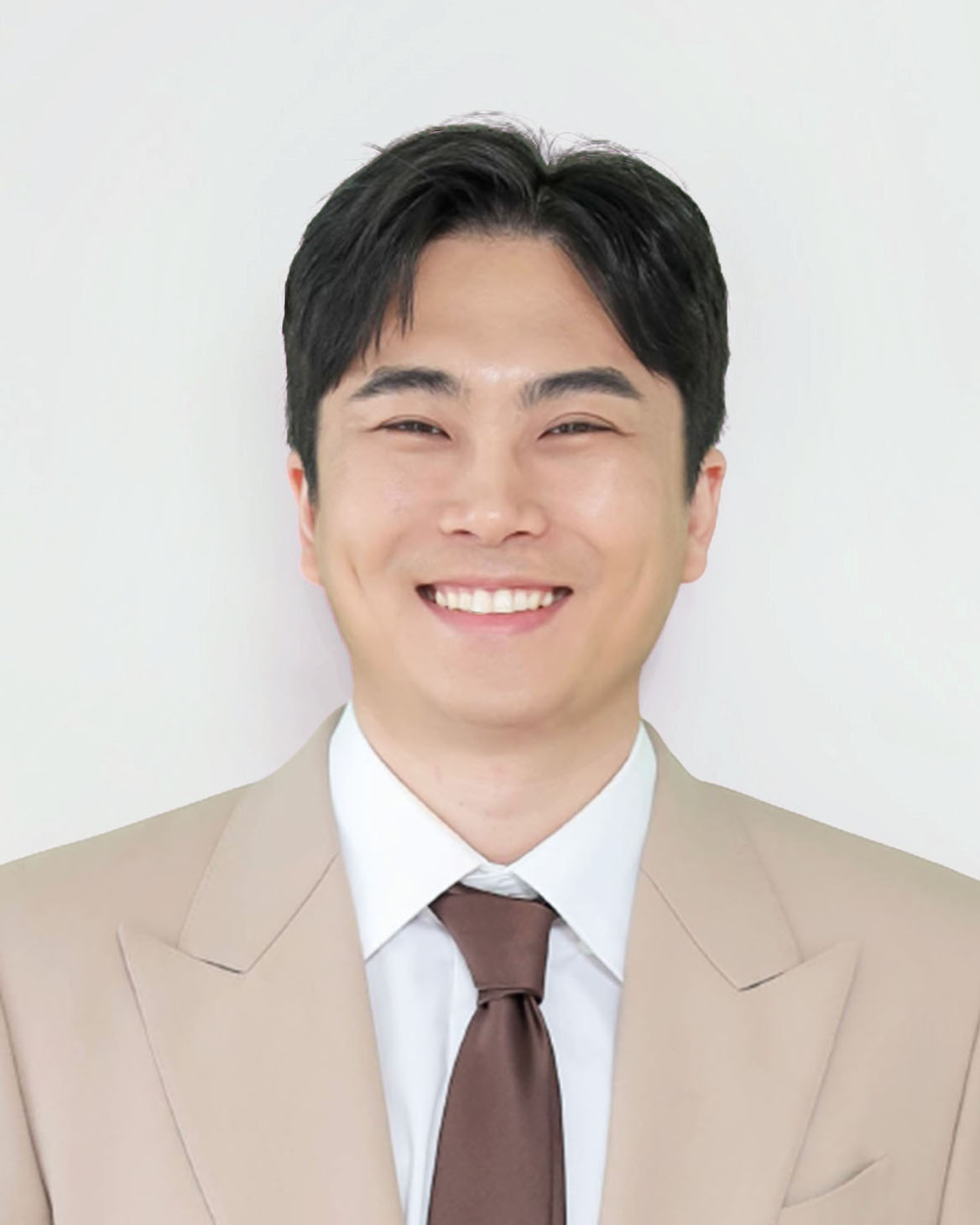
 Jun-Gi Jang
· 3 previous affiliations
- Assistant Professor · Since 2025
- Current
- Postdoc · 2023–2025
- Seoul National University2017–2023
- PhD student · 2017–2023
Research Overview
Jun-Gi Jang focuses on scalable tensor decomposition, time-series analysis, and the efficient processing of irregular and streaming multidimensional data. Early work addressed the computational bottlenecks of matrix-tensor factorization and partial Fourier transforms for anomaly detection. Recent research investigates neural tensor representations and higher-order interaction prediction in sparse, dynamic environments.
Research Trajectory
Jang’s early research concentrated on overcoming the computational and memory limitations of traditional tensor factorization methods. A key early contribution was the co-development of S3CMTF, detailed in Fast, Accurate, and Scalable Method for Sparse Coupled Matrix-Tensor Factorization. This work addressed the challenge of extracting latent factors simultaneously from coupled tensor and matrix data. By aggressively exploiting the sparsity inherent in real-world datasets, the method significantly improved both speed and accuracy over existing factorization techniques, enabling the analysis of increasingly large multidimensional structures.
Following this foundational work in static tensor factorization, Jang expanded into the optimization of spectral methods for time-series analysis. Recognizing that many machine learning applications do not require a full frequency spectrum, Jang co-authored Fast and Accurate Partial Fourier Transform for Time Series Data. This research introduced an algorithm to compute only a specified subset of Fourier coefficients by approximating twiddle factors. The approach proved highly effective for accelerating anomaly detection pipelines, where reconstructing time series to find large errors previously required cumbersome, full-spectrum computations. This focus on temporal efficiency aligns with the broader area of Adaptive Temporal Windowing for Nonstationary Time Series, where computational resources must be dynamically allocated to relevant data segments.
Beginning in 2022, Jang took on a primary leadership role in advancing the analysis of irregular and dense tensors. Irregular tensors—collections of matrices with varying row lengths—present unique alignment and computational challenges in applications like phenotype discovery and trend analysis. In DPar2: Fast and Scalable PARAFAC2 Decomposition for Irregular Dense Tensors, Jang introduced a method to efficiently compress tensor slices, drastically reducing the cost of PARAFAC2 decomposition. This approach contributed significantly to the research direction of Computing Directly on Compressed Tensor Representations, demonstrating that complex algebraic operations can be performed without fully expanding high-dimensional data.
Jang subsequently extended these factorization techniques to dynamic, online environments. In Static and Streaming Tucker Decomposition for Dense Tensors, Jang developed frameworks to maintain accurate Tucker decompositions as new data arrives continuously, bypassing the need to directly manipulate large dense tensors during updates. This was followed by Fast and Accurate Dual-Way Streaming PARAFAC2 for Irregular Tensors - Algorithm and Application, which tackled the highly complex "dual-way" streaming scenario where both new rows and entirely new matrices are added over time. By enabling real-time analysis of evolving irregular structures without the prohibitive cost of static re-computation, this work intersects with themes such as Continuous Field Representations for Spatio-Temporal Dynamics, providing tools to model systems that change continuously in multiple dimensions.
Most recently, Jang has integrated deep learning architectures with tensor algebra to capture more complex relational patterns. In Tensor Convolutional Network for Higher-Order Interaction Prediction in Sparse Tensors, Jang proposed a novel framework that moves beyond the simple fusion of latent vectors used in traditional factorization. Because most entities in sparse tensors have very few observed interactions, traditional methods often lack expressiveness. By employing Tensor Convolutional Networks, Jang’s method effectively predicts top-k higher-order interactions even when the underlying tensor is highly incomplete.
Current Directions
The most recent papers in the evidence indicate a strategic shift from purely algebraic tensor decomposition toward neural-integrated tensor methods. Current work investigates how deep learning architectures, such as recurrent neural networks and convolutional frameworks, can be embedded directly into tensor-train and factorization pipelines. This hybrid approach aims to relax the strict data assumptions—such as uniform smoothness, fixed rank, or structural regularity—traditionally required by compression and factorization algorithms.
A major ongoing focus is the prediction of higher-order interactions in extremely sparse environments, such as temporal graphs and recommendation systems. Rather than relying solely on historical co-occurrences or linear latent factors, recent methodologies leverage neural representations to infer missing links and complex multi-way relationships. This evolution reflects a growing interest in work in the area of Temporal Smoothness for Dynamic Latent Representations, as Jang seeks to build models that can maintain continuous, expressive latent spaces even when the incoming multidimensional data is fragmented, irregular, or highly sparse.
Profile updated
Loading new papers…
Other researchers whose papers cluster into the same research directions — a proxy for overlapping technical interests and shared intellectual neighborhoods.
See something wrong? Report a mistake