

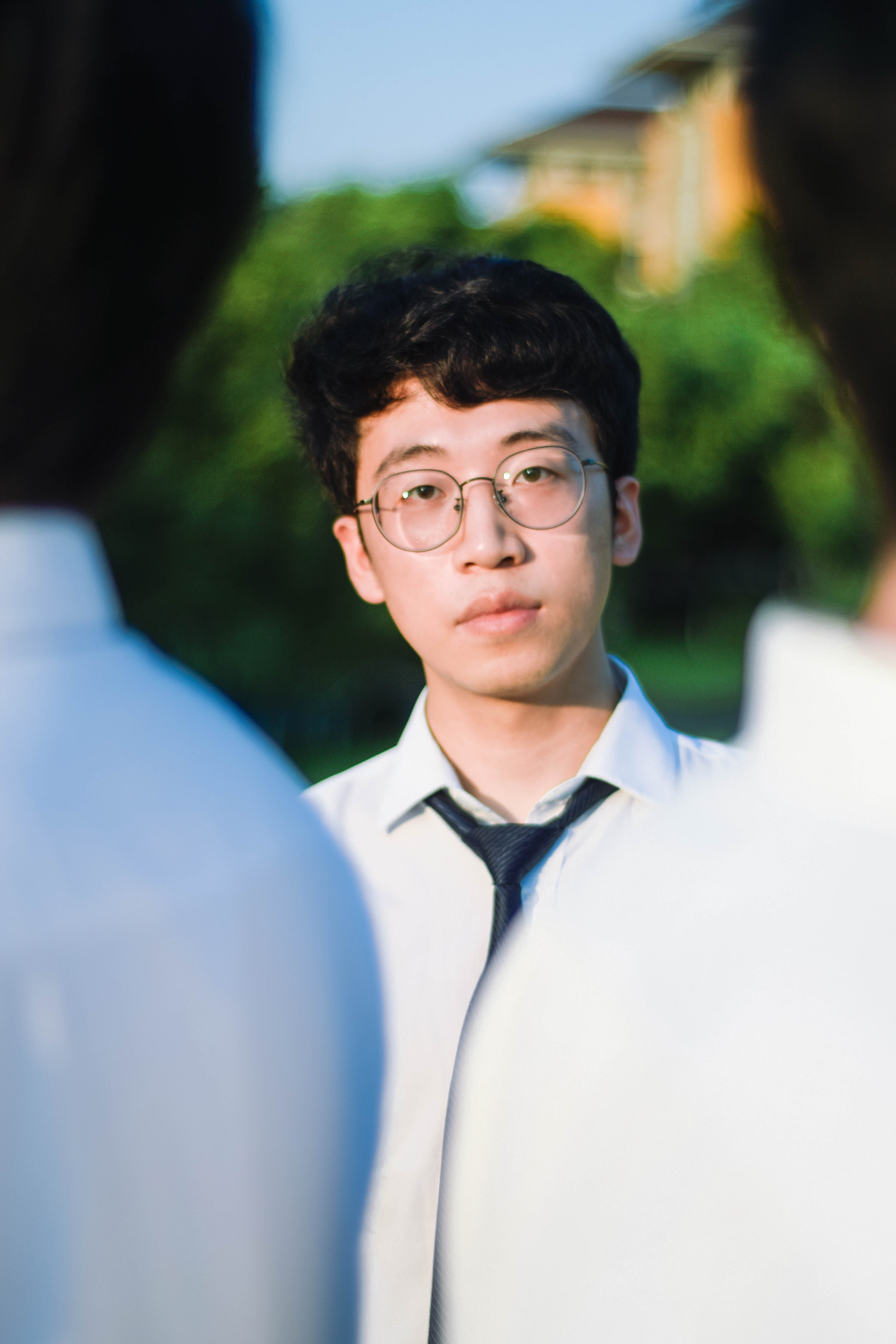
 Jun Dan
· 2 previous affiliations
- Alibaba Group (China)Since 2025
- Researcher · Since 2025
- Zhejiang University2020–2025
- PhD student · 2020–2025
Research Overview
Jun Dan focuses on computer vision and machine learning, with specific emphasis on face perception, generative AI for human portraits, and transfer learning. His trajectory spans the development of robust vision transformer architectures for face recognition to advanced domain adaptation techniques for graph and visual data. Currently, his work addresses open-set domain adaptation and the efficient fine-tuning of large-scale vision-language models.
Research Trajectory
Jun Dan's early research established a dual focus on robust facial representation and transfer learning. In 2023, he addressed the vulnerabilities of Vision Transformers (ViTs) in large-scale face recognition. He introduced TransFace: Calibrating Transformer Training for Face Recognition from a Data-Centric Perspective, a model designed to preserve structural facial information and leverage local token data, overcoming the limitations of standard data augmentation and hard sample mining. Concurrently, he advanced transfer learning methodologies with Trust-aware conditional adversarial domain adaptation with feature norm alignment, focusing on aligning feature norms to bridge domain gaps, a problem space that also connects to his broader interest in the research direction of Decoupling Style and Structure via Fourier Domain Augmentation.
In 2024, his work expanded significantly into semi-supervised learning and graph neural networks. He developed TFGDA: Exploring Topology and Feature Alignment in Semi-supervised Graph Domain Adaptation through Robust Clustering, a framework that aligns the intrinsic topological skeletons of graphs on a hypersphere. This work contributed to several broader research areas, including data-efficient learning for graph neural networks, Riemannian geometry for distribution alignment, and bridging domain gaps with sparse target labels. Building on the importance of graph structures, he also proposed HOGDA: Boosting Semi-supervised Graph Domain Adaptation via High-Order Structure-Guided Adaptive Feature Alignment, which utilizes high-order structural information to overcome the feature extraction limitations of standard graph convolutional networks.
Applying these topological insights back to computer vision, he introduced TopoFR: A Closer Look at Topology Alignment on Face Recognition. By preserving the intricate topological features of face data in the latent space, this work advanced the broader area of persistent homology for structural analysis in deep learning. His contributions to semi-supervised vision tasks also included PRCL: Probabilistic Representation Contrastive Learning for Semi-Supervised Semantic Segmentation. Additionally, he participated in generative AI research, contributing to FaceChain-ImagineID: Freely Crafting High-Fidelity Diverse Talking Faces from Disentangled Audio, which tackled the complex decoupling of identity, content, and emotion to generate dynamic, audio-consistent talking faces.
Moving into 2025, his research tackled increasingly complex adaptation scenarios. He developed Distinguish Then Exploit: Source-free Open Set Domain Adaptation via Weight Barcode Estimation and Sparse Label Assignment, a framework that identifies unknown categories without access to original training data. This work intersected with research directions such as weakly supervised learning with class prior estimation, open set and universal domain adaptation, and optimal transport for structured alignment in deep learning. He further explored optimal transport in EHM: Exploring dynamic alignment and hierarchical clustering in unsupervised domain adaptation via high-order moment-guided contrastive learning, addressing biased estimations of domain discrepancy. Returning to facial recognition architectures, he introduced TransFace++: Rethinking the Face Recognition Paradigm With a Focus on Accuracy, Efficiency, and Security, which enables direct recognition on raw image bytes and contributes to the area of Token Reduction for Efficient Vision Transformers.
His recent collaborative efforts have also examined the fine-tuning paradigms of large-scale models, as seen in Fully fine-tuned CLIP models are efficient few-shot learners, which demonstrated the efficiency of full fine-tuning over prompt tuning in data-limited scenarios. Most recently, his work has extended into multi-modal perception with MPNet: Boosting Infrared and Visible Image Fusion via Modality Adaptation and Phase Alignment, focusing on aligning distinct visual modalities.
Current Directions
The most recent papers in the evidence indicate a strong focus on open-world and source-free domain adaptation, particularly in scenarios where target domains contain unknown categories or where source data is entirely restricted. This involves leveraging optimal transport and sparse label assignment to create adaptive decision boundaries. Concurrently, his work investigates the efficiency and security of foundational vision models, exploring how Vision Transformers can operate directly on raw data formats and how large-scale Vision-Language Models like CLIP can be optimally fine-tuned for few-shot learning without catastrophic forgetting. Finally, emerging work in modality adaptation suggests a growing interest in fusing diverse sensor inputs, such as infrared and visible imagery, for robust perception.
Profile updated
Loading new papers…
Other researchers whose papers cluster into the same research directions — a proxy for overlapping technical interests and shared intellectual neighborhoods.
See something wrong? Report a mistake