

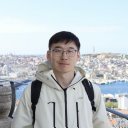
 Jun Bai
· 6 previous affiliations
- Researcher · Since 2024
- Microsoft (United States)2023–2024
- Intern · 2023–2024
- Beihang University2020–2024
- PhD student · 2020–2024
- Intern · 2022–2023
- PingAn Technology2020–2022
- Intern · 2020–2022
- NEC2018–2019
- Intern · 2018–2019
1 other author named Jun Bai: Jun Bai (McGill University · 15 papers)
Research Overview
Jun Bai focuses on natural language processing, information retrieval, and generative modeling, with an emphasis on improving representation learning and reasoning capabilities in language models. His early work addresses retrieval question answering and variational autoencoders, while his recent research explores transferability estimation and parallel reasoning frameworks for large language models.
Research Trajectory
Bai's research trajectory begins with a focus on information retrieval and question answering systems. In 2021, he contributed to the development of dual-encoder architectures for text representation, specifically exploring cross-embeddings to improve answer retrieval in Enhancing Dual-Encoders with Question and Answer Cross-Embeddings for Answer Retrieval. He expanded on this retrieval focus the following year by investigating how background knowledge can be integrated into these systems to overcome information overload. With collaborators, he developed KnowReQA: A Knowledge-aware Retrieval Question Answering System, which introduced knowledge-aware text encoding and matching modules to facilitate faster and more accurate retrieval from large-scale candidate answers. Concurrently, he participated in research on knowledge representation, helping to design an asymmetric context-aware method for knowledge graph embedding in Asymmetric Neighboring Context Modeling for Knowledge Graph Embedding. This work focused on learning low-dimensional vectors for entities and relations by introducing surrounding triple information through an asymmetric context encoder.
Alongside his work in retrieval and knowledge graphs, Bai has made contributions to unsupervised learning and generative modeling. In 2022, he addressed the persistent challenge of posterior collapse—or KL vanishing—in variational autoencoders (VAEs). His work on Improving Variational Autoencoders with Density Gap-based Regularization proposed a novel regularization approach to optimize the Evidence Lower Bound (ELBo) without allowing the posterior distribution of all samples to converge to the same degenerated local optimum. This research intersects with several broader theoretical areas, including the research direction of Aggregated Posterior Regularization for Latent Variable Models, the area of Mutual Information Maximization in Generative Models, and the broader area of Balancing Latent Space Structure and Reconstruction Fidelity.
As the field increasingly shifted toward large-scale pre-training, Bai's focus evolved to address the computational bottlenecks associated with adapting these models. In 2023, he led an empirical survey on transferability estimation for natural language processing, How to Determine the Most Powerful Pre-trained Language Model without Brute Force Fine-tuning? An Empirical Survey. This work evaluated methods for estimating a model's target-task performance with low computational cost, bridging techniques from computer vision to language scenarios to aid in the selection of pre-trained language models.
Most recently, Bai's research has advanced into the domain of complex reasoning and reinforcement learning for large language models. In 2026, he collaborated on Native Parallel Reasoner: Reasoning in Parallelism via Self-Distilled Reinforcement Learning. This framework trains language models to execute reasoning tasks in parallel without relying on external teacher models, utilizing a three-stage self-distilled training process and a novel parallel-aware policy optimization algorithm. This work contributes to the research direction of The Reasoning Ceiling in Language Model Distillation.
Current Directions
The most recent papers in the evidence indicate a strong focus on optimizing the efficiency and reasoning capabilities of large language models. Recent work investigates how to train models to perform complex reasoning tasks in parallel, significantly improving inference speed and accuracy. This involves exploring self-distilled reinforcement learning techniques and parallel-aware policy optimization to reduce reliance on external teacher models. Additionally, his recent research addresses the computational challenges of model selection, exploring transferability estimation methods that allow researchers to predict the performance of pre-trained language models on downstream tasks without the need for brute-force fine-tuning.
Profile updated
| Paper | Venue | Year |
|---|---|---|
| Improving Variational Autoencoders with Density Gap-based RegularizationGitHubzhangjf-nlp/ | NeurIPS | 2022 |
Loading new papers…
Other researchers whose papers cluster into the same research directions — a proxy for overlapping technical interests and shared intellectual neighborhoods.
See something wrong? Report a mistake