

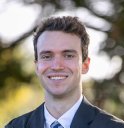
 Julien Horwood
· 2 previous affiliations
- University of CambridgeSince 2022
- PhD student · Since 2022
- Université de Montréal2018–2020
- MS student · 2018–2020
Research Overview
Julien Horwood focuses on graph representation learning, molecular design, and causal interpretability in machine learning. His early work developed synthetically accessible generative models and hierarchical pooling mechanisms for chemical structures. More recently, his research investigates identifiable latent representations, causal feature attribution, and the integration of Gaussian processes with diffusion models for improved uncertainty quantification.
Research Trajectory
Horwood's early research explored methods for improving the structural integrity and interpretability of deep learning models applied to chemical data. In 2019, he contributed to Towards Interpretable Sparse Graph Representation Learning with Laplacian Pooling, which introduced LaPool, a hierarchical graph pooling method. By utilizing the graph Laplacian to identify critical structural centroids, this approach mimics chemical fragmentation to enhance molecular property prediction and drug discovery tasks. This work intersects with several broader research areas, including Hierarchical Molecular Representations and the study of Overcoming Long Range Dependency Bottlenecks in Graph Networks, Edge Aware Message Passing for Relational Graphs, and Overcoming the Homophily Assumption in Graph Neural Networks.
Building on this foundation in computational chemistry, he developed new reinforcement learning frameworks to ensure that computationally designed drugs can be physically synthesized. In Molecular Design in Synthetically Accessible Chemical Space via Deep Reinforcement Learning (2020), he introduced REACTOR, an AI agent whose generative "moves" are constrained to real-world chemical reactions. This method advanced the area of Multi-Objective Molecular Optimization by optimizing molecules for multiple properties while guaranteeing that the resulting structures avoid the common pitfall of being impossible to synthesize in a laboratory.
By 2024, his focus expanded to address fundamental challenges in model interpretability, causal inference, and representation learning. He collaborated on Leveraging Task Structures for Improved Identifiability in Neural Network Representations, which demonstrated that access to a distribution of tasks can achieve linear identifiability in multi-task regression. By assuming a causal structure over these tasks, the method enables simple maximum marginal likelihood optimization. This reduces the equivalence class for identifiability to permutations and scaling of the true latent factors, contributing to the broader area of Provable Causal Representation Learning.
In parallel, he participated in the development of FANS, detailed in Feature Attribution with Necessity and Sufficiency via Dual-stage Perturbation Test for Causal Explanation. This work utilizes a dual-stage counterfactual framework to determine feature importance, moving beyond simple perturbation tests to better distinguish which features are truly necessary and sufficient for a model's predictions, thereby yielding more faithful and robust explanations.
Continuing to explore probabilistic modeling and uncertainty, his subsequent research investigated the intersection of generative models and Gaussian processes. In Diffusion Gaussian Processes (2026), he and his collaborators proposed a framework that integrates Gaussian processes into Denoising Diffusion Probabilistic Models (DDPMs). While diffusion models demonstrate strong performance in modeling complex distributions, their uncertainty estimates are often limited by the point estimations of neural networks. Conversely, Gaussian processes provide principled uncertainty estimates but face scalability issues and assumptions of homos cedastic Gaussian likelihoods. By embedding Gaussian processes as denoisers, this work bridges the gap between generative flexibility and rigorous uncertainty quantification.
Current Directions
The most recent papers in the evidence indicate a sustained focus on improving the reliability, interpretability, and uncertainty quantification of deep learning models. Recent work investigates the integration of principled probabilistic methods, such as Gaussian processes, into modern generative frameworks like diffusion models to address scalability and likelihood constraints. Additionally, his ongoing research addresses causal interpretability and the identifiable recovery of latent factors, seeking to build models that not only perform well on complex regression and generation tasks but also yield faithful, causally grounded explanations for their behavior.
Profile updated
Loading new papers…
Other researchers whose papers cluster into the same research directions — a proxy for overlapping technical interests and shared intellectual neighborhoods.
See something wrong? Report a mistake