

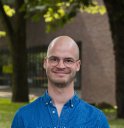
 Julian Kranz
· 4 previous affiliations
- University of MünsterSince 2018
- Postdoc · 2024–2027
- Postdoctoral Researcher (akademischer Rat auf Zeit) · 2024–2025
- Postdoctoral Researcher · 2020–2023
- Master of Science - MS, Mathematics · 2018–2020
- Postdoctoral Researcher · 2024–2025
- European Research Center for Information Systems2024–2025
- Research Affiliate · 2024–2025
- University of Oxford2023–2024
- Postdoctoral Research Associate · 2023–2024
Research Overview
Julian Kranz focuses on operator algebras, topological K-theory, and the mathematical foundations of machine learning. His early work addresses C*-algebras, groupoid actions, and isomorphism conjectures in pure mathematics. Recently, he has expanded his focus to apply concepts from o-minimal geometry to the optimization dynamics of neural networks.
Research Trajectory
Julian Kranz’s research trajectory begins in pure mathematics during his doctoral and postdoctoral work at the University of Münster, with a primary focus on operator algebras, C-algebras, and K-theoretic isomorphism conjectures. His early work investigates the structural properties of these mathematical objects and their associated group actions. In 2022, he explored the area of Generating Vertex Algebras from Local Systems of Operators, providing explicit descriptions for "exotic" crossed-product functors in the context of C-algebras. In Partial tensor-product functors and crossed-product functors, he leveraged Kirchberg's work on tensor products to clarify the relationship between minimal exact and maximal injective functors, a result with direct implications for the Baum-Connes conjecture.
Continuing this focus into 2025, Kranz advanced the understanding of assembly maps and groupoid actions. He bridged two distinct constructions of the assembly map in An identification of the Baum-Connes and Davis-Lück assembly maps, offering a more unified framework for approaching the Baum-Connes conjecture. His research also addresses the structural classification of C-algebras. In Actions on classifiable C*-algebras without equivariant property (SI), he and his collaborators constructed the first examples of group actions on certain C-algebras that are tracially amenable but not amenable, demonstrating that equivariant Z-stability does not automatically guarantee equivariant property (SI).
A significant portion of his 2025 mathematical output focuses on étale groupoids and Bernoulli shifts. In Amenability for actions of étale groupoids on $C^*$-algebras and Fell bundles, he generalized Renault's notion of measurewise amenability, showing that it characterizes the nuclearity of crossed products for specific groupoid actions. He further tackled the weak containment problem in The weak containment problem for étale groupoids which are strongly amenable at infinity, proving that strong amenability at infinity combined with isomorphic full and reduced C*-algebras implies the amenability of the groupoid itself. Expanding into algebraic K-theory, he developed a general framework for computing the K-theory of crossed products by Bernoulli shifts on additive categories in Bernoulli shifts on additive categories and algebraic K-theory of wreath products. This work yielded a new formula for the K-theory of group rings associated with wreath products of finite groups. He also investigated these shifts on UHF-algebras in K-theory of Bernoulli shifts of finite groups on UHF-Algebras, demonstrating that the Bernoulli shift and the trivial action of a finite group on an infinite-type UHF-algebra are $KK^G$-equivalent.
Recently, Kranz has expanded his research to intersect with data science, applying sophisticated mathematical frameworks to the theoretical foundations of machine learning. This transition bridges pure mathematics and optimization dynamics. A central contribution to this interdisciplinary effort is SAD Neural Networks: Divergent Gradient Flows and Asymptotic Optimality via o-minimal Structures. In this work, he proved a fundamental dichotomy in neural network training: gradient flow either converges to a specific point or diverges to infinity while the loss reaches an asymptotic value. By applying o-minimal structures, he demonstrated that for many common tasks, achieving zero loss strictly requires the network weights to diverge. This research spans several critical directions in deep learning theory, including the broader area of Optimization and Generalization with Non-Smooth Activations, the mathematical framework of Tame Geometry for Nonsmooth Optimization, and the study of The Computational Limits of Bounded Weight Neural Networks. It also contributes to ongoing discussions in the research areas of The Implicit Regularization of Stochastic Optimization Dynamics and Guaranteed Convergence via Initial Risk Thresholds.
Alongside his theoretical work on gradient flows, Kranz has collaborated on practical optimization strategies for scientific machine learning. In PADAM: Parallel averaged Adam reduces the error for stochastic optimization in scientific machine learning, he contributed to the development of Parallel Averaged Adam, an optimization method that runs multiple averaged versions of the Adam optimizer in parallel. This approach dynamically selects the best-performing optimizer during training, significantly reducing optimization error in complex tasks like solving partial differential equations without requiring additional gradient evaluations.
Current Directions
The most recent papers in the evidence indicate a dual focus on advanced operator algebras and the theoretical foundations of machine learning. In pure mathematics, current work investigates the amenability and weak containment problems for étale groupoids, as well as the algebraic K-theory of crossed products by Bernoulli shifts. Concurrently, in the domain of deep learning theory, recent research addresses the optimization dynamics of neural networks. This includes applying tame geometry and o-minimal structures to understand divergent gradient flows and asymptotic optimality, as well as developing parallelized stochastic optimization methods for scientific machine learning applications.
Profile updated
Loading new papers…
Other researchers whose papers cluster into the same research directions — a proxy for overlapping technical interests and shared intellectual neighborhoods.
See something wrong? Report a mistake