

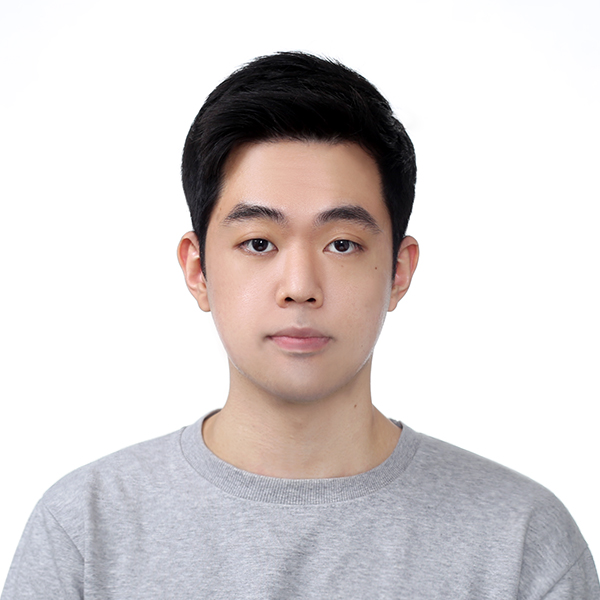
 Juheon Yi
· 5 previous affiliations
- Microsoft (United States)Since 2025
- Researcher · Since 2025
- Current
- Nokia Bell Labs2023–2024
- Research Scientist · 2023–2024
- Seoul National University2016–2024
- PhD student · 2020–2024
- Master's degree, Electrical and Computer Engineering · 2016–2018
- Nokia (Germany)2024
- Researcher · 2024
Research Overview
Juheon Yi focuses on designing mobile and networked systems to support media applications, edge computing, and augmented reality. His trajectory spans from optimizing mobile video streaming and GPU coordination to developing distributed video analytics and 3D telepresence platforms. His most recent work investigates resource-efficient media AI agents and synthetic media detection.
Research Trajectory
Early in his career, his research addressed fundamental challenges in mobile networking and resource-constrained media delivery. He contributed to foundational work in Object Identification (2017) and developed adaptive streaming techniques for multi-homed smartphones in REQUEST: Seamless Dynamic Adaptive Streaming over HTTP for Multi-Homed Smartphone under Resource Constraints (2017). To improve mobile network efficiency, he introduced BlueScan: Boosting Wi-Fi Scanning Efficiency Using Bluetooth Radio (2018), a system that leverages collocated low-power Bluetooth radios to identify operating channels and target beacon transmission times, significantly reducing the time and energy wasted during standard Wi-Fi scanning.
Moving into the early 2020s, his focus expanded to the systems challenges of augmented reality (AR) and volumetric video. He participated in the design of GROOT: a real-time streaming system of high-fidelity volumetric videos (2020). Recognizing the intense computational demands of emerging AR applications, he developed Heimdall: mobile GPU coordination platform for augmented reality applications (2020). This platform addresses the severe latency and frame-rate degradation caused by concurrent deep neural network (DNN) execution and graphics rendering on mobile GPUs. In parallel, he applied AR systems to urban challenges with EagleEye: wearable camera-based person identification in crowded urban spaces (2020), designing an Identity Clarification Network to recover details from low-resolution faces and improve identification accuracy in continuous mobile vision systems.
His work on mobile vision systems naturally progressed into live video analytics and mixed reality (MR). He outlined a roadmap for distributed camera systems in Vision Paper: Towards Software-Defined Video Analytics with Cross-Camera Collaboration (2021). To handle high-resolution streams on devices, he co-developed FlexPatch: Fast and Accurate Object Detection for On-device High-Resolution Live Video Analytics (2022), which uses a tracking-aware patching technique to overcome the limitations of standard detection-based tracking. He also addressed the compute-intensive nature of image enhancement with Supremo: Cloud-Assisted Low-Latency Super-Resolution in Mobile Devices (2022), formulating a mobile-cloud cooperative execution pipeline and specialized data compression algorithms to minimize end-to-end latency. In the MR domain, he contributed to LIVE: life-immersive virtual environment with physical interaction-aware adaptive blending (2022), a system that dynamically adjusts the blending of virtual and physical worlds based on the user's interaction state.
More recently, his research has tackled the complexities of 3D telepresence and distributed smart cameras. He helped design FarfetchFusion: Towards Fully Mobile Live 3D Telepresence Platform (2023), proposing a disentangled fusion approach that separates invariant and dynamically changing regions to overcome the latency and computational bottlenecks of volumetric reconstruction on mobile devices. Building on his earlier vision for multi-camera systems, he introduced Argus: Enabling Cross-Camera Collaboration for Video Analytics on Distributed Smart Cameras (2025). Argus avoids redundant, processing-heavy identification tasks by leveraging object-wise collaboration across overlapping camera views.
In the most recent phase of his trajectory, his focus has broadened to include resource-efficient AI models and media security. He developed Papez: Resource-Efficient Speech Separation with Auditory Working Memory (2024), which replaces heavy Transformer architectures with a bio-inspired memory mechanism and adaptive token pruning to enable high-quality speech separation on mobile and IoT devices. This work contributes to broader research areas such as Recurrent Depth and Parameter Sharing in Transformers, Compressed Memory Banks for Efficient Streaming Transformers, and Linear-Scaling Architectures for Long-Form Audio Modeling. He also collaborated on DLBox: New Model Training Framework for Protecting Training Data (2025), addressing data privacy in model training. Finally, he contributed to VidGuard-R1: AI-Generated Video Detection and Explanation via Reasoning MLLMs and RL (2026), a multi-modal large language model fine-tuned to detect and explain temporal artifacts in synthetic media, advancing the research direction of Algorithmic Fingerprints for Synthetic Media Detection.
Current Directions
The most recent papers in the evidence address the intersection of resource-efficient AI systems and the security of generative media. Recent work investigates how to deploy complex models on constrained devices, such as developing bio-inspired memory mechanisms and adaptive token pruning to drastically reduce the size of Transformer models for mobile speech separation. Concurrently, his research explores the detection and interpretability of AI-generated content, utilizing multi-modal large language models and reinforcement learning to identify temporal artifacts in synthetic videos and provide human-readable reasoning for their classification. Additional recent efforts involve frameworks for protecting training data during model development.
Profile updated
Loading new papers…
Other researchers whose papers cluster into the same research directions — a proxy for overlapping technical interests and shared intellectual neighborhoods.
See something wrong? Report a mistake