

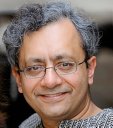
 Joydeep Ghosh
· 1 previous affiliation
- The University of Texas at AustinSince 1988
- Full Professor · Since 1998
- Associate Professor · 1993–1998
- Assistant Professor · 1988–1993
Research Overview
Joydeep Ghosh focuses on scalable machine learning, data mining, and trustworthy artificial intelligence, with particular emphasis on predictive analytics and health informatics. His trajectory spans foundational work in clustering and ensemble methods to recent advancements in federated learning, algorithmic recourse, and dynamic graph modeling. Currently, his research addresses multi-agent collaboration, multimodal foundation models, and reasoning in large language models.
Research Trajectory
Ghosh’s early research established foundational methods in unsupervised learning, particularly in clustering and ensemble techniques. In Cluster Ensembles --- A Knowledge Reuse Framework for Combining Multiple Partitions, he introduced a framework for combining multiple data clusterings without requiring access to the original features, advancing techniques for distributed clustering and ensemble consensus. In 2005, he formalized a unified framework for clustering using Bregman divergences in Clustering with Bregman Divergences, generalizing algorithms like k-means and establishing theoretical connections between exponential families and distortion measures. This mathematical foundation was subsequently extended to matrix approximation in A Generalized Maximum Entropy Approach to Bregman Co-clustering and Matrix Approximation.
Transitioning toward predictive analytics in domains such as healthcare, his work began addressing the challenges of modeling with incomplete or aggregated public databases. He developed approaches for the research direction of Bridging the Aggregate to Individual Inference Gap, notably introducing techniques to maintain inference accuracy when working with aggregated records in Generalized Linear Models for Aggregated Data. He also contributed to complex forecasting problems, particularly in the area of Coherent Hierarchical Time Series Forecasting. With collaborators, he developed methods to simultaneously forecast hierarchically related time series—such as inventory levels across different geographic scales—ensuring consistency across aggregations in Simultaneously Reconciled Quantile Forecasting of Hierarchically Related Time Series.
A major theme in his subsequent trajectory is ethical and trustworthy AI, specifically focusing on explainability and the broader area of Actionable Algorithmic Recourse. He co-developed a model-agnostic framework in CERTIFAI: A Common Framework to Provide Explanations and Analyse the Fairness and Robustness of Black-box Models, which utilizes genetic algorithms to generate counterfactual explanations. This work provided a unified interface to audit models for robustness and demographic fairness, contributing to the direction of Fairness through Equality of Effort and Recourse. He further advanced this domain by designing a high-speed framework for generating sparse and robust counterfactuals via latent space search in FASTER-CE: Fast, Sparse, Transparent, and Robust Counterfactual Explanations.
Addressing privacy and system heterogeneity, his research expanded into federated learning. He tackled the limitations of traditional federated models by introducing a privacy-preserving Bayesian framework in Privacy Preserving Bayesian Federated Learning in Heterogeneous Settings, aligning with the research direction of Public Data Dependency in Federated Distillation. He also proposed a unified framework for collaborative self-supervised learning across diverse client resources in Federated Self-supervised Learning for Heterogeneous Clients. Applying these decentralized approaches to healthcare, he developed a transformer-based federated architecture to estimate individual treatment effects without sharing sensitive patient data in Federated Learning for Estimating Heterogeneous Treatment Effects.
Parallel to federated learning, he investigated evolving graph structures. He introduced a contrastive self-training framework to adapt Graph Neural Networks to dynamic, unlabeled data streams in Incremental Unsupervised Domain Adaptation on Evolving Graphs. He also developed methods to identify entirely new node categories under subpopulation shifts in Novel Node Category Detection Under Subpopulation Shift.
His most recent work explores dynamic graph learning, recommendation systems, and the integration of large language models (LLMs). In Between Linear and Sinusoidal: Rethinking the Time Encoder in Dynamic Graph Learning, his research demonstrated that linear time encoders can effectively capture temporal relationships in dynamic networks while avoiding the information loss associated with traditional sinusoidal functions. In the recommendation space, he addressed multi-objective optimization using goal-conditioned supervised learning in Goal-Conditioned Supervised Learning for Multi-Objective Recommendation. He also leveraged the reasoning capabilities of LLMs, fine-tuned with reinforcement learning, to tackle the cold-start problem for new items in LLM Reasoning for Cold-Start Item Recommendation. Expanding into foundation models and multi-agent systems, he participated in research on interaction-aware mixture-of-experts architectures in Building Massively Multimodal Foundation Models with Interaction-aware Mixture-of-Experts. Most recently, he introduced a holistic optimization framework for LLM-based multi-agent collaboration in OMAC: A Holistic Optimization Framework for LLM-Based Multi-Agent Collaboration, systematically enhancing agent functionality and collaboration structures.
Current Directions
The most recent papers in the evidence indicate a strong focus on integrating large language models into complex reasoning and collaborative tasks. Current work investigates the optimization of multi-agent systems, exploring how semantic initializers and contrastive comparators can improve the structural collaboration of LLM-based agents. Additionally, recent research addresses the application of LLMs to sparse data environments, such as cold-start recommendation systems, and the development of massively multimodal foundation models using mixture-of-experts architectures. Alongside these LLM-driven approaches, there is an ongoing focus on simplifying and improving temporal modeling in dynamic graph learning to better capture evolving network relationships.
Profile updated
Loading new papers…
Other researchers whose papers cluster into the same research directions — a proxy for overlapping technical interests and shared intellectual neighborhoods.
See something wrong? Report a mistake