

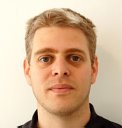
 Joseph Keshet
· 7 previous affiliations
- Associate Professor · Since 2022
- aiOla2022–2026
- Chief Scientist · 2022–2026
- Amazon (United States)2020–2022
- Amazon Scholar · 2020–2022
- Bar-Ilan University2013–2022
- Associate Professor · 2013–2022
- Disruptive AI Venture Capital2020–2021
- Founding Venture Partner · 2020–2021
- Hebrew University of Jerusalem2002–2008
- PhD, Compuer Science · 2002–2008
- Tel Aviv University2000–2002
- Master of Science - MSc, Electrical and Electronics Engineering · 2000–2002
Research Overview
Joseph Keshet focuses on speech and audio processing, structured prediction, and the intersection of machine learning with signal analysis. His trajectory spans early work in online learning and large margin algorithms to recent advancements in end-to-end deep learning for raw audio waveforms. Currently, his research investigates generative diffusion models, efficient transformer decoding, and the theoretical limits of artificial agency.
Research Trajectory
Keshet's early research explored foundational machine learning algorithms and their application to audio alignment. He participated in the development of a unified framework for incremental learning on evolving data streams, detailing this approach in Online Passive-Aggressive Algorithms. Building on large margin classification techniques, he subsequently introduced A Large Margin Algorithm for Speech-to-Phoneme and Music-to-Score Alignment. This work framed the forced alignment of audio signals to event sequences—such as phonemes or musical notes—as a discriminative learning problem.
Moving into structured prediction, his research addressed the disconnect between surrogate training losses and actual task evaluation metrics. In Direct Loss Minimization for Structured Prediction, he established theoretical guarantees for optimizing task-specific metrics, contributing to the broader research direction of Differentiable Relaxations for Sorting and Ranking and exploring optimization strategies for rugged neural loss landscapes. Later, he extended structured prediction concepts to evaluate model robustness, developing methods for the area of Cross Model Adversarial Transferability. This was demonstrated in Houdini: Fooling Deep Structured Visual and Speech Recognition Models with Adversarial Examples, which generated adversarial examples tailored to combinatorial performance measures in speech and vision tasks.
A major theme in Keshet's later trajectory is the application of deep learning directly to audio signals, particularly within the domain of Feature Learning Directly from Raw Audio Waveforms. He guided the development of systems for specialized clinical and linguistic analysis, such as DDKtor: Automatic Diadochokinetic Speech Analysis, which automated the segmentation of speech sounds for neurodegenerative disease assessment. Similarly, he addressed learning from limited data in specialized medical domains with DeepFry: Identifying Vocal Fry Using Deep Neural Networks, a system for detecting creaky voice qualities directly from raw waveforms.
By 2024, his focus on speech recognition expanded to encompass robustness, joint modeling, and efficient inference. He explored the joint optimization of speech front-ends and downstream tasks in Enhanced ASR Robustness to Packet Loss with a Front-End Adaptation Network, using a front-end adapter to improve recognition accuracy over corrupted audio. In WhisperNER: Unified Open Named Entity and Speech Recognition, he integrated open-vocabulary entity recognition with transcription, advancing end-to-end spoken language understanding. He also addressed open-vocabulary challenges in Open-Vocabulary Keyword-Spotting with Adaptive Instance Normalization. To tackle the computational bottlenecks of large transformer-based ASR models, his group introduced Whisper in Medusa's Ear: Multi-head Efficient Decoding for Transformer-based ASR, which utilized multi-token prediction and speculative sampling to accelerate autoregressive inference. Additionally, he investigated raw waveform generation in DiffAR: Denoising Diffusion Autoregressive Model for Raw Speech Waveform Generation.
Most recently, Keshet has investigated the theoretical and practical properties of generative models alongside the philosophical implications of artificial intelligence. He analyzed noise schedules in Spectral Analysis of Diffusion Models with Application to Schedule Design, aiming to mitigate discretization errors in few-step diffusion models. He also continued his clinical speech research with Enhancing analysis of diadochokinetic speech using deep neural networks. In 2026, his work expanded into the theoretical foundations of AI; he authored Why Sampling Is Not Choosing: Intentionality, Agency, and Moral Responsibility in Large Language Models, which examines the philosophical limits of probabilistic sampling in the context of socioaffective alignment for anthropomorphic AI. He also proposed novel architectures for joint tasks in Joint Enhancement and Classification using Coupled Diffusion Models of Signals and Logits, demonstrating how parallel trajectory refinement can allow diffusion models to mutually guide signal reconstruction and classification.
Current Directions
The most recent papers in the evidence indicate a dual focus on the mechanics of advanced generative models and the theoretical boundaries of artificial agency. Recent work investigates the optimization of diffusion models, particularly through spectral analysis for schedule design and the coupling of diffusion processes to jointly handle signal enhancement and classification. Alongside these technical advancements, Keshet is exploring the philosophical and ethical dimensions of large language models, specifically analyzing how probabilistic sampling architectures relate to concepts of intentionality, moral responsibility, and agency in AI systems. He also continues to advance clinical applications of deep learning, refining neural network architectures for the automated analysis of motor speech disorders.
Profile updated
Loading new papers…
Other researchers whose papers cluster into the same research directions — a proxy for overlapping technical interests and shared intellectual neighborhoods.
See something wrong? Report a mistake