

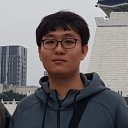
 Jongjin Park
· 1 previous affiliation
- PhD student · Since 2019
Research Overview
Jongjin Park focuses on semi-supervised learning, preference-based reinforcement learning, and the alignment of autonomous agents with human intent. His research addresses the challenges of data efficiency and robustness in training machine learning models, particularly in scenarios where labeled data is scarce or where reward functions are difficult to define mathematically. By leveraging techniques such as contrastive learning, self-knowledge distillation, and transformer architectures, Park develops frameworks that allow agents to learn effectively from limited human feedback and noisy, open-set unlabeled data.
Research Trajectory
Park’s early research, beginning around 2020, centered on improving the generalization and robustness of deep neural networks through novel regularization and semi-supervised learning (SSL) techniques. During this period, he addressed the practical limitations of standard SSL, which typically assumes that labeled and unlabeled data share the same class distribution. His work on OpenCoS: Contrastive Semi-supervised Learning for Handling Open-set Unlabeled Data introduced a framework for managing "open-set" unlabeled data—samples that do not belong to any of the classes present in the labeled set. By utilizing unsupervised contrastive learning, this approach identifies out-of-class samples and incorporates them into the training process using soft labels, preventing the performance degradation often caused by out-of-distribution data. Simultaneously, he explored internal model regularization in Regularizing Class-Wise Predictions via Self-Knowledge Distillation, which penalizes predictive variances between similar samples to mitigate overconfidence and overfitting.
In 2021 and 2022, Park shifted his focus toward the intersection of representation learning and sequential decision-making, specifically within the domains of imitation learning and Reward Learning from Pairwise Human Preferences. A significant contribution during this phase was the development of SURF: Semi-supervised Reward Learning with Data Augmentation for Feedback-efficient Preference-based Reinforcement Learning. This work addressed the high cost of human feedback in reinforcement learning (RL) by applying semi-supervised techniques to reward modeling, significantly improving data efficiency. He also investigated the "causal confusion" problem in behavioral cloning, where agents erroneously rely on nuisance variables that are correlated with, but do not cause, expert actions. His proposed solution, Object-Aware Regularization for Addressing Causal Confusion in Imitation Learning, used semantic object awareness to force policies to attend to relevant environmental features rather than superficial correlations.
More recently, Park has expanded his work into advanced reward synthesis and the alignment of large-scale models. This includes research into Reinforcement Learning with History Dependent Reward Structures, moving beyond the standard Markovian assumption that rewards depend only on the current state and action. His work on the Preference Transformer: Modeling Human Preferences using Transformers for RL reflects this shift, using attention mechanisms to capture long-term dependencies in agent behavior that inform human preferences. Park has also participated in research regarding the reasoning capabilities of Large Language Models (LLMs), contributing to frameworks like SuRe, which utilizes summarization and verification to improve accuracy in open-domain question answering.
Current Directions
Park’s current research is increasingly focused on the scalability and reliability of human-agent alignment. This involves refining The Reward Engineering Bottleneck in Reinforcement Learning, where the goal is to bridge the gap between high-level human intent and low-level machine execution without exhaustive manual engineering. A key component of this direction is Robust Alignment with Noisy Preference Data, which seeks to develop algorithms that remain effective even when human preference datasets contain inconsistent or erroneous labels. By integrating transformer-based preference models with robust optimization techniques, Park aims to create agents that can operate safely and effectively in complex, real-world environments where reward signals are inherently sparse or subjective.
Representative Work
OpenCoS: Contrastive Semi-supervised Learning for Handling Open-set Unlabeled Data In this work, Park addresses a critical flaw in semi-supervised learning: the assumption of a closed-set distribution between labeled and unlabeled data. In realistic scenarios, unlabeled datasets often contain "out-of-class" samples that can mislead traditional SSL algorithms. Park introduced OpenCoS, which leverages self-supervised contrastive learning to detect these samples. Instead of discarding them, the framework assigns soft labels based on their similarity to known classes in the feature space. This approach prevents the model from being forced into overconfident, incorrect classifications, thereby maintaining high performance even in the presence of significant open-set noise.
SURF: Semi-supervised Reward Learning with Data Augmentation for Feedback-efficient Preference-based Reinforcement Learning The primary bottleneck in preference-based RL is the volume of human feedback required to learn an accurate reward function. Park developed SURF to mitigate this by treating reward learning as a semi-supervised problem. The framework utilizes unlabeled trajectory pairs and applies data augmentation to expand the training set for the reward model. By enforcing consistency across augmented versions of the same behavior, SURF allows agents to learn complex tasks with a fraction of the human interventions required by previous methods, making preference-based RL more viable for practical robotics and control tasks.
Object-Aware Regularization for Addressing Causal Confusion in Imitation Learning Imitation learning via behavioral cloning often fails when an agent learns to follow "nuisance" variables—features that are strongly correlated with expert actions but are not the actual cause of those actions (e.g., a dashboard light that turns on when a car brakes). Park proposed OREO (Object-aware REgularizatiOn), a two-stage technique that first identifies semantic objects in the environment and then regularizes the policy to ensure it attends to all relevant objects uniformly. This prevents the policy from over-indexing on a single misleading feature, leading to better generalization in novel environments.
Preference Transformer: Modeling Human Preferences using Transformers for RL Traditional preference models in RL assume that human judgment is based on a sum of Markovian rewards. Park argued that human preferences are often non-Markovian, depending on the sequence and timing of events rather than just instantaneous states. He co-developed the Preference Transformer, which uses a transformer architecture to process entire sequences of behavior. By applying attention mechanisms, the model can weigh different segments of a trajectory differently when predicting a human's preference, allowing for a more nuanced and accurate representation of human intent in complex tasks.
Regularizing Class-Wise Predictions via Self-Knowledge Distillation To combat the issue of overfitting in deep neural networks, Park explored a self-distillation approach that does not require a separate teacher model. This method regularizes the "dark knowledge" (the probability distribution over incorrect classes) by forcing the network to produce consistent predictions for different samples within the same class. By minimizing the divergence between the predictive distributions of same-label samples, the method reduces intra-class variation and prevents the model from becoming overconfident in its predictions, leading to improved test-time generalization.
Meta-Learning with Self-Improving Momentum Target Meta-learning aims to enable models to adapt quickly to new tasks, but obtaining task-specific target models for training can be computationally prohibitive. Park contributed to the development of SiMT (Self-improving Momentum Target), which generates target models by adapting from a temporal ensemble of the meta-learner itself. This momentum-based approach provides a stable and efficient target for the student model to follow, significantly boosting generalization performance across a large number of tasks without the need for expensive, separately trained teacher models.
Profile updated
Loading new papers…
Other researchers whose papers cluster into the same research directions — a proxy for overlapping technical interests and shared intellectual neighborhoods.
See something wrong? Report a mistake