

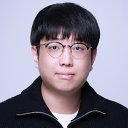
 Jongheon Jeong
· 4 previous affiliations
- Korea UniversitySince 2024
- Assistant Professor · Since 2024
- Current
- Postdoc · 2023–2024
- Postdoctoral Researcher · 2023
- PhD student · 2017–2023
- Bachelor's degree, Mathematics and Computer Science · 2012–2017
- Amazon (United States)2021–2022
- Applied Scientist II · 2022
- Applied Scientist I · 2021
- XBrain, Inc.2016–2017
- Machine Learning Engineer · 2016–2017
Research Overview
Jongheon Jeong focuses on AI safety, robustness against distribution shifts, and the alignment of generative models with human values. His early work addressed novelty detection and certified adversarial robustness in vision systems, gradually expanding to test-time adaptation and anomaly segmentation. Recently, his research emphasizes protecting digital content from malicious editing and developing lightweight, aligned architectures for large language and diffusion models.
Research Trajectory
In his early research, Jeong explored methods for identifying out-of-distribution samples and securing models against adversarial perturbations. He collaborated on CSI: Novelty Detection via Contrastive Learning on Distributionally Shifted Instances (2020), which proposed a training scheme that contrasts samples with distributionally-shifted instances to improve the identification of data drawn from outside the training distribution. He then introduced SmoothMix: Training Confidence-calibrated Smoothed Classifiers for Certified Adversarial Robustness (2021), a method utilizing self-mixup to calibrate the confidence of smoothed classifiers, thereby balancing accuracy and certified robustness against $\ell_2$-adversarial perturbations.
Moving into dynamic environments, his work addressed the challenges of continual model adaptation. In NOTE: Robust Continual Test-time Adaptation Against Temporal Correlation (2022), he and his collaborators tackled the failure of existing adaptation methods when faced with non-i.i.d. data streams, such as those encountered in autonomous driving. This contribution intersects with several broader research areas, including Test-Time Adaptation Beyond Batch Normalization, Robust Learning from Temporally Correlated Data Streams, and Class Balanced Memory Management for Continual and Streaming Learning. To further mitigate the fragility of models under distribution shifts, he developed an autoencoder-based training objective in Enhancing Multiple Reliability Measures via Nuisance-extended Information Bottleneck (2023). This approach extends the standard information bottleneck to model nuisance information, preventing models from co-adapting to shortcut signals in limited training data.
In the domain of visual anomaly detection, he proposed WinCLIP: Zero-/Few-Shot Anomaly Classification and Segmentation (2023). By designing a compositional ensemble, this work adapts the vision-language model CLIP for zero-shot and few-shot industrial quality inspection tasks, bypassing the need for extensive task-specific annotations.
As generative models became more prominent, Jeong's focus expanded to leveraging and securing these architectures. He introduced Adversarial Robustification via Text-to-Image Diffusion Models (2024), which repurposes diffusion models as specialized denoisers to generate synthetic reference images, achieving robustness for off-the-shelf models without requiring original training data. Building on the concept of denoised smoothing, his lab investigated the hallucination issues inherent in denoiser models. This led to Confidence-aware Denoised Fine-tuning of Off-the-shelf Models for Certified Robustness (2024), which provides provable adversarial robustness for pre-trained classifiers in a post-hoc manner.
In 2025, his research trajectory broadened to encompass model alignment, intellectual property protection, and robust fine-tuning. To address reference mismatch in preference alignment, his group developed Margin-aware Preference Optimization for Aligning Diffusion Models without Reference (2025), enabling reference-agnostic alignment for diverse text-to-image downstream tasks. He also contributed to the broader research direction of Transferable Adversarial Immunization for Generative Content Protection. In this area, he participated in the development of WaTeRFlow: Watermark Temporal Robustness via Flow Consistency (2025), a framework utilizing optical flow to ensure digital watermarks survive the transition from static images to generated video. Continuing his work on content protection, his lab proposed BlurGuard: A Simple Approach for Robustifying Image Protection Against AI-Powered Editing (2025). This method adaptively blurs adversarial noise to match an image's natural frequency spectrum, rendering the protection irreversible against purification attacks like JPEG compression.
Simultaneously, he addressed the robustness of foundation models during adaptation. He introduced StarFT: Robust Fine-tuning of Zero-shot Models via Spuriosity Alignment (2025), a framework that leverages large language models to neutralize spurious features, preserving the inherent robustness of models like CLIP. In the natural language domain, he collaborated on Learning from the Undesirable: Robust Adaptation of Language Models without Forgetting (2025), a regularization scheme that forces models to maintain stable internal representations against gradient ascent, thereby preventing catastrophic forgetting and improving resistance to adversarial attacks.
Most recently, his group explored efficient architectures for generative agents. They developed Persona-Pruner: Sculpting Lightweight Models for Role-Playing (2026), a framework that extracts persona-specific sub-networks from general-purpose language models using textual descriptions, creating lightweight agents that preserve general reasoning capabilities. In multimodal alignment, Jeong contributed to Vision-driven Preference Synthesis for Mitigating Hallucinations in VLMs (2026), which synthesizes visual preference data to curb hallucinations in vision-language models.
Current Directions
The most recent papers in the evidence indicate a strong focus on the robust adaptation of foundation models and the protection of digital content against generative AI. One major current direction involves developing adversarial safeguards and watermarking techniques that resist purification attacks and survive complex transformations, such as image-to-video generation. Concurrently, recent work investigates how to align and fine-tune large language and diffusion models without compromising their inherent robustness or general reasoning capabilities. This includes reference-agnostic preference optimization, neutralizing spurious features during zero-shot adaptation, and designing regularization schemes that prevent catastrophic forgetting. Additionally, recent efforts address the efficiency of generative agents by extracting lightweight, persona-specific sub-networks from general-purpose models for role-playing applications.
Profile updated
Loading new papers…
Other researchers whose papers cluster into the same research directions — a proxy for overlapping technical interests and shared intellectual neighborhoods.
See something wrong? Report a mistake