

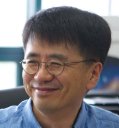
 Jong C. Park
· 2 previous affiliations
- Full Professor · Since 1998
- University of Pennsylvania1989–1996
- PhD student · 1989–1996
Research Overview
Jong C. Park focuses on computational linguistics and natural language processing, with a research trajectory that spans formal semantic modeling, biomedical text mining, and modern information retrieval. Park’s work has evolved from addressing fundamental problems in quantifier scope and lexical ambiguity to developing unsupervised frameworks for document expansion and self-adaptive language models. His research consistently addresses the tension between linguistic expressiveness and computational efficiency, moving from symbolic and rule-based methods in the 1990s to neural and probabilistic approaches in the 2020s.
Research Trajectory
Park’s early research in the 1990s was grounded in formal semantics and the resolution of linguistic ambiguity. A primary focus during this period was Underspecified Semantics for Combinatorial Scope Ambiguity, particularly concerning quantifier scope. This work addressed the challenge of sentences that yield multiple logical interpretations, such as those involving Collective and Distributive Ambiguity in Plural Quantifiers. To manage the exponential explosion of syntactically valid interpretations in long sentences, Park explored Pruning Syntactic Ambiguity with Early Semantic Constraints, a method for narrowing down possible parses based on semantic constraints.
During this foundational period, Park also investigated the computational aspects of grammar and lexicons. This included Grammar Compilation for Efficient Runtime Parsing, which sought to bridge the gap between high-level linguistic formalisms like Head-Driven Phrase Structure Grammar (HPSG) and the need for efficient processing. Recognizing the "lexicographical bottleneck" caused by the manual construction of semantic databases, Park’s work touched upon the Automating Lexical Semantic Resource Construction. Additionally, he examined the Processing Non-Compositional Semantics in Natural Language, focusing on how systems handle multiword expressions where the meaning is not a simple sum of its parts.
In the mid-2000s, Park’s focus shifted toward applied natural language processing, specifically in the domain of biomedicine. As a contributor to the thematic session on text mining in biomedicine at IJCNLP 2004, he addressed the urgent need to organize and extract knowledge from the vast Medline database. This work involved the application of named entity recognition and information extraction techniques using various linguistic analyses.
By the mid-2010s, Park’s research expanded into accessibility and cognitive linguistics. He served as the senior researcher on projects involving sign language transcription and the analysis of semantic fluency. The former utilized deep learning-based pose estimation to create parallel corpora for under-resourced sign languages, while the latter combined prosodic and computational linguistic analyses of speech signals to gain insights into executive function and semantic memory.
Current Directions
Park’s recent work, beginning in the early 2020s, centers on information retrieval (IR) and the optimization of large language models (LLMs). A significant area of focus is the "vocabulary mismatch problem," where queries and documents use different terms to describe the same semantic concepts. To address this, Park has developed unsupervised frameworks for document expansion, using pre-trained language models to generate supplementary sentences that enrich document representations without requiring large volumes of labeled query-document pairs.
His recent research also explores dense retrieval models, which map queries and documents into a shared embedding space. Park has proposed methods for augmenting document representations through interpolation and perturbation to improve retrieval performance in scenarios where human-annotated data is scarce. Most recently, his work has investigated the capabilities of "small" language models, focusing on test-time self-adaptation. This research seeks to improve the performance of smaller models on specific tasks using only unlabeled test data, addressing the limitations of general-purpose LLMs in specialized contexts. Park also participated in research regarding knowledge-augmented language model verification, contributing to the broader effort of ensuring the accuracy and reliability of model outputs.
Representative Work
In Introduction (Thematic Session: Text Mining in Biomedicine), Park and his co-author discuss the emergence of bio-text mining as a critical field for managing the overwhelming volume of biomedical literature. The work highlights the application of machine learning, support vector machines (SVMs), and both shallow and deep linguistic analyses to extract and organize information from over 14 million Medline abstracts.
As the senior author of Prosodic and Linguistic Analysis of Semantic Fluency Data: A Window into Speech Production and Cognition, Park investigated how speech signals can reveal underlying cognitive processes. By analyzing Korean semantic fluency data—where participants name as many members of a category as possible—the study demonstrated that combining prosodic analysis with computational linguistic modeling provides a more nuanced understanding of utterance planning and semantic memory than traditional word counts alone.
In Enhanced Sign Language Transcription System via Hand Tracking and Pose Estimation, Park led the development of a system designed to improve the construction of parallel corpora for sign languages. The system utilizes a single RGB camera and deep learning-based pose estimation to transcribe hand movements into SignWriting. This approach aims to make sign language data collection more scalable and accessible, addressing the lack of resources for these languages compared to spoken ones.
Park’s work on Unsupervised Document Expansion for Information Retrieval with Stochastic Text Generation introduced the Unsupervised Document Expansion with Generation (UDEG) framework. This research addresses the vocabulary mismatch problem in IR by using a pre-trained language model to generate diverse, semantically relevant sentences for a document. Crucially, the framework operates without the need for labeled query-document pairs, making it applicable in domains where training data is limited.
In Augmenting Document Representations for Dense Retrieval with Interpolation and Perturbation, Park proposed the Document Augmentation for dense Retrieval (DAR) framework. This method enhances the performance of dense retrieval models by augmenting document embeddings through interpolation and perturbation. The study validated DAR on benchmark datasets, demonstrating that these simple augmentation techniques can significantly improve retrieval accuracy when human-annotated query-document pairs are difficult to acquire.
The paper Test-Time Self-Adaptive Small Language Models for Question Answering represents Park’s recent focus on model efficiency and adaptation. The research investigates how smaller language models, which may have limited general knowledge compared to massive instruction-tuned models, can be adapted to specific target tasks at test time. By using only unlabeled test data, the proposed self-adaptive approach allows these smaller models to transfer and adapt their knowledge more effectively for question-answering tasks.
Profile updated
| Paper | Venue | Year |
|---|---|---|
| Knowledge-Augmented Language Model VerificationGitHubJinheonBaek/ | EMNLP | 2023 |
Loading new papers…
Other researchers whose papers cluster into the same research directions — a proxy for overlapping technical interests and shared intellectual neighborhoods.
See something wrong? Report a mistake