

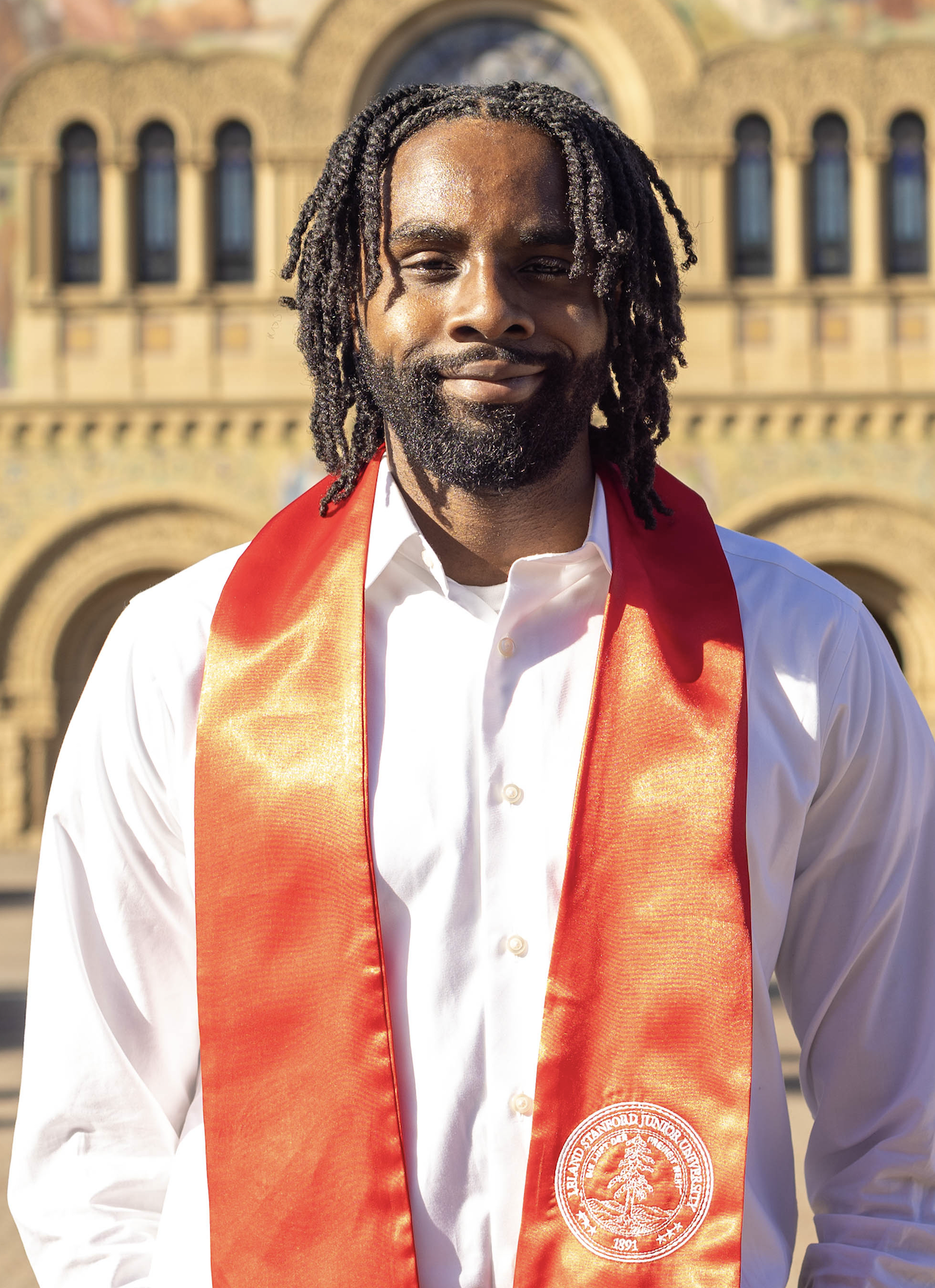
 Jonathan Williams
· 2 previous affiliations
- Princeton UniversitySince 2025
- PhD student · 2025–2030
- Current
- Stanford University2021–2025
- Undergrad student · 2021–2025
1 other author named Jonathan Williams: Jonathan Williams (Max Planck Institute for Chemistry · Cyprus Institute · 1 paper)
Research Overview
Jonathan Williams focuses on the alignment and reasoning capabilities of large-scale machine learning models, with a particular emphasis on inference-time adaptation and latent computation. His work addresses the challenge of underspecified tasks where training data fails to capture the full spectrum of user intent or the complexity of multi-step reasoning. By developing frameworks for dynamic model adjustment and dense credit assignment in latent trajectories, Williams aims to create systems that are both more personalized and more robust in their internal logic.
Research Trajectory
The early stages of Williams's research career were characterized by a focus on structural coherence and decomposition in high-dimensional data, particularly within the domains of computer vision and remote sensing. Around 2019, his work centered on the problem of Structural Coherence in 3D Instance Segmentation, addressing the phenomenon of instance fragmentation where single physical entities are incorrectly partitioned by vision models. This period involved exploring Iterative Scene Decomposition via Sequential Extraction and Erasure, a method designed to mitigate signal bias in crowded scenes by identifying and removing dominant features to reveal occluded or smaller objects.
During this time, Williams also engaged with the fundamental constraints of 3D data representation. He investigated methods for Scaling 3D Representations Beyond the Memory Wall, a critical area given the cubic growth of volumetric grids. His work in this domain sought to balance resolution and computational efficiency, often by Vertical Feature Collapse in Spatial Projections, a common technique in autonomous driving and spatial perception. Additionally, he applied unsupervised learning techniques to structural problems, specifically Estimating Cluster Count via the Eigengap Heuristic to allow data structure to emerge without pre-defined parameters.
By 2022, Williams's focus shifted toward the complexities of spectral data, specifically Resolving Spectral Signature Confusion in Sensor Data. This research addressed the difficulty of identifying objects with overlapping spectral signatures, moving beyond simple classification toward more nuanced signal disambiguation.
Starting in 2024, Williams engaged with inference-time adaptation in Test-Time Alignment via Hypothesis Reweighting, contributing to techniques in Pluralistic Alignment for Heterogeneous Human Preferences through dynamic hypothesis reweighting across diverse user objectives.
In 2025 and 2026, Williams's work transitioned further into LLM alignment, reasoning, and multimodal evaluation. Alongside work on supervising internal reasoning processes, Williams collaborated on analyzing the Robustness of Internal Signals for Hallucination Detection in Vision-Language Models, evaluating whether internal activation cues reliably diagnose visual hallucinations or merely rely on positional heuristics.
Current Directions
Williams's current research is concentrated on two primary pillars: inference-time alignment and latent reasoning trajectories.
The first pillar addresses the "alignment gap"—the discrepancy between a model's broad training data and the specific, often conflicting, preferences of individual users. Williams has contributed to the development of "Hypothesis Reweighting" (HyRe), a framework that enables models to personalize their behavior dynamically. This approach moves away from static fine-tuning, instead using small sets of labeled examples to reweight an ensemble of potential model behaviors at the moment of inference.
The second pillar focuses on the internal "thought" processes of models. Williams has introduced methods to supervise the latent reasoning steps that occur before a model generates a token. This work is particularly relevant for Looped Language Models (LoopLMs), which perform multi-step internal computations. By rewarding the entire trajectory of these latent states rather than just the final output, Williams seeks to improve the logical consistency and reasoning depth of smaller, more efficient models.
Representative Work
Williams has led and contributed to several key papers that define his current focus on model adaptation and reasoning.
In Prioritize the Process, Not Just the Outcome: Rewarding Latent Thought Trajectories Improves Reasoning in Looped Language Models, Williams serves as the lead author, introducing the Reward Latent Thought Trajectories (RLTT) framework. The paper identifies a fundamental mismatch in standard reinforcement learning objectives, such as Group Relative Policy Optimization (GRPO), which typically only assign credit to the final state of a model. Williams argues that for LoopLMs, which engage in multi-step latent reasoning, this "outcome-only" reward structure is insufficient. RLTT provides dense, trajectory-level credit assignment, ensuring that the model is incentivized to maintain logical coherence throughout its internal reasoning process. This approach has demonstrated significant improvements in reasoning benchmarks for models with smaller parameter budgets.
As a key collaborator, Williams has also co-authored a series of papers on the HyRe framework. In Test-Time Alignment via Hypothesis Reweighting, the authors address the challenge of underspecified tasks. The work proposes training an efficient ensemble—a single neural network with multiple prediction heads—where each head represents a different valid function consistent with the training data. At test time, the HyRe technique dynamically reweights these heads to match the specific intent of the user.
This line of inquiry is further refined in Inference-Time Alignment via Hypothesis Reweighting, which emphasizes the lightweight nature of the framework. The research demonstrates that chat assistants can be aligned to diverse user needs without the heavy computational cost of traditional fine-tuning. By using a small set of labeled examples from the target distribution, the model can perform a Bayesian update to its ensemble weights, effectively personalizing the assistant in real-time.
A subsequent iteration, also titled Inference-Time Alignment via Hypothesis Reweighting, explores the limits of this personalization. The work shows that HyRe can achieve effective domain and user adaptation with as few as one to five labeled examples. This research highlights a critical insight: while uniform ensemble averaging is robust on training distributions, it often underperforms individual ensemble members when a model encounters a distribution shift. By upweighting the specific "hypotheses" (prediction heads) that best match the target domain, Williams and his colleagues provide a path toward highly responsive and adaptable AI systems.
Profile updated
Loading new papers…
Other researchers whose papers cluster into the same research directions — a proxy for overlapping technical interests and shared intellectual neighborhoods.
See something wrong? Report a mistake