

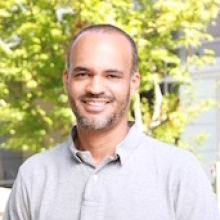
 Jonathan E Allen
· 6 previous affiliations
- Lawrence Livermore National LaboratorySince 2007
- Distinguished Member of Technical Staff · Since 2026
- Principal Researcher · Since 2009
- Bioinformatics Scientist · Since 2008
- Postdoctoral Research Staff Member · 2007–2008
- Computational Scientist · 2017–2025
- University of Maryland, College Park2005–2007
- Faculty Research Assistant · 2005–2007
- PhD, Computer Science · 2006
- Software Engineer · 2001–2005
- BA, Computer Science · 1996
Research Overview
Jonathan E Allen focuses on computational biomolecular modeling, pathogen genomics, and machine learning for drug discovery. His early work addressed large-scale genomic data processing and metagenomic classification to improve diagnostic accuracy. More recently, he develops deep learning architectures and foundation models to predict protein-ligand interactions and molecular properties, bridging genomic and proteomic modalities.
Research Trajectory
As a Distinguished Member of Technical Staff at Lawrence Livermore National Laboratory, Jonathan E Allen initially focused on the computational challenges of metagenomic analysis. He led the development of methods to distinguish human from microbial DNA in complex clinical samples. In Using populations of human and microbial genomes for organism detection in metagenomes, his team built a massive k-mer database incorporating population-scale variation from the 1000 Genomes Project. This work advanced the research direction of K-Mer Frequency Vectorization for Alignment-Free Sequence Analysis and contributed to the broader area of Denoising Genomic Data for Accurate Variant Discovery. By significantly improving the identification of human reads, the approach also intersected with the area of Privacy Preserving Computation for Genomic Data and provided strategies for the domain of Overcoming the Memory Bottleneck in Large-Scale Genomics.
In subsequent years, his focus expanded toward structural biology and computational drug discovery. With collaborators, he explored the area of Ligand-Conditioned Protein Binding Site Prediction. The study Clustering Protein Binding Pockets and Identifying Potential Drug Interactions: A Novel Ligand-Based Featurization Method characterized binding pockets based on ligand preferences rather than physical shape alone, aiding the research direction of Functional Discovery Beyond the Sequence Twilight Zone. Continuing this theme, he participated in evaluating how functional information can validate computational models of protein-ligand interactions in Challenges in Leveraging Functional Information to Evaluate Predicted Protein-Ligand Interactions. He subsequently directed research into deep learning frameworks that bypass the need for expensive experimental co-crystal structures. The resulting model, detailed in Protein-ligand binding affinity prediction using multi-instance learning with docking structures, treated simulated docking poses as a "bag" in a multi-instance learning setup to automatically prioritize the most plausible orientations.
By 2025, his collaborative efforts encompassed synthetic biology and the evaluation of biomolecular foundation models. He contributed to GENERATIVE PROTEIN DESIGN FOR OVERLAPPING GENES, which proposed an iterative method for designing overlapping protein sequences in alternative reading frames to stabilize genetic constructs. He also participated in efforts to bridge genomic and proteomic modalities through foundation models. This included the introduction of the Geno-Prot benchmark in Benchmarking Biomolecular Foundation Models for Cross-Modal Genomics-Proteomics, and further evaluation frameworks in Closing the Omics Gap: A Benchmark for Unified Evaluation of Biomolecular Foundation Models.
Most recently, he has guided the development of advanced molecular representations that fuse 2D and 3D data. He oversaw the creation of the FACET architecture, a graph transformer designed to unify 2D molecular graphs and 3D conformer ensembles. Introduced in From Fragments to Geometry: A Unified Graph Transformer for Molecular Representation from Conformer Ensembles and further detailed in FACET: A Fragment-Aware Conformer Ensemble Transformer, this model approximates the Fused Gromov-Wasserstein distance to achieve efficient, geometry-aware property prediction. Concurrently, he contributed to the PLIP framework in Pre-training on noncovalent interactions in synthetic protein-ligand structures to better predict binding affinity, which explicitly models aromatic rings and noncovalent interactions using a heterogeneous graph transformer pre-trained on millions of synthetic structures.
Current Directions
Recent work investigates advanced geometric representations and multimodal foundation models for molecular science. A primary focus is the development of efficient graph transformer architectures that unify 2D chemical graphs with 3D conformer ensembles. By approximating complex geometric alignments, these models achieve scalable, geometry-aware property predictions without the computational bottleneck of traditional methods.
Additionally, current research addresses the precise prediction of protein-ligand binding affinities through large-scale pre-training. This involves explicitly modeling hierarchical chemical features, such as aromatic rings and noncovalent interactions, across millions of synthetic structures. Parallel efforts focus on bridging the gap between genomics and proteomics, establishing unified benchmarks to evaluate how biomolecular foundation models integrate and interpret both nucleotide and amino acid sequences.
Profile updated
Loading new papers…
Other researchers whose papers cluster into the same research directions — a proxy for overlapping technical interests and shared intellectual neighborhoods.
See something wrong? Report a mistake