

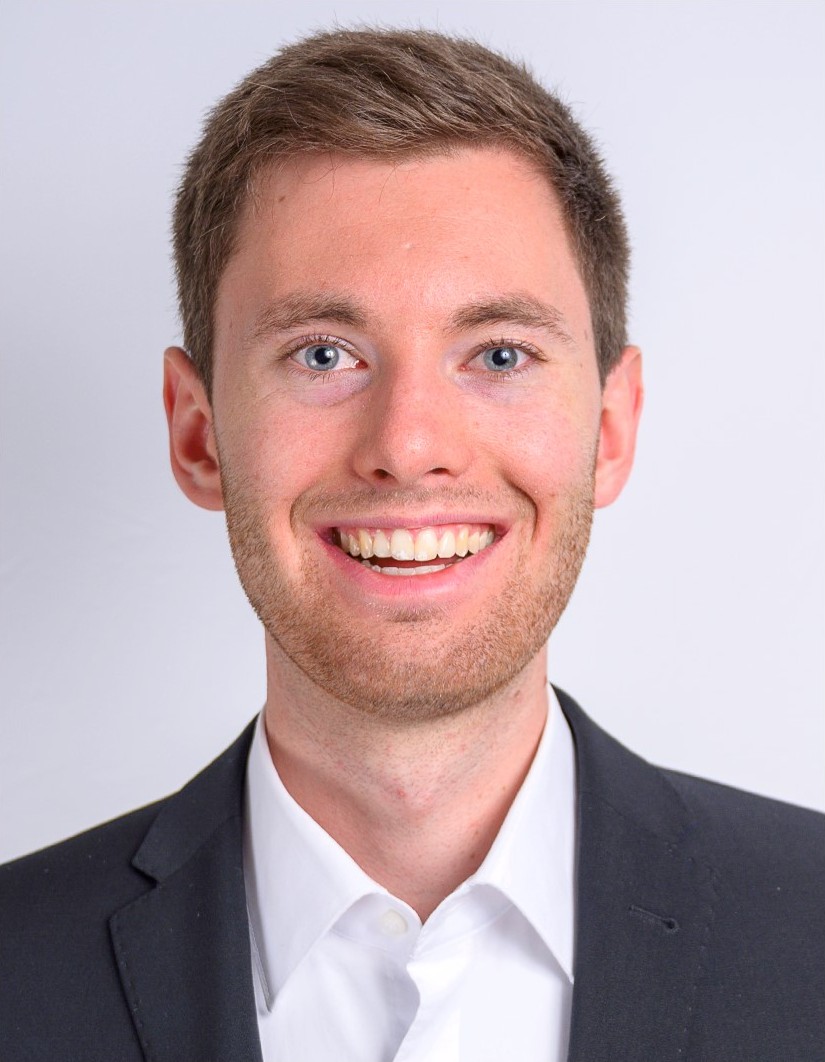
 Jonas Wallat
· 2 previous affiliations
- L3S Research CenterSince 2020
- PhD student · Since 2020
- Leibniz University Hannover2017–2020
- MS student · 2017–2020
Research Overview
Jonas Wallat focuses on information retrieval, the internal mechanics of language models, and temporal reasoning in artificial intelligence. His early work investigated how transformer architectures process relevance and retain factual knowledge during pre-training. More recently, his research addresses the temporal robustness of large language models and the faithfulness of retrieval-augmented generation systems.
Research Trajectory
Wallat’s research initially centered on understanding the internal mechanisms of contextual language models, particularly how they apply to information retrieval and ranking tasks. A central question in his early work was whether models like BERT genuinely capture established notions of relevance or merely rely on surface-level patterns. In his first-author paper Probing BERT for Ranking Abilities (2023), Wallat conducted a layer-wise probing analysis using probes based on lexical matching and semantic similarity. This work sought to demystify the black-box nature of transformers, contributing to the broader research direction of Hierarchical Feature Abstraction Across Transformer Layers.
Alongside his investigations into how models rank information, Wallat explored how they acquire and store factual knowledge in the first place. In The Effect of Masking Strategies on Knowledge Retention by Language Models (2023), he examined the impact of different pre-training tasks on a model's ability to retain world knowledge. This research highlighted the critical relationship between pre-training methodologies and a model's subsequent performance on knowledge-intensive tasks, such as question answering.
By 2024, Wallat’s focus expanded to the reliability, attribution, and temporal awareness of generative models. As retrieval-augmented generation (RAG) became a standard method for grounding language models in external facts, he identified critical nuances in how these systems cite their sources. In Correctness is not Faithfulness in RAG Attributions, he formally disentangled two often-conflated concepts: citation correctness (whether a retrieved document supports a generated claim) and citation faithfulness (whether the model actually relied on that document to generate the claim). He argued that evaluating both dimensions is necessary to establish genuine user trust in attributed answers.
Concurrently, Wallat began addressing the static nature of pre-training corpora, which often leaves models unable to handle queries with specific temporal intents. His work in Temporal Blind Spots in Large Language Models evaluated general-purpose models on temporal question-answering datasets, revealing significant limitations in their ability to process factual temporal knowledge.
This trajectory naturally progressed into deeper evaluations of temporal reasoning. In A Study into Investigating Temporal Robustness of LLMs (2025), Wallat designed eight specific time-sensitive robustness tests to systematically measure how well models process temporal scope and orientation in zero-shot settings. Alongside his first-author evaluations, he has collaborated on architectural solutions to these temporal deficits. As a co-author on Extending Dense Passage Retrieval with Temporal Information, he contributed to the development of TempRetriever, an approach that explicitly embeds query dates and document timestamps into the retrieval process to improve performance on time-sensitive tasks.
Current Directions
Wallat’s most recent work centers on overcoming the temporal blindness inherent in standard retrieval and generation pipelines. He is actively contributing to the research area of Chronological Alignment for Retrieval-Augmented Generation, which seeks to ensure that retrieved documents match the temporal context of a user's query rather than just its semantic topic.
His ongoing research focuses on moving beyond static semantic matching to dynamic, time-aware retrieval architectures. By integrating temporal metadata directly into dense vector spaces, his recent collaborative efforts aim to solve the practical challenges of temporal question answering. This focus aligns closely with emerging themes such as Temporal Contrastive Learning for Time Sensitive Reasoning, reflecting a sustained commitment to developing language models and retrieval systems that can reliably navigate the evolving nature of factual knowledge.
Profile updated
Loading new papers…
Other researchers whose papers cluster into the same research directions — a proxy for overlapping technical interests and shared intellectual neighborhoods.
See something wrong? Report a mistake