

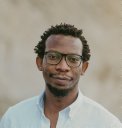
 John Murray-Bruce
· 3 previous affiliations
- University of South FloridaSince 2020
- Assistant Professor · Since 2020
- Boston University2017–2019
- Postdoc · 2017–2019
- Imperial College London2012–2017
- PhD student · 2012–2017
Research Overview
John Murray-Bruce focuses on inverse source problems, spatio-temporal sampling, and computational imaging. His early research developed exact inversion formulas and distributed algorithms for reconstructing diffusion fields from sparse sensor network data. More recently, he has contributed to non-line-of-sight imaging techniques, exploring how transient light measurements and occluders can resolve hidden scenes.
Research Trajectory
Murray-Bruce’s early work, primarily published between 2014 and 2017, centered on the mathematical and algorithmic challenges of inverse source problems in sensor networks. Operating as a first author during this period, he focused on identifying the locations, activation times, and intensities of sources that induce diffusion fields. This research aligns with the broader area of Overcoming Global Parameter Dependency in Decentralized Optimization, as it frequently sought to reconstruct global field properties using only local interactions and sparse measurements from distributed autonomous sensors.
In 2014, he formalized a two-step method for estimating source parameters using arbitrarily placed sensors in Reconstructing diffusion fields sampled with a network of arbitrarily distributed sensors. By applying well-chosen test functions, this work demonstrated how Prony’s method could be leveraged to reveal the locations and intensities of localized sources. He subsequently expanded this framework to fully distributed settings. In Consensus for the distributed estimation of point diffusion sources in sensor networks (2015), he introduced an exact inversion formula for jointly recovering localized, instantaneous sources and adapted it for sensor networks using average consensus schemes, allowing field reconstruction through strictly local sensor interactions.
As his methodology matured, Murray-Bruce moved beyond instantaneous point sources to more complex geometries. In Reconstructing non-point sources of diffusion fields using sensor measurements (2016), he presented a framework for estimating straight-line and polygonal sources. By reducing the estimation problem to a system governed by a power series expansion, he showed that non-localized sources could also be efficiently reconstructed using algebraic methods. This trajectory culminated in a generalized theoretical framework for linear partial differential equations (PDEs). In A Sampling Framework for Solving Physics-Driven Inverse Source Problems (2017), he demonstrated that unknown field sources governed by linear PDEs could be recovered from a sequence of generalized measurements using multidimensional frequency estimation techniques.
By 2020, the available evidence indicates a shift in application domain toward computational imaging, specifically non-line-of-sight (NLOS) imaging. Working as part of larger collaborative teams, Murray-Bruce contributed to the development of edge-resolved transient imaging. In Seeing Around Corners with Edge-Resolved Transient Imaging (2020), where he was a middle author, the research team addressed the challenge of diffuse reflections scattering light in all directions. The proposed method derived angular resolution from vertical edges and longitudinal resolution from the temporal response to a pulsed light source, enabling the formation of images outside the direct field of view.
Current Directions
The most recent papers in the evidence, dating to 2020 and 2021, indicate an active focus on computational imaging and the physical modeling of light transport for NLOS reconstruction. This work investigates how transient light measurements—specifically direct time-of-flight data—can be combined with the azimuthal angular resolution provided by vertical edge occluders to detect and reconstruct hidden objects.
Current open problems in this domain include optimizing acquisition strategies and modeling scene responses under varying physical constraints. Recent analyses explore how the difficulty of detecting hidden scenes depends on a complex interplay of parameters, including illumination power, acquisition time, ambient light, and the reflectivity of both visible and hidden surfaces. The overarching goal of this direction is to improve the signal-to-noise ratio of diffuse reflections and refine reconstruction algorithms for practical applications in search and rescue, reconnaissance, and medical imaging.
Profile updated
Loading new papers…
Other researchers whose papers cluster into the same research directions — a proxy for overlapping technical interests and shared intellectual neighborhoods.
See something wrong? Report a mistake