

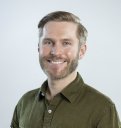
 John Kirchenbauer
· 10 previous affiliations
- University of TorontoSince 2026
- Postdoc · Since 2026
- Vector InstituteSince 2026
- Postdoc · Since 2026
- University of Maryland, College Park2021–2026
- Graduate Assistant · 2021–2026
- X, the moonshot factory2023–2024
- PhD Resident - AI/ML · 2023–2024
- Software Engineering Institute2020–2021
- Associate Machine Learning Engineer · 2020–2021
- Carnegie Mellon University2020–2021
- Associate Machine Learning Engineer · 2020–2021
- Capacity2018–2020
- NLP Research Developer · 2018–2020
- Washington University in St. Louis2017–2020
- MS student · 2017–2020
- Streaming Data Engineer · 2019
- Oberlin College2014–2017
- Undergrad student · 2014–2017
Research Overview
John Kirchenbauer focuses on the security, provenance, and optimization of large generative models, with a particular emphasis on statistical watermarking techniques. His trajectory spans foundational methods for embedding invisible signatures in both text and images, alongside techniques for efficient model training and prompt discovery. His most recent work investigates memory-efficient optimization, self-distillation for accelerated inference, and the mechanics of memorization in language models.
Research Trajectory
In 2023, Kirchenbauer introduced a foundational framework in A Watermark for Large Language Models, which proposed subtly biasing token selection toward a randomized "green list" to create a hidden statistical signature. This signature remains invisible to human readers but can be detected with high confidence from short text spans without requiring access to the model's internal parameters. This established a core technique in the area of Statistical Watermarking for Large Language Models and the related domain of Watermarking Low Entropy Generative Text. The approach also intersects with the broader direction of Multi-Objective Decoding for Constrained Text Generation.
Expanding into image modalities that same year, he collaborated on Tree-Rings Watermarks: Invisible Fingerprints for Diffusion Images. This training-free method embeds a key into the Fourier space of the initial noise vector, yielding a watermark that is highly robust against common image edits like cropping and rotation. This work contributed to the research direction of In Generation Latent Space Watermarking and the broader area of Proactive Watermarking for Generative Model Provenance. Additionally, he participated in research on prompt optimization, contributing to Hard Prompts Made Easy: Gradient-Based Discrete Optimization for Prompt Tuning and Discovery, which developed a gradient-based algorithm to automatically discover discrete, human-readable prompts capable of bypassing simple content filters.
In 2024, his focus on watermarking deepened to address practical deployment challenges. He led On the Reliability of Watermarks for Large Language Models, analyzing the robustness of statistical signatures against adversarial modifications, such as paraphrasing or mixing machine-generated text with human-written essays. Alongside provenance, his work explored model training dynamics and evaluation. He participated in the development of NEFTune in NEFTune: Noisy Embeddings Improve Instruction Finetuning, demonstrating that injecting random noise into embedding vectors during instruction tuning significantly improves conversational quality without degrading factual performance, advancing the area of Noisy Embedding Regularization for Large Language Models. He also introduced LMD3: Language Model Data Density Dependence, a methodology for predicting model performance on specific queries by estimating the density of surrounding training data.
In 2025, his research expanded into optimization efficiency with When Can You Get Away with Low Memory Adam?. This work utilized layer-wise Signal-to-Noise Ratio analysis to design SlimAdam, an optimizer that significantly reduces second-moment memory usage while matching the accuracy and stability of standard Adam.
By 2026, his work continued to bridge model efficiency, data provenance, and learning mechanics. He developed Multi-Token Prediction via Self-Distillation, a method to accelerate autoregressive inference by training models to predict multiple tokens in a single forward pass, achieving substantial speedups without complex auxiliary architectures. Returning to provenance, he explored intellectual property defense in Watermarking for Proprietary Dataset Protection, addressing how data owners can proactively detect if their content was scraped for model training. Finally, he introduced FictionalQA: A Dataset for Studying Memorization and Knowledge Acquisition, utilizing a cleanroom dataset of synthetic events to disentangle verbatim memorization from genuine factual learning in language models.
Current Directions
The most recent papers in the evidence address the dual challenges of scaling large language models efficiently and understanding their relationship with training data. Recent work investigates memory-efficient adaptive optimization and self-distillation techniques designed to accelerate inference without requiring complex auxiliary pipelines. Concurrently, there is a strong focus on data provenance and intellectual property, exploring how watermarking can be adapted to protect proprietary datasets from unauthorized scraping. This is complemented by fundamental investigations into how models acquire knowledge, using synthetic datasets to study the boundary between verbatim memorization and genuine factual acquisition.
Profile updated
Loading new papers…
Other researchers whose papers cluster into the same research directions — a proxy for overlapping technical interests and shared intellectual neighborhoods.
See something wrong? Report a mistake