

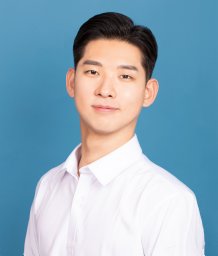
 Joel Jang
8 previous affiliations
- Nvidia (United States)2024–2025
- Senior Research Scientist · 2025
- Research Intern · 2024–2025
- University of Washington2023–2025
- PhD student · 2023–2025
- Research Intern · 2023–2024
- M.S., Graduate School of AI · 2021–2023
- LG AI Research (South Korea)2022–2023
- Research Intern · 2022–2023
- 카카오브레인 - kakaobrain2020–2021
- Research Intern · 2020–2021
- Korea University2017–2021
- Undergrad student · 2017–2021
- Software Engineer Intern · 2020
Research Overview
Joel Jang focuses on natural language processing, continual learning, and embodied artificial intelligence. His early work addressed the challenges of updating and evaluating large language models as real-world knowledge evolves. More recently, his research has shifted toward robotics, exploring how video foundation models and latent action discovery can enable scalable, zero-shot generalization for physical AI systems.
Research Trajectory
Jang’s early research investigated continual learning and adaptation in natural language processing. He initially addressed data imbalance in text classification through Sequential targeting: A continual learning approach for data imbalance in text classification. Recognizing that large language models (LLMs) encode static world knowledge that quickly becomes outdated, he subsequently formulated the problem of continual knowledge learning. In Towards Continual Knowledge Learning of Language Models, he explored methods for updating models with new information while preventing catastrophic forgetting, contributing to techniques for continual instruction tuning and surgical knowledge editing.
Building on his work with language models, Jang expanded his focus to zero-shot generalization and evaluation methodologies. He participated in developing alternative meta-training techniques in Guess the Instruction! Flipped Learning Makes Language Models Stronger Zero-Shot Learners, which trains models to generate task instructions from inputs to improve performance on unseen labels. To further enhance reasoning capabilities, he contributed to The CoT Collection: Improving Zero-shot and Few-shot Learning of Language Models via Chain-of-Thought Fine-Tuning. This work demonstrated how fine-tuning on synthetic reasoning paths advances the broader research direction of Task Diversity for Cross-Task Generalization.
In parallel, Jang investigated the architectural and lifecycle management of LLMs. He challenged the prevailing reliance on massive multitask instruction tuning in Exploring the Benefits of Training Expert Language Models over Instruction Tuning, showing that retrieving specialized expert models can yield superior zero-shot generalization and modular growth. To support the continuous evaluation of such systems, he introduced TemporalWiki: A Lifelong Benchmark for Training and Evaluating Ever-Evolving Language Models, emphasizing the efficiency of training only on new information. He also addressed the privacy implications of memorized training data in Knowledge Unlearning for Mitigating Privacy Risks in Language Models, proposing gradient ascent techniques for selective knowledge erasure.
Jang’s work on model evaluation and alignment matured through several collaborative efforts. He participated in the development of Prometheus: Inducing Evaluation Capability in Language Models, an open-source evaluator designed to match proprietary models when provided with reference materials. This work advanced the research direction of Open Source Evaluator Models for Reliable Benchmarking, alongside related areas such as Reference Anchored Evaluation for Language Models and Rationale First Automated Evaluation. He also contributed to Improving Probability-based Prompt Selection Through Unified Evaluation and Analysis, which unified gradient-free prompt selection methods around mutual information maximization. To address the limitations of aggregate human preferences, he led Personalized Soups: Personalized Large Language Model Alignment via Post-hoc Parameter Merging, framing personalized alignment as a multi-objective reinforcement learning problem.
In recent years, Jang’s research trajectory has shifted significantly toward physical AI, focusing on the intersection of video foundation models and robotic control. A major theme of this work is the research direction of Scaling General Purpose Robotics via Vision Language Action Models. He contributed to the development of GR00T N1: An Open Foundation Model for Generalist Humanoid Robots, which combines vision-language understanding with high-frequency motor control to bridge the embodiment gap for humanoid systems.
To overcome the data bottlenecks in robot learning, Jang has extensively explored the research direction of Learning Latent Actions from Unlabeled Video. He co-developed Latent Action Pretraining from Videos, an unsupervised method that learns discrete action spaces from internet-scale, action-free videos. He further advanced the use of synthetic data in DreamGen: Unlocking Generalization in Robot Learning through Video World Models, demonstrating that generative world models can synthesize neural trajectories to teach robots new behaviors without extensive real-world demonstrations. His participation in World Simulation with Video Foundation Models for Physical AI supported the creation of unified flow-based architectures for high-fidelity physical simulation.
Most recently, Jang has focused on "World Action Models" that jointly predict future states and actions. He oversaw the development of World Action Models are Zero-shot Policies, which leverages pretrained video diffusion models to achieve significant improvements in zero-shot generalization and cross-embodiment transfer. He also contributed to DreamDojo: A Generalist Robot World Model from Large-Scale Human Videos, a system pretrained on massive egocentric datasets that uses self-supervised latent actions to translate human motion into robotic control.
Current Directions
The most recent papers in the evidence indicate a strong focus on scaling physical AI through generative world models and unsupervised action discovery. Current work investigates how massive datasets of human video can be translated into actionable robotic policies without relying on expensive, ground-truth action labels. By developing World Action Models and leveraging latent action spaces, this research aims to achieve zero-shot generalization across diverse robotic embodiments, environments, and tasks, effectively closing the sim-to-real gap for generalist robots.
Profile updated
Loading new papers…
Other researchers whose papers cluster into the same research directions — a proxy for overlapping technical interests and shared intellectual neighborhoods.
See something wrong? Report a mistake