

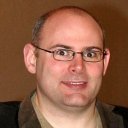
 Joachim Wagner
· 2 previous affiliations
- Dublin City UniversitySince 2005
- Research Fellow · Since 2018
- Postdoc · Since 2013
- Systems Administrator · 2007–2013
- PhD student · 2013–2012
- Research Assistant · 2006–2007
- Tutor · 2005–2006
- Osnabrück University1997–2003
- Magister Artium, Computation Linguistics · 1997–2003
- Research Assistant · 2000–2001
- Tutor · 1998–1999
Research Overview
Joachim Wagner focuses on natural language processing, specifically parser adaptation, grammatical error detection, and the syntactic analysis of noisy or user-generated text. His early research explored methods for adapting standard parsers to ungrammatical and out-of-domain data, while his later work addressed the challenges of processing microtext, code-mixed language, and translation quality estimation.
Research Trajectory
Wagner’s early work centered on the robustness of natural language parsers when confronted with non-standard or erroneous text. In 2007, he led research on A Comparative Evaluation of Deep and Shallow Approaches to the Automatic Detection of Common Grammatical Errors, investigating how different levels of linguistic analysis perform in identifying syntactic mistakes. This interest in grammatical noise naturally extended to parser adaptation. As a secondary author, he contributed to Adapting a WSJ-Trained Parser to Grammatically Noisy Text (2008), which demonstrated that a parser trained on standard Wall Street Journal data could be made more robust by retraining it on an artificially generated ungrammatical treebank. This approach significantly improved performance on noisy test sets while utilizing a classifier to prevent degradation on well-formed data.
By 2011, Wagner's collaborative work shifted toward the emerging challenges of Web 2.0 and microtext, domains characterized by high levels of linguistic noise and domain shift. He participated as a co-author in #hardtoparse: POS Tagging and Parsing the Twitterverse, which evaluated statistical dependency parsers on Twitter datasets. The study highlighted the severe performance drops caused by out-of-domain application and part-of-speech tagging errors, and showed that retraining parsers on self-trained Twitter material yielded significant improvements. During this period, he also contributed to broader efforts to establish resources for these new domains, such as From News to Comment: Resources and Benchmarks for Parsing the Language of Web 2.0 (2011).
In subsequent years, Wagner's research expanded to include multilingual and cross-lingual tasks. In 2014, he co-authored DCU-UVT: Word-Level Language Classification with Code-Mixed Data, addressing the complexities of language identification in texts where users switch between languages at the word level.
Current Directions
Based on the most recent papers in the evidence, which date to 2014, Wagner's focus evolved to encompass translation evaluation and multilingual text processing. Alongside his work on code-mixed language classification, he contributed as a co-author to research on machine translation, specifically investigating Target-Centric Features for Translation Quality Estimation. These later projects reflect a broader interest in applying robust natural language processing techniques to complex, real-world linguistic phenomena, moving from monolingual syntactic parsing toward multilingual and evaluative frameworks.
Profile updated
Loading new papers…
Other researchers whose papers cluster into the same research directions — a proxy for overlapping technical interests and shared intellectual neighborhoods.
See something wrong? Report a mistake