

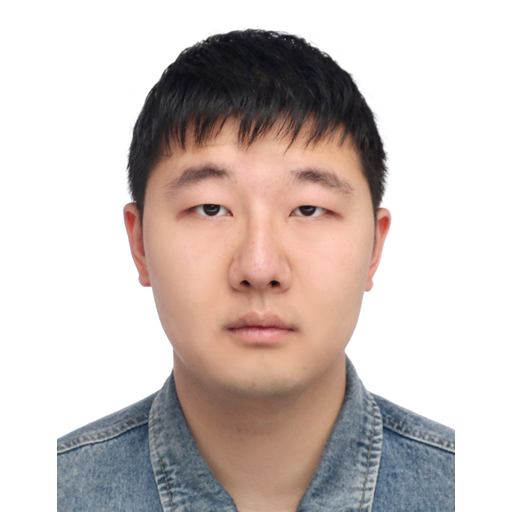
 Jixun Yao
· 1 previous affiliation
- Current
- PhD student · 2021–2025
Research Overview
Jixun Yao focuses on speech processing, generative audio modeling, and voice privacy. His early work addressed noise-robust voice conversion and speaker anonymization techniques that protect identity while preserving intelligibility. More recently, he develops streaming architectures and language model-based frameworks for zero-shot voice conversion, speech enhancement, and expressive text-to-speech synthesis.
Research Trajectory
Yao's early research concentrated on voice conversion and the broader area of Neural Voice Anonymization for Privacy Preserving Speech Analytics. A central challenge in this domain is concealing a speaker's identity without degrading the intelligibility or naturalness of the speech. He addressed this in Distinguishable Speaker Anonymization Based on Formant and Fundamental Frequency Scaling, developing an anonymization framework that operates without relying on automatic speaker verification models. He subsequently advanced this methodology in Distinctive and Natural Speaker Anonymization via Singular Value Transformation-Assisted Matrix, utilizing Singular Value Decomposition to transform identity representations while maintaining speech distinctiveness against sophisticated re-identification attacks. Concurrently, he investigated environmental robustness in voice conversion. In Preserving Background Sound in Noise-Robust Voice Conversion Via Multi-Task Learning, he introduced an end-to-end framework that cascades source separation and bottleneck feature extraction to prevent the speech distortion typically caused by neural separation models, allowing background sounds to be preserved during conversion.
As generative AI techniques matured, Yao integrated diffusion models and language-driven controls into his speech architectures. To overcome the limitations of pre-defined style labels in voice conversion, he developed Promptvc: Flexible Stylistic Voice Conversion in Latent Space Driven by Natural Language Prompts, which employs a latent diffusion model to generate style vectors directly from text descriptions. This work naturally extended into the research direction of Disentangling Speaker Identity and Speech Content. He applied these disentanglement principles to privacy in EASY: Emotion-aware Speaker Anonymization via Factorized Distillation, a framework that sequentially factorizes speech into distinct identity, linguistic, and emotional subspaces, thereby hiding the speaker's identity while meticulously preserving their emotional state.
In his most recent work, Yao has focused heavily on the area of Audio Generation with Conditional Flow Matching to achieve high-fidelity, zero-shot voice cloning with low latency. He introduced StableVC: Style Controllable Zero-Shot Voice Conversion with Conditional Flow Matching, a framework utilizing a dual-attention mechanism to provide independent control over a speaker's timbre and prosody. This approach significantly accelerates inference compared to traditional autoregressive models while navigating constraints related to The Reconstruction Ceiling of Neural Audio Codecs. To address the demands of real-time applications, he developed StreamFlow: Streaming Flow Matching with Block-wise Guided Attention Mask for Speech Token Decoding. By implementing a hierarchical attention mask within a Diffusion Transformer architecture, this model achieves a first-packet latency of 180 milliseconds. He further optimized real-time performance with MeanVC: Lightweight and Streaming Zero-Shot Voice Conversion via Mean Flows, a highly parameter-efficient model that combines chunk-wise autoregressive denoising with average velocity fields to synthesize high-quality speech in a single step.
Beyond voice conversion, Yao has explored the intersection of large language models and speech enhancement, contributing to the field of Parallel Speech Generation for Real-Time Applications. He proposed GenSE: Generative Speech Enhancement via Language Models using Hierarchical Modeling, which shifts speech enhancement from traditional signal regression to conditional language modeling. The framework first recovers semantic tokens before reconstructing acoustic tokens, yielding strong performance in unseen noise environments. Additionally, he has collaborated on applying Direct Preference Optimization (DPO) to audio generation to better align models with human auditory perception. He participated in the development of Aligning Generative Speech Enhancement with Human Preferences via Direct Preference Optimization, which uses a neural Mean Opinion Score predictor to optimize for listening comfort rather than strict signal accuracy. Building on these alignment techniques, he co-authored MPO: Multidimensional Preference Optimization for Language Model-based Text-to-Speech, introducing a multi-objective learning framework that balances clarity, speaker likeness, and prosody while preventing the model degradation often seen in standard DPO.
Current Directions
The most recent papers in the evidence indicate a strong focus on optimizing generative speech models for real-time, high-fidelity applications. A primary current direction involves leveraging Conditional Flow Matching and Diffusion Transformers to build streaming architectures that minimize latency without sacrificing zero-shot cloning capabilities or audio quality. Additionally, recent work investigates the alignment of speech synthesis and enhancement models with human auditory preferences. By adapting Direct Preference Optimization for multidimensional audio criteria—such as naturalness, listening comfort, and prosody—this research aims to bridge the gap between objective signal reconstruction metrics and subjective human perception in language model-based audio generation.
Profile updated
Loading new papers…
Other researchers whose papers cluster into the same research directions — a proxy for overlapping technical interests and shared intellectual neighborhoods.
See something wrong? Report a mistake