

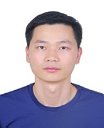
 Jiwei Zhang
· 1 previous affiliation
- Lecturer · Since 2022
- Postdoc · 2019–2021
Research Overview
Jiwei Zhang focuses on digital image forensics, multimedia security, and edge-assisted Internet of Things. His trajectory spans from traditional camera calibration and spatio-temporal data querying to advanced deep learning methods for detecting malicious behaviors. Recently, his work emphasizes leveraging diffusion models and uncertainty-guided networks to localize sophisticated artificial intelligence manipulations and image forgeries.
Research Trajectory
Zhang’s early research established foundational methods in digital forensics and surveillance data management. He introduced An Algorithm for Asymmetric Clipping Detection Based on Parameter Optimization (2017), which refined camera calibration techniques to identify asymmetric image tampering by optimizing internal camera parameters to detect non-coplanar geometric figures. Concurrently, he developed the Spatio-Temporal Association Query Algorithm for Massive Video Surveillance Data in Smart Campus (2018), utilizing spatio-temporal clustering and HBase architectures to improve the stability and efficiency of retrieving massive video datasets. Expanding his focus on image authenticity, his research group investigated Digital Image Forensics Based on CFA Interpolation Feature and Gaussian Mixture Model (2019), leveraging color filter array artifacts for forensic analysis.
Entering the 2020s, Zhang’s work began incorporating deep learning architectures and expanding into edge computing and Internet of Things (IoT) security. He participated in research applying generative adversarial networks to image reconstruction, as seen in MRGAN: a generative adversarial networks model for global mosaic removal (2020). In the IoT domain, he proposed frameworks for robust system performance, including Trustworthy Target Tracking With Collaborative Deep Reinforcement Learning in EdgeAI-Aided IoT (2022), which balanced tracking quality with resource efficiency across distributed devices. Addressing vulnerabilities in these distributed systems, he also designed AntiConcealer: Reliable Detection of Adversary Concealed Behaviors in EdgeAI-Assisted IoT (2022) to identify malicious actors attempting to evade IoT security protocols by continuously adapting their behaviors at the device level.
By 2024, returning to image forensics with advanced neural network architectures, Zhang directed significant efforts toward localizing sophisticated image tampering. He introduced UGEE-Net: Uncertainty-guided and edge-enhanced network for image splicing localization, which employed Bayesian learning to model uncertainty maps and frequency domain strategies to enhance tampering edges, directing the model's focus to challenging pixels. Collaborating on broader manipulation detection, he contributed to MFI-Net: Multi-Feature Fusion Identification Networks for Artificial Intelligence Manipulation, which introduced the IPM15K dataset—comprising 150,000 doctored images—to address the lack of AI-tampered image benchmarks. He also collaborated on EC-Net: General image tampering localization network based on edge distribution guidance and contrastive learning, utilizing a two-phase approach with contrastive learning to improve generalization across diverse and invisible tampering traces.
Most recently, Zhang’s research has heavily emphasized the application of diffusion models to the broader research direction of Universal Image Forgery Detection and Localization. To overcome the overconfidence of traditional decoders in identifying subtle tampering boundaries, he guided the creation of InpDiffusion: Image Inpainting Localization via Conditional Diffusion Models (2025), treating localization as a conditional mask generation task that progressively refines predictions. This approach was further generalized in ForgDiffuser: General Image Forgery Localization with Diffusion Models (2025), which leverages iterative denoising for highly accurate boundary detection. He also co-authored DcDsDiff: Dual-Conditional and Dual-Stream Diffusion Model for Generative Image Tampering Localization (2025), focusing specifically on AI-generated tampering. Alongside diffusion-based methods, Zhang continues to refine network architectures through works like UFG-Net: Uncertainty and frequency guided network for image forgery localization (2025), which integrates frequency domain insights with uncertainty modeling to prevent feature misalignment, and TEPR-Net: Image Inpainting Localization Network via Texture Enhancement and Progressive Refinement (2025), which targets texture discrepancies in inpainted regions.
Current Directions
The most recent papers in the evidence address the escalating challenge of detecting AI-generated image manipulations and sophisticated digital forgeries. Zhang's current work investigates the use of conditional diffusion models to localize tampered regions, framing forgery detection as an iterative mask-generation process rather than a traditional segmentation task. This includes developing dual-stream and dual-conditional architectures to identify subtle blending artifacts and inpainting boundaries. Additionally, his research continues to explore uncertainty-guided learning and frequency domain analysis to improve the generalization and reliability of forensic models against increasingly imperceptible tampering techniques.
Profile updated
| Paper | Venue | Year |
|---|---|---|
| OSTAR: Optimized Statistical Text-classifier with Adversarial ResistanceGitHubBUPT-SN/ | NeurIPS | 2025 |
Loading new papers…
Other researchers whose papers cluster into the same research directions — a proxy for overlapping technical interests and shared intellectual neighborhoods.
See something wrong? Report a mistake