

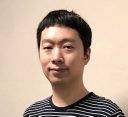
 Jitong Chen
· 5 previous affiliations
- ByteDance (China)Since 2018
- Tech Lead Manager · Since 2021
- Research Scientist · 2018–2021
- Baidu (China)2017–2018
- Research Scientist · 2017–2018
- The Ohio State University2011–2017
- Doctor of Philosophy - PhD, Computer Science · 2011–2017
- Research Intern · 2016
- MetaMind2015
- Data Science Intern · 2015
Research Overview
Jitong Chen focuses on generative audio modeling, with a specialized emphasis on text-to-speech (TTS) synthesis, singing voice synthesis (SVS), and large-scale music generation. His research addresses the technical challenges of high-fidelity audio reconstruction, efficient parallel wave generation, and the development of foundation models for speech and music. By leveraging architectures such as Inverse Autoregressive Flows (IAF), diffusion models, and autoregressive transformers, his work seeks to bridge the gap between discrete linguistic or symbolic representations and continuous raw audio waveforms.
Research Trajectory
The early phase of Chen’s research, beginning around 2018, was primarily concerned with the efficiency and data requirements of neural speech synthesis. During this period, the field was transitioning toward Unified Architectures for Direct Audio Waveform Generation, moving away from multi-stage pipelines that relied on intermediate representations like mel-spectrograms. Chen contributed to this shift by exploring few-shot learning for voice cloning and developing end-to-end architectures that could generate audio directly from text at high speeds. This work was critical in addressing the "fidelity gap" in neural audio, particularly regarding High Frequency Harmonic Reconstruction for Neural Audio, which often limited the clarity of synthesized speech.
By 2020, Chen’s focus expanded into the domain of music informatics and symbolic music generation. This transition involved the creation of large-scale datasets and the application of convolutional neural networks (CNNs) to complex musical tasks such as chorus detection and singing voice synthesis. His work in this period emphasized the need for diverse, high-quality data to train models capable of capturing the nuances of musical performance, moving beyond simple speech patterns to the more rhythmic and melodic requirements of singing.
In recent years (2023–2025), Chen has been a key contributor to the development of large-scale foundation models for both speech and music. This current phase of research addresses the "information density mismatch" between dense text tokens and sparse audio signals through Decoupled Semantic and Acoustic Speech Generation. His recent work on frameworks like Seed-TTS and Seed-Music explores the intersection of autoregressive language modeling and diffusion-based approaches. These systems are designed to improve Long Form Structural Coherence in Musical Audio Generation and provide fine-grained controllability over emotional expressiveness and musical style. Furthermore, his research has begun to address broader systemic issues in the field, such as The Cross-Cultural Generalization Gap in Music Models and optimizing efficiency through Perceptual Frequency Partitioning for Efficient Speech Processing.
Current Directions
Chen’s current research is centered on the scalability and versatility of audio foundation models. A primary objective is the development of unified frameworks that can handle diverse audio tasks—ranging from zero-shot voice cloning to professional-grade music editing—within a single architecture. This involves investigating how different intermediate representations, such as audio tokens and symbolic lead sheets, can be combined to enhance model stability and user control.
Another significant area of focus is the improvement of real-time generation capabilities. By replacing slow, hierarchical models with novel mechanisms like Dual-Path Diffusion (DPD), Chen’s work aims to achieve generation speeds significantly faster than real-time without sacrificing audio quality. This direction is particularly relevant for interactive applications where low latency is essential. Additionally, his recent participation in projects like StemGen and InstructME indicates an increasing interest in context-aware music generation, where models must "listen" and respond to existing musical stems to maintain harmonic and rhythmic consistency.
Representative Work
Neural Voice Cloning with a Few Samples As the first author of this 2018 study, Chen explored the feasibility of replicating a unique human voice using extremely limited data. The research compared two primary methodologies: speaker adaptation, which involves fine-tuning a pre-trained model on new data, and speaker encoding, which utilizes an encoder to extract a speaker embedding for instant inference. The work demonstrated that high-quality cloning is achievable with only a few seconds of audio, providing a foundational framework for low-resource, real-time voice synthesis.
ClariNet: Parallel Wave Generation in End-to-End Text-to-Speech In this work, Chen served as a primary contributor to the development of ClariNet, a fully convolutional, end-to-end TTS system. The core innovation of ClariNet is its use of Gaussian Inverse Autoregressive Flows (IAF) to enable parallel wave generation. By distilling a student network from an autoregressive teacher model using a closed-form KL divergence calculation, the system achieved generation speeds over 20 times faster than real-time. This paper was significant for introducing one of the first architectures capable of training a text-to-wave pipeline from scratch.
GiantMIDI-Piano: A large-scale MIDI dataset for classical piano music Chen played a central role in the creation of GiantMIDI-Piano, a massive symbolic music dataset containing over 38 million transcribed notes from more than 10,000 classical works. The project utilized automated audio retrieval and neural transcription techniques to scale symbolic music resources by several orders of magnitude compared to previous benchmarks. This dataset has served as a critical resource for training models in music generation and transcription.
Seed-TTS: A Family of High-Quality Versatile Speech Generation Models As a lead author on the Seed-TTS project, Chen contributed to the development of a family of large-scale autoregressive speech foundation models. These models are designed to generate speech that is virtually indistinguishable from human recordings. The research emphasizes "in-context learning" for speech, where the model can achieve high speaker similarity and naturalness in a zero-shot setting. The framework also introduced advanced controllability over speech attributes such as emotion and prosody.
Seed-Music: A Unified Framework for High Quality and Controlled Music Generation In this 2024 paper, Chen helped develop Seed-Music, a unified framework that integrates autoregressive language modeling with diffusion-based approaches. The system is designed to support a wide range of workflows, from one-click song generation to detailed post-production editing. By utilizing multiple intermediate representations—including audio tokens and symbolic lead sheets—the framework addresses the dual needs of high-fidelity output and professional-grade controllability in music AI.
ByteSing: A Chinese Singing Voice Synthesis System Using Duration Allocated Encoder-Decoder Acoustic Models and WaveRNN Vocoders Chen participated in the development of ByteSing, a specialized system for Chinese singing voice synthesis. The architecture employs a Tacotron-like encoder-decoder structure with an auxiliary phoneme duration prediction model. This auxiliary model is crucial for enhancing the system's ability to maintain tempo accuracy and stability, which are more demanding in singing than in standard speech. The use of WaveRNN vocoders further ensured the high-fidelity reconstruction of the singing voice.
Profile updated
Loading new papers…
Other researchers whose papers cluster into the same research directions — a proxy for overlapping technical interests and shared intellectual neighborhoods.
See something wrong? Report a mistake