

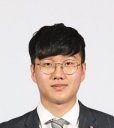
 Jisong Kim
· 3 previous affiliations
- Samsung Electronics (South Korea)Since 2025
- Staff Engineer · Since 2025
- Hanyang UniversityCurrent
- Current
- PhD student · 2020–2025
- Undergrad student · 2014–2020
- Autonomous Driving Intern · 2025
Research Overview
Jisong Kim works on 3D object detection and multi-sensor fusion, with a specific focus on enhancing radar-based perception for autonomous driving systems. His research addresses the technical limitations of radar data—including sparsity, noise, and low spatial resolution—through the development of architectures for temporal integration, generative point cloud modeling, and cross-modal knowledge distillation. Based at Hanyang University, Kim’s work emphasizes the creation of robust representation learning frameworks that integrate camera, radar, and LiDAR data to improve the accuracy of environmental perception in dynamic driving scenarios.
Research Trajectory
Kim’s research trajectory is characterized by a transition from multi-modal temporal fusion to the fundamental enhancement of radar data quality. In 2024, his work focused on the integration of temporal dynamics into camera-radar fusion frameworks. This research was motivated by the observation that standard fusion methods often fail to account for the motion of dynamic objects when stacking historical frames, leading to misaligned features and reduced detection accuracy. By developing methods to explicitly estimate and compensate for motion across time, Kim shifted the focus from static spatial fusion to a motion-aware temporal paradigm.
In 2025, Kim’s research expanded to address the structural deficiencies of radar point clouds through two distinct strategies: generative modeling and knowledge distillation. The generative modeling aspect of his work explores how sparse radar data can be transformed into denser, higher-quality representations using pillar-based architectures. Simultaneously, he has contributed to research that utilizes LiDAR as a "teacher" modality to supervise the training of radar-based detectors. This approach aims to transfer the high-resolution spatial characteristics of LiDAR to the radar domain, allowing for improved performance during inference when only radar sensors are available.
Current Directions
Kim’s current work continues to refine the synthesis of multi-modal data, particularly focusing on the challenges of domain transformation and feature alignment. A primary area of interest is the development of "Pillar-based" networks that can encode point clouds into structured grid formats, facilitating more efficient processing and generation of synthetic data. Additionally, he is exploring how dilation operations and proposal-based distillation can be used to bridge the gap between the sparse features of radar and the dense features of LiDAR, ensuring that radar-based systems can achieve performance levels closer to those of more expensive sensor suites.
Representative Work
In CRT-Fusion: Camera, Radar, Temporal Fusion Using Motion Information for 3D Object Detection, Kim introduced a framework designed to optimize 3D object detection by fusing camera and radar data with temporal information. The core contribution of this work is the explicit estimation of motion for dynamic objects, which allows the system to compensate for displacement across successive frames. Unlike traditional methods that stack historical data—often resulting in blurred or misaligned features—this motion-compensated fusion achieves a more precise alignment of temporal features. Evaluated on the nuScenes dataset, the method achieved a 1.7% increase in the NuScenes Detection Score (NDS) over existing fusion models, demonstrating the efficacy of incorporating motion information into the fusion pipeline.
Kim further addressed the inherent sparsity of radar data in PillarGen: Enhancing Radar Point Cloud Density and Quality via Pillar-based Point Generation Network. This work proposes a generative model, PillarGen, which transforms input point clouds into synthetic versions with increased density and improved quality. The architecture utilizes a three-stage process: pillar encoding, Occupied Pillar Prediction (OPP), and Pillar to Point Generation (PPG). By encoding point clouds into a grid-based pillar structure, the model predicts which areas of the spatial environment are likely to contain points and then generates synthetic points within those "occupied" pillars. This method provides a systematic way to densify radar data, making it more suitable for downstream detection tasks that typically struggle with the sparse returns of standard radar sensors.
In addition to his primary work on generative models, Kim participated in the development of RadarDistill: Boosting Radar-based Object Detection Performance via Knowledge Distillation from LiDAR Features. As a contributing author, he worked on a team that developed a knowledge distillation (KD) framework to bridge the performance gap between radar and LiDAR. The method, RadarDistill, employs three primary components: Cross-Modality Alignment (CMA), Activation-based Feature Distillation (AFD), and Proposal-based Feature Distillation (PFD). CMA uses multiple layers of dilation operations to increase the density of radar features, aligning them more closely with the dense spatial representations of LiDAR. AFD and PFD then facilitate the transfer of discriminative features from a LiDAR-based teacher model to a radar-based student model. This research highlights a collaborative effort to leverage high-fidelity sensors to improve the feature representation of more cost-effective but noisier sensor modalities.
Profile updated
Loading new papers…
Other researchers whose papers cluster into the same research directions — a proxy for overlapping technical interests and shared intellectual neighborhoods.
See something wrong? Report a mistake