

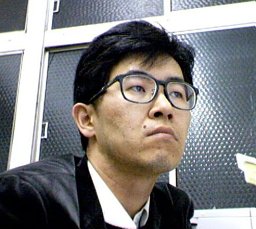
 Jiro Katto
· 6 previous affiliations
- Waseda UniversitySince 1999
- Full Professor · Since 2004
- Associate Professor · 1999–2004
- New Energy and Industrial Technology Development Organization2004–2008
- Director · 2004–2008
- NEC (Japan)1992–1999
- Researcher · 1992–1999
- NEC1992–1999
- Researcher · 1992–1999
- Princeton University1996–1997
- Visiting Scholar · 1996–1997
- The University of Tokyo1983–1992
- Ph.D, Electronical Engineering · 1987–1992
- B.E., Electrical Engineering · 1983–1987
Research Overview
Jiro Katto focuses on the development of end-to-end learned systems for data compression and visual analysis, with a particular emphasis on image, video, and 3D point cloud data. His work investigates the integration of deep learning architectures—including convolutional autoencoders, generative adversarial networks, and transformers—to surpass the limitations of traditional hand-crafted codecs. A significant portion of his research explores the "compressed domain" paradigm, where machine vision tasks are performed directly on encoded representations to optimize computational efficiency and task performance.
Research Trajectory
The trajectory of Katto’s research reflects a systematic transition from evaluating foundational deep learning architectures for image coding to developing specialized models for complex 3D sensor data and multi-user streaming environments.
Foundations of Learned Compression (2018–2019)
In the early stages of this period, Katto’s work was characterized by a comparative analysis of emerging neural architectures against established standards like JPEG and HEVC. This phase focused on identifying which deep learning frameworks—specifically Convolutional AutoEncoders (CAEs), Generative Adversarial Networks (GANs), and Super-Resolution (SR) models—offered the best trade-offs between coding efficiency and subjective reconstruction quality. This foundational work established that while CAEs provided superior feature extraction for standard metrics, GANs were more effective for high-ratio compression where perceptual fidelity is prioritized.
During this time, Katto also extended these concepts to the temporal dimension, addressing Autoregressive Weight Modeling for Neural Video Compression. By introducing spatial-temporal energy compaction into the loss functions of video codecs, his research sought to exploit the redundancies inherent in sequential frames more effectively than traditional motion-vector approaches. This period also saw the development of residual learning techniques and sub-pixel convolution for up-sampling, which were deployed in competitive benchmarks such as the Challenge on Learned Image Compression (CLIC).
Efficiency, Streaming, and Compressed Domain Vision (2020–2022)
As the field of Overcoming Computational Overhead in Neural Video Codecs matured, Katto’s focus shifted toward the practical constraints of deployment and the utility of compressed data for non-human observers. He addressed the challenges of multi-user video delivery, developing frameworks to evaluate adaptive bitrate algorithms in real-time network emulations. This work intersected with broader concerns regarding Sparsity Preserving Error Correction for Distributed Systems, particularly in maintaining Quality of Experience (QoE) across diverse network conditions.
A major thematic shift occurred in 2021 with the exploration of "Machine Vision in the Compressed Domain." Katto argued that because most visual data is consumed by machines rather than humans, the traditional process of fully decoding a bitstream into pixels before performing a task (such as semantic segmentation) is computationally wasteful. His research demonstrated that by performing inference directly on the latent representations generated by a learned encoder, systems could achieve faster processing speeds and lower bitrates without sacrificing accuracy. This period also involved refining the mathematical underpinnings of these models, viewing Neural Networks as Mutual Information Estimators to better optimize the rate-distortion-perception trade-off.
3D Perception and Hybrid Architectures (2023–2024)
Katto’s recent work has expanded into the domain of autonomous perception, specifically focusing on the compression of LiDAR point clouds. Recognizing that standard Cartesian representations create a geometric mismatch with the way sensors perceive the environment, he has championed Sensor Centric Polar Representations for 3D Perception. By utilizing spherical coordinates, his models leverage the azimuthal angle invariance and circular patterns characteristic of spinning LiDAR sensors, leading to more efficient geometry and attribute compression.
Simultaneously, Katto has continued to refine 2D image compression by moving beyond purely convolutional models. His recent research explores hybrid architectures that combine the local modeling strengths of Convolutional Neural Networks (CNNs) with the non-local, long-range dependency modeling of Transformers. This approach seeks to maximize coding gain while maintaining a controllable level of computational complexity suitable for practical deployment.
Representative Work
Performance Comparison of Convolutional AutoEncoders, Generative Adversarial Networks and Super-Resolution for Image Compression As senior author, Katto presents a comprehensive evaluation of three primary deep learning approaches for image coding. The study concludes that CAEs excel at extracting compact features for coding efficiency, while GANs provide superior subjective quality at high compression ratios. This work served as an early benchmark for the transition from traditional to learned image compression.
Learning Image and Video Compression Through Spatial-Temporal Energy Compaction This paper generalizes image compression techniques to the video domain by implementing an interpolation loop and a spatial-temporal energy compaction penalty in the loss function. The research demonstrates how learned models can be structured to minimize redundancy across both spatial and temporal dimensions more flexibly than block-based traditional codecs.
Learning in Compressed Domain for Faster Machine Vision Tasks In this work, Katto proposes a framework that eliminates the need for full image decoding by sending compressed latent representations directly to task-specific networks. By sorting latent channels by entropy and transmitting only selective data, the method reduces both computational complexity and bitrate, marking a significant step toward efficient machine-to-machine communication.
Learned Lossless Image Compression With Combined Autoregressive Models And Attention Modules Katto explores the application of lossy compression components, such as Gaussian Mixture Models (GMM) and attention mechanisms, to the problem of lossless compression. The resulting architecture achieves competitive performance against established lossless standards like WebP and JPEG2000 by more accurately modeling the probability distribution of image pixels.
SCP: Spherical-Coordinate-based Learned Point Cloud Compression Addressing the specific needs of autonomous vehicles, this paper introduces a model-agnostic method for LiDAR point cloud compression. By operating in spherical coordinates and utilizing a multi-level Octree, the approach accounts for the unique geometry of spinning sensors and mitigates reconstruction errors in distant areas, which are often overlooked in Cartesian-based models.
Learned Image Compression with Mixed Transformer-CNN Architectures This research proposes the Transformer-CNN Mixture (TCM) block to unify the advantages of both architectures. Katto demonstrates that integrating the local modeling of CNNs with the global context captured by Transformers allows for superior rate-distortion performance, providing a template for the next generation of hybrid learned codecs.
Profile updated
Loading new papers…
Other researchers whose papers cluster into the same research directions — a proxy for overlapping technical interests and shared intellectual neighborhoods.
See something wrong? Report a mistake