

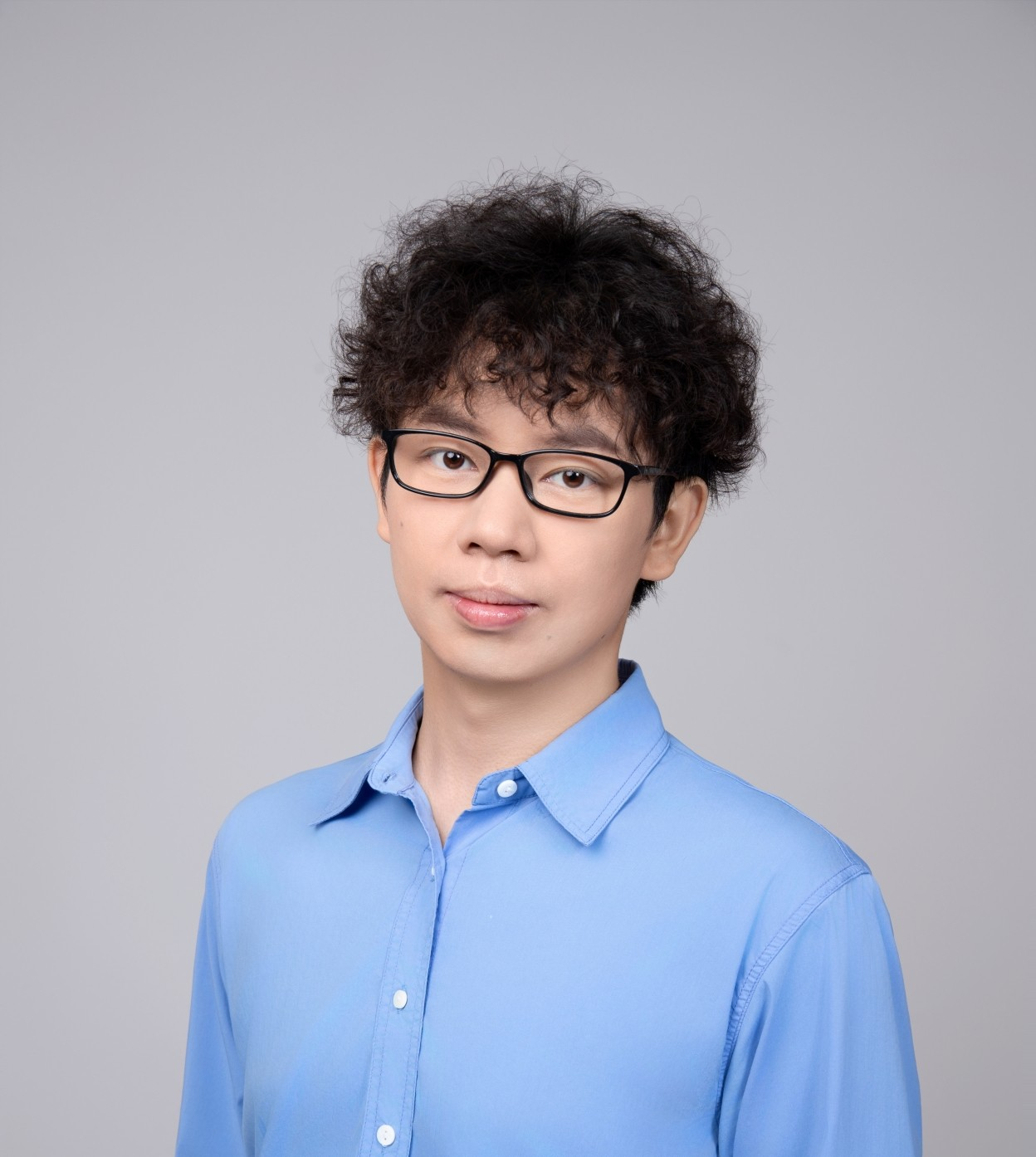
 Jiquan Wang
· 2 previous affiliations
- Zhejiang UniversitySince 2019
- Researcher · Since 2025
- PhD student · 2019–2025
- Harbin Institute of Technology2015–2019
- Undergrad student · 2015–2019
Research Overview
Jiquan Wang focuses on electroencephalography (EEG) decoding, brain-computer interfaces, and applied deep learning for physiological signals. His early work explored multimodal natural language processing before shifting toward automated sleep staging and medical diagnostics. Currently, he develops neural foundation models and continual learning frameworks to improve the generalization and adaptability of brain-computer interfaces.
Research Trajectory
Wang's early research focused on multimodal natural language processing, particularly the integration of textual and visual information from social media. In 2020, he participated in developing RIVA: A Pre-trained Tweet Multimodal Model Based on Text-image Relation for Multimodal NER, which sought to align text and image representations for named entity recognition. He expanded on this by introducing RpBERT: A Text-image Relation Propagation-based BERT Model for Multimodal NER (2021). This work contributed to the research direction of Relevance Gating for Selective Multimodal Fusion by implementing a relation propagation mechanism that intelligently suppressed irrelevant visual noise while amplifying helpful visual cues in noisy social media datasets. He further applied multimodal fusion techniques to social media analysis with Multimodal Sarcasm Target Identification in Tweets (2022).
Beginning in 2023, the trajectory of his work shifted significantly toward the analysis of physiological signals, with a strong emphasis on automated sleep staging and medical diagnostics. He contributed to an end-to-end deep learning framework in Narcolepsy Diagnosis With Sleep Stage Features Using PSG Recordings (2023). By treating sleep staging as an auxiliary task, this multi-task learning approach fused sleep stage features with diagnostic data from polysomnography (PSG) recordings. This research advanced methods in the area of Temporal Prediction Aggregation for Long-Duration Signals and the broader field of Local Global Temporal Modeling with Convolutional Transformers.
A recurring challenge in physiological signal processing is the variability between subjects and recording environments. To address this, Wang introduced domain generalization techniques to sleep assessment in Generalizable Sleep Staging via Multi-Level Domain Alignment (2024). This framework aligned both local salient features and sequential features to improve model performance on unseen datasets. In parallel, he explored methods to reduce the hardware burden of sleep monitoring. With collaborators, he developed a framework detailed in Simplifying Multimodal With Single EOG Modality for Automatic Sleep Staging (2024), which utilized generative adversarial networks to hallucinate missing EEG information from a single electrooculography (EOG) channel, enabling high-accuracy staging more suitable for home-based deployment.
By 2025, Wang's focus deepened into the development of foundation models and continual learning systems specifically designed for electroencephalography (EEG) and brain-computer interfaces (BCIs). Recognizing the fragmented nature of EEG datasets, he developed CBraMod: A Criss-Cross Brain Foundation Model for EEG Decoding (2025). This architecture addressed the structural nuances of brain waves, contributing to the research direction of Masked Signal Reconstruction for Neural Foundation Models. He continued to explore foundation model architectures for neural signals with EEGMamba: An EEG foundation model with Mamba (2025).
To enable BCI models to adapt to new users over time without catastrophic forgetting, Wang and his colleagues proposed several unsupervised learning frameworks. He participated in the development of SPICED: A Synaptic Homeostasis-Inspired Framework for Unsupervised Continual EEG Decoding (2025), which drew on biological principles to maintain performance across continuous data streams. He also co-developed BrainUICL: An Unsupervised Individual Continual Learning Framework for EEG Applications (2025), a system designed to balance plasticity and stability, allowing models to continuously adapt to new individuals without manual labels. Returning to sleep staging with these adaptive principles, he contributed to Personalized Sleep Staging Leveraging Source-free Unsupervised Domain Adaptation (2025), a framework that tailored models to individual patients using a two-step adaptation process without requiring access to the original training data.
Expanding the application of physiological decoding, Wang explored the intersection of brain signals and generative media. He contributed to Wearable Music2Emotion : Assessing Emotions Induced by AI-Generated Music through Portable EEG-fNIRS Fusion (2025), which introduced a portable system to evaluate emotional responses to AI-generated music. This work intersected with the research area of The Perceptual Evaluation Gap in Generative Audio. Most recently, his work has extended into generative modeling for the physiological signals themselves, as seen in EEGDiffuser: Label-guided EEG signals synthesis via diffusion model for BCI applications (2026).
Current Directions
The most recent papers in the evidence address the creation of robust, adaptable brain-computer interfaces through the lens of foundation models and generative AI. Recent work investigates the application of state-space models (such as Mamba) and diffusion models to electroencephalography, aiming to synthesize label-guided EEG signals and build universal representations of brain activity. A parallel focus remains on unsupervised continual learning and source-free domain adaptation, solving the practical challenge of deploying physiological decoding systems that can personalize to new subjects in real-world, label-scarce environments.
Profile updated
Loading new papers…
Other researchers whose papers cluster into the same research directions — a proxy for overlapping technical interests and shared intellectual neighborhoods.
See something wrong? Report a mistake