

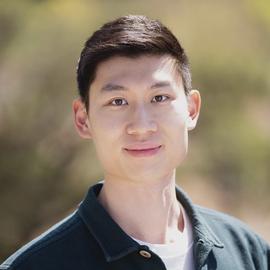
 Jinning Li
· 5 previous affiliations
- Google (United States)Since 2023
- Researcher · Since 2024
- Software Engineering Intern · 2023
- Nuro2024
- Research Scientist · 2024
- University of California, Berkeley2019–2024
- Graduate Student Researcher / Instructor · 2019–2024
- PhD student · 2019–2024
- Research Intern · 2023
1 other author named Jinning Li: Jinning Li (Google (United States) · University of Illinois Urbana-Champaign · 34 papers)
Research Overview
Jinning Li focuses on reinforcement learning, multi-agent systems, and out-of-distribution generalization for autonomous systems. Early work addressed distributional shift in offline reinforcement learning by developing pessimistic value function methods. More recently, the focus has shifted toward improving the robustness of motion forecasting and trajectory prediction models in autonomous driving scenarios.
Research Trajectory
The research trajectory begins with a focus on the reliability of reinforcement learning algorithms, particularly in offline settings where agents must learn policies entirely from static datasets. In 2021, Li led research addressing the challenge of distributional shift caused by out-of-distribution (OOD) states. This work resulted in Dealing with the Unknown: Pessimistic Offline Reinforcement Learning, which proposed an algorithm designed to guide agents back to familiar state spaces. The method achieved this by deliberately penalizing high value estimates for states that were absent from the training data, thereby mitigating the overestimation errors common in offline reinforcement learning.
Subsequent work expanded into multi-agent systems and the broader challenge of policy generalization. In 2024, Li participated as a co-author in Quantifying Interaction Level Between Agents Helps Cost-efficient Generalization in Multi-agent Reinforcement Learning. This collaborative research introduced a metric to quantify the intensity of interactions among agents within specific environments. The study demonstrated that while exposing an ego agent to a diverse set of co-players during training generally enhances its ability to generalize, the extent of this improvement is highly dependent on the specific scenario and the measured level of influence between agents.
Most recently, Li has applied principles of OOD generalization to the applied domain of autonomous driving. As the lead author of Adaptive Prediction Ensemble: Improving Out-of-Distribution Generalization of Motion Forecasting in 2025, Li developed a framework that integrates deep learning models with rule-based prediction experts. By employing a learned routing function trained concurrently with the deep learning model, the system dynamically selects the most reliable prediction based on the input scenario. This approach demonstrated improved zero-shot generalization across large-scale autonomous driving datasets, addressing the common failure mode where deep learning trajectory models perform worse than simple heuristics in unfamiliar environments.
Current Directions
The most recent papers in the evidence indicate a current focus on the robustness and safety of autonomous systems, specifically in the context of motion forecasting and trajectory prediction. This involves developing hybrid architectures that combine the representational capacity of deep learning with the reliability of rule-based models to handle out-of-distribution scenarios. A central theme in this direction is ensuring that prediction models can maintain safe and accurate performance when encountering novel environments, unfamiliar datasets, or unexpected agent behaviors that were not present in their initial training distributions.
Profile updated
Loading new papers…
Other researchers whose papers cluster into the same research directions — a proxy for overlapping technical interests and shared intellectual neighborhoods.
See something wrong? Report a mistake