

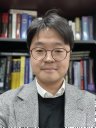
 Jinkyoo Park
· 4 previous affiliations
- Associate Professor · Since 2016
- Stanford University2011–2016
- PhD student · 2011–2016
- MS student · 2011–2015
- The University of Texas at Austin2009–2011
- MS student · 2009–2011
- Seoul National University2002–2009
- Undergrad student · 2002–2009
Research Overview
Jinkyoo Park focuses on neural combinatorial optimization, multi-agent reinforcement learning, and the alignment of generative models. His early work developed data-driven control schemes and multi-agent coordination strategies, which evolved into scalable neural solvers for complex routing and scheduling problems. Most recently, his research addresses foundation models for combinatorial optimization and variational inference techniques for aligning diffusion models.
Research Trajectory
Park’s early research focused on data-driven optimization and control for physical systems. He introduced a Bayesian ascent algorithm for real-time cooperative wind farm control, optimizing power production through trial actions based on monitoring data in Bayesian Ascent: A Data-Driven Optimization Scheme for Real-Time Control With Application to Wind Farm Power Maximization. Moving into multi-agent systems, he explored the complex dynamics of cooperative and competitive environments. His work on Cooperative and Competitive Biases for Multi-Agent Reinforcement Learning proposed a friend-or-foe framework that leverages biased action information to stabilize and boost training in multi-agent reinforcement learning (MARL).
In 2022, Park expanded his focus to decentralized coordination and scalable inference. He developed ScheduleNet: Learn to solve multi-agent scheduling problems with reinforcement learning, which framed multi-agent scheduling as a sequential decision-making problem solved via graph attention mechanisms, contributing to the broader area of Spatio-Temporal Interaction Graphs for Multi-Agent Systems. Concurrently, he participated in research on Gaussian Processes, co-authoring Efficient Approximate Inference for Stationary Kernel on Frequency Domain. This work introduced a sampling-based variational sparse spectrum method to reduce computational costs, advancing the research direction of Scaling Kernel Methods with Random Fourier Features.
During this period, Park also began foundational work in neural combinatorial optimization (NCO). He led the development of Sym-NCO: Leveraging Symmetricity for Neural Combinatorial Optimization, a regularizer-based training scheme that exploits rotational and reflectional invariances to improve the generalization of deep reinforcement learning solvers. Recognizing the need for standardized tools in this rapidly growing field, his group subsequently introduced RL4CO: a Unified Reinforcement Learning for Combinatorial Optimization Library in 2023, providing a unified codebase to facilitate reproducibility and fair comparison across NCO algorithms.
By 2025, Park’s research heavily emphasized scaling neural solvers to handle complex, real-world constraints, particularly in vehicle routing problems (VRPs). He addressed the profiled VRP—where vehicles have specific client-based constraints—with CAMP: Collaborative Attention Model with Profiles for Vehicle Routing Problems, utilizing MARL and specialized collaborative attention. To unify the treatment of various VRP variants, he proposed RouteFinder: Towards Foundation Models for Vehicle Routing Problems. This transformer-based framework treats different routing constraints as attributes within a generalized environment, utilizing mixed batch training to enhance multi-task performance.
His work in the area of Scaling Neural Combinatorial Optimization to Real World Instances culminated in PARCO: Parallel AutoRegressive Models for Multi-Agent Combinatorial Optimization. By replacing sequential construction with parallel decision-making and learned conflict resolution, PARCO achieved significant speedups and advanced the research direction of Zero Shot Scale Generalization in Neural Combinatorial Optimization. Alongside these optimization breakthroughs, Park continued to refine multi-agent learning, introducing the STRIL framework in Learning Strategy Representation for Imitation Learning in Multi-Agent Games to automatically filter sub-optimal demonstrations using unsupervised strategy representations.
In 2026, Park’s trajectory branched into integrating large language models for heuristic design, refining offline reinforcement learning, and aligning generative models. He pushed NCO further into practical logistics with RRNCO: Towards Real-World Routing with Neural Combinatorial Optimization, an architecture designed to process actual city road data and asymmetric travel times rather than simplified geometric graphs. He also explored evolutionary algorithms driven by LLMs in TrajEvo: Trajectory Prediction Heuristics Design via LLM-driven Evolution, generating fast and explainable heuristics for trajectory prediction. In discrete optimization, he developed a training-free sampling approach in Solving Integer Linear Programming with Parallel Tempering, demonstrating robustness against distribution shifts. Simultaneously, Park addressed data efficiency in reinforcement learning with Adaptive Replay Buffer for Offline-to-Online Reinforcement Learning, which dynamically prioritizes offline data sampling based on policy alignment.
A major new theme in his recent work is the alignment of diffusion models to downstream rewards without sacrificing diversity. He introduced a differentiable approximation of the soft Q-function in Diffusion Fine-Tuning via Reparameterized Policy Gradient of the Soft Q-Function, contributing to the research direction of Adaptive Weighting for Intrinsic and Extrinsic Rewards. He further expanded on generative alignment with Aligning Few-Step Generative Model via Amortizing Sample-Based Variational Inference, leveraging Stein Variational Gradient Descent. This line of inquiry continued with Diffusion Alignment as Variational Expectation-Maximization, framing alignment as a variational EM problem to maximize specific rewards while preserving naturalness, advancing the broader area of Overcoming Local Mode Entrapment in Multimodal Sampling.
Current Directions
The most recent papers in the evidence indicate a dual focus on the alignment of generative models and the deployment of neural combinatorial optimization in real-world environments. In the generative space, recent work investigates how to fine-tune diffusion models for specific downstream rewards—such as aesthetic quality or biological activity—without suffering from reward over-optimization or losing the diversity of the original distribution. This involves framing alignment through variational expectation-maximization and amortized sample-based variational inference.
Concurrently, in combinatorial optimization, current research addresses the complexities of actual logistics networks, moving beyond geometric assumptions to incorporate asymmetric travel times and real city road data. This is complemented by the exploration of large language models to automatically design and evolve explainable heuristics for trajectory prediction and routing, bridging the gap between deep learning-based solvers and traditional operational research methods.
Profile updated
Loading new papers…
Other researchers whose papers cluster into the same research directions — a proxy for overlapping technical interests and shared intellectual neighborhoods.
See something wrong? Report a mistake