

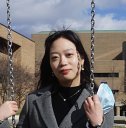
 Jing Zhu
· 3 previous affiliations
- Microsoft (United States)Current
- Current
- University of Michigan2021–2026
- PhD student · 2021–2026
- Intern · 2021
4 other authors named Jing Zhu: Jing Zhu (TikTok · 9 papers), Jing Zhu (3 papers), Jing Zhu (Network Simulation Solutions LLC · 1 paper), Jing Zhu (1 paper)
Research Overview
Jing Zhu focuses on graph neural networks, multimodal learning, and link prediction. His early work explored structural node embeddings and network alignment before expanding into the integration of visual and tactile data for robotic perception. Most recently, his research addresses the intersection of large language models and text-attributed graphs, as well as generative recommendation systems that leverage multimodal semantics.
Research Trajectory
Jing Zhu's early research addressed foundational problems in graph representation learning. He introduced PhUSION, a unified framework for computing both structural and positional node embeddings, in Node Proximity Is All You Need: Unified Structural and Positional Node and Graph Embedding. He also contributed to natural language processing through the unsupervised discovery of negative examples in commonsense knowledge bases in NegatER: Unsupervised Discovery of Negatives in Commonsense Knowledge Bases. Continuing his focus on graph structures, he developed a general multilevel framework for network alignment in CAPER: Coarsen, Align, Project, Refine - A General Multilevel Framework for Network Alignment.
In parallel, Zhu participated in research bridging visual and tactile modalities. He collaborated on Touch and Go: Learning from Human-Collected Vision and Touch, which introduced a dataset of paired egocentric video and tactile sensor data collected in natural environments. This work contributed to the broader research area of Generalizing Geospatial AI Across Diverse Global Biomes and the direction of Generalizing Robotics to Unstructured In-the-Wild Environments.
A significant portion of Zhu's trajectory examines the architectural assumptions and training methodologies of Graph Neural Networks (GNNs), particularly for link prediction. He identified critical data leakage issues caused by including target edges during message passing. This investigation led to SpotTarget: Rethinking the effect of target edges for link prediction in Graph Neural Networks and the related study Pitfalls in Link Prediction with Graph Neural Networks: Understanding the Impact of Target-link Inclusion & Better Practices, advancing the research direction of Target Link Exclusion in Graph Neural Networks. He further explored how node features interact with graph topology, participating in an analysis of feature heterophily in On the Impact of Feature Heterophily on Link Prediction with Graph Neural Networks. To better align pretrained model features with graph structures, he developed a detect-and-correct finetuning framework in TouchUp-G: Improving Feature Representation through Graph-Centric Finetuning.
More recently, Zhu's research has expanded to integrate large language models (LLMs) and multimodal data with graph learning. He investigated the use of LLMs for predicting missing links in text-attributed graphs in LinkGPT: Leveraging Large Language Models for Enhanced Link Prediction in Text-Attributed Graphs. To address the limitations of specialized multimodal GNNs, he helped establish a large-scale benchmark integrating high-resolution visual data in Mosaic of Modalities: A Comprehensive Benchmark for Multimodal Graph Learning. His work on multimodal integration extends to generative recommendation systems, where he proposed an enhanced late-fusion framework to mitigate modality sensitivity in Beyond Unimodal Boundaries: Generative Recommendation with Multimodal Semantics. Additionally, he contributed to improving reinforcement learning from human feedback (RLHF) on imbalanced domain distributions in DISCO Balances the Scales: Adaptive Domain- and Difficulty-Aware Reinforcement Learning on Imbalanced Data.
Current Directions
Zhu's most recent research investigates the intersection of large language models, multimodal semantics, and graph structures. A primary focus is the broader area of Bridging Text Semantics and Graph Topology, where he explores how LLMs can be adapted to reason over text-attributed networks and predict missing relational data.
Additionally, his current work addresses the challenges of multimodal fusion in both graph learning and generative recommendation systems. This includes developing benchmarks to evaluate how well graph neural networks incorporate high-resolution visual data, as well as designing late-fusion architectures that mitigate modality competition. He is also investigating reinforcement learning from human feedback (RLHF), specifically focusing on adaptive optimization techniques that improve generalization and fairness when training language models on highly imbalanced, multi-domain datasets.
Profile updated
Loading new papers…
Other researchers whose papers cluster into the same research directions — a proxy for overlapping technical interests and shared intellectual neighborhoods.
See something wrong? Report a mistake