

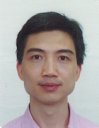
 Jing-Hao Xue
· 1 previous affiliation
- University College LondonCurrent
- Full Professor · Current
Research Overview
Jing-Hao Xue focuses on statistical pattern recognition, generative modeling, and distance metric learning. His early work established robust classification methods for high-dimensional and imbalanced datasets, laying a theoretical foundation for subsequent advances in deep learning generalization. Recently, his research has expanded into high-fidelity visual synthesis, exploring seamless panoramic diffusion, latent space manipulation, and anomaly detection across medical and time-series domains.
Research Trajectory
Jing-Hao Xue’s early research established foundational methods in statistical pattern recognition, particularly addressing the challenges of complex data distributions. In 2009, he explored component influence in high-dimensional spaces with Tilting Methods for Assessing the Influence of Components in a Classifier. That same year, he addressed the volatility of Euclidean distance in heavy-tailed distributions by developing Median-Based Classifiers for High-Dimensional Data, which utilized L-1 distances to improve robustness. Continuing this focus on fundamental classification challenges, he later investigated the mechanics of imbalanced learning, providing a theoretical explanation for Why Does Rebalancing Class-Unbalanced Data Improve AUC for Linear Discriminant Analysis? in 2015.
Building on these statistical foundations, his trajectory expanded into the theoretical properties of deep learning generalization. He analyzed how optimization choices impact model performance in Generalization Bound of Gradient Descent for Non-Convex Metric Learning. This interest in robust metric learning continued with Toward Certified Robustness of Distance Metric Learning, where he minimized perturbation loss to achieve provable security and optimize geometric distances to decision boundaries. Concurrently, he addressed complex data geometries in binary classification by introducing PUAL: A Classifier on Trifurcate Positive-Unlabeled Data, a framework designed to prevent distant positive samples from distorting decision boundaries in positive-unlabeled datasets.
Parallel to his theoretical work, he made significant contributions to generative modeling and latent space manipulation. He participated in the development of TediGAN: Text-Guided Diverse Face Image Generation and Manipulation, mapping images and text into shared spaces to enable precise editing, a key advancement in the broader area of Disentangled Control in Generative Latent Spaces. To synthesize the rapidly growing field of latent mapping, he co-authored GAN Inversion: A Survey, detailing algorithms for high-fidelity image restoration and touching upon the research direction of Amortized Inversion for Real Time Generative Image Editing. He further extended latent space manipulation to video dynamics with Modeling GAN Latent Dynamics using Neural ODEs, formulating latent codes as continuous state transitions to facilitate frame interpolation.
His recent work demonstrates a broad application of advanced neural architectures across diverse visual tasks. In the domain of brain-computer interfaces, he contributed to DREAM: Visual Decoding from REversing HumAn Visual SysteM, an fMRI-to-image framework that reconstructs visual stimuli by deciphering parallel semantic and structural pathways. Addressing computational efficiency, he explored the width-precision trade-off in binary neural networks by introducing BDC-Occ: Binarized Deep Convolution Unit For Binarized Occupancy Network, which successfully applied binarized networks to 3D occupancy prediction. He also advanced discriminative part localization with Rise by Lifting Others: Interacting Features to Uplift Few-Shot Fine-Grained Classification, leveraging interacting feature extractors to identify subtle discriminative regions.
A major recent focus has been the adaptation of diffusion models for specialized geometries and anomaly detection. He significantly advanced the research direction of Seamless 360 Degree Panorama Synthesis with Diffusion Models through Customizing 360-Degree Panoramas through Text-to-Image Diffusion Models, which introduced a denoising process to generate equirectangular images from text. He expanded on this with 360PanT: Training-Free Text-Driven 360-Degree Panorama-to-Panorama Translation, utilizing a tiling-based strategy to maintain cyclical structures, contributing to the area of Circular Padding for Seamless Spherical Representation. In the realm of anomaly detection, he participated in developing PathoSCOPE: Few-Shot Pathology Detection via Self-Supervised Contrastive Learning and Pathology-Informed Synthetic Embeddings, a framework for unsupervised medical image analysis. Most recently, he contributed to extending diffusion-based anomaly detection to temporal data with ICDiffAD: Implicit Conditioning Diffusion Model for Time Series Anomaly Detection, addressing challenges in robust time series forecasting.
Current Directions
The most recent papers in the evidence indicate a strong focus on adapting generative diffusion models for specialized, non-standard data structures and anomaly detection. Recent work investigates training-free methods for 360-degree panorama translation, ensuring seamless spherical continuity without the need for extensive model fine-tuning. Concurrently, his research addresses few-shot and unsupervised anomaly detection across diverse domains, utilizing self-supervised contrastive learning for medical pathology and implicit conditioning in diffusion models for time-series analysis. Additionally, he continues to refine few-shot fine-grained classification by exploring novel feature interaction mechanisms that improve the identification of subtle discriminative regions.
Profile updated
Loading new papers…
Other researchers whose papers cluster into the same research directions — a proxy for overlapping technical interests and shared intellectual neighborhoods.
See something wrong? Report a mistake