

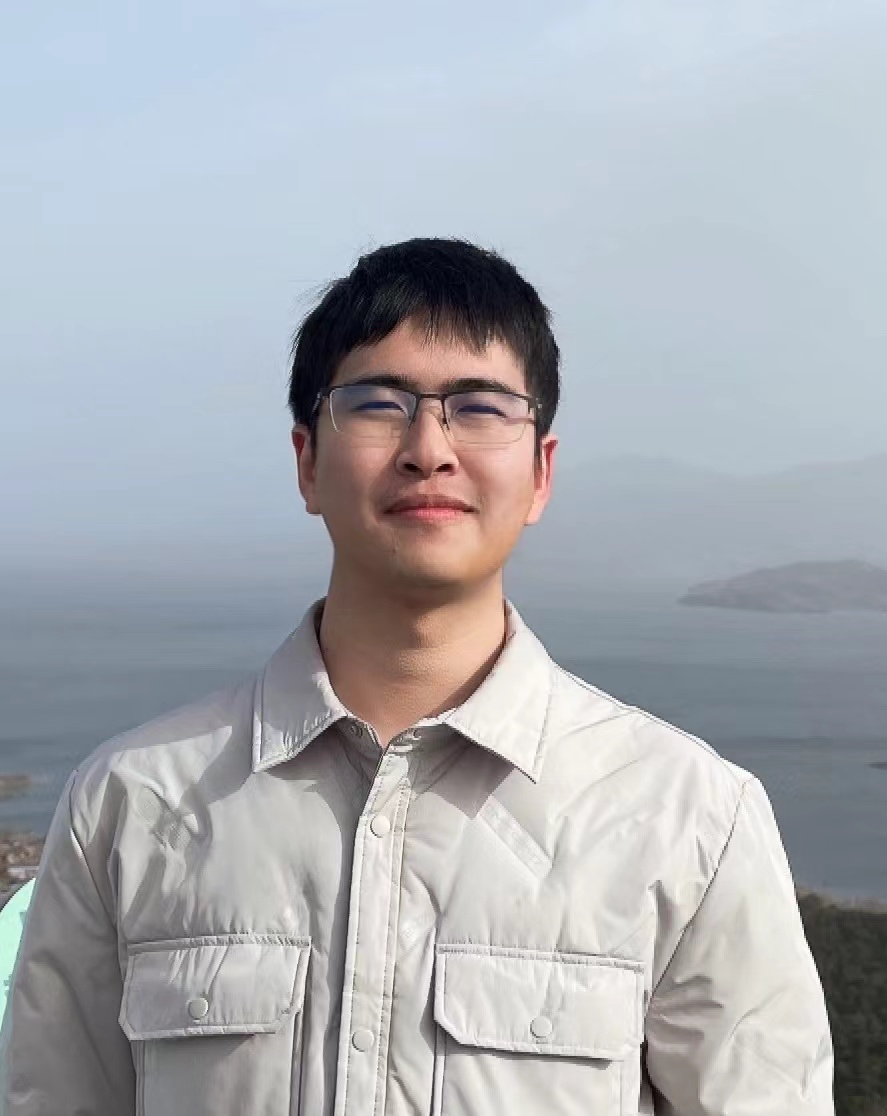
 Jin Xu
· 2 previous affiliations
- Alibaba Group (China)Since 2023
- Researcher · Since 2023
- Tsinghua University2018–2023
- PhD student · 2018–2023
9 other authors named Jin Xu: Jin Xu (Microsoft (United States) · 11 papers), Jin Xu (11 papers), Jin Xu (Peking University · 8 papers), Jin Xu (South China University of Technology · 2 papers), Jin Xu (2 papers), and 4 more
Research Overview
Jin Xu focuses on audio understanding, speech synthesis, and the development of large multimodal models. His early work explored neural architecture search and low-resource speech processing before shifting toward the design of unified audio-language architectures. His most recent research investigates omni-modal perception and the integration of complex audio-visual reasoning in foundational models.
Research Trajectory
Xu's early research addressed foundational challenges in speech processing and automated model design. In 2020, he introduced LRSpeech: Extremely Low-Resource Speech Synthesis and Recognition, a system designed to support rare languages by leveraging pre-training on rich-resource languages alongside dual-learning techniques. This interest in efficient and robust speech systems expanded into the research direction of Generative Error Correction for Speech Recognition. With collaborators, he developed FastCorrect: Fast Error Correction with Edit Alignment for Automatic Speech Recognition, which utilized non-autoregressive generation to reduce latency in ASR error correction. This was shortly followed by FastCorrect 2: Fast Error Correction on Multiple Candidates for Automatic Speech Recognition, which improved accuracy by aligning and analyzing multiple candidate transcriptions. Concurrently, he explored transducer architectures for continuous mel-spectrogram prediction in Speech-T: Transducer for Text to Speech and Beyond.
Alongside speech processing, Xu investigated Neural Architecture Search (NAS) to optimize model efficiency. He contributed to AutoHEnsGNN: Winning Solution to AutoGraph Challenge for KDD Cup 2020, which proposed a hierarchical ensemble architecture to mitigate variance in Graph Neural Networks. Applying NAS to natural language processing, he presented NAS-BERT: Task-Agnostic and Adaptive-Size BERT Compression with Neural Architecture Search, addressing the computational costs of pre-trained language models by generating compressed models with varying latency profiles. He further refined NAS methodologies in Analyzing and Mitigating Interference in Neural Architecture Search, identifying conflicting gradient updates on shared weights as a primary failure mode and proposing strategies to stabilize training topologies. During this period, his focus also broadened to fundamental issues in text generation, specifically the broader area of Self-Reinforcing Repetition in Autoregressive Models. In Learning to Break the Loop: Analyzing and Mitigating Repetitions for Neural Text Generation, he analyzed why large-scale language models get stuck in sentence-level loops during maximization-based decoding.
As large language models scaled, Xu's work—now affiliated with the Qwen team at Alibaba—pivoted toward integrating complex audio modalities into foundational architectures. He led the development of Qwen-Audio: Advancing Universal Audio Understanding via Unified Large-Scale Audio-Language Models, which scaled pre-training across diverse audio types using a hierarchical tagging system to prevent multi-task interference. This work significantly advanced the research direction of Scaling Audio Models for Long Context Understanding. He continued to scale these systems with the Qwen2-Audio Technical Report, simplifying pre-training with natural language prompts and employing Direct Preference Optimization to process speech, music, and environmental noise. This progression aligned with emerging work in the area of Generative Symmetry in Any-to-Any Multimodal Models. Concurrently, he contributed to the core language model scaling efforts detailed in the Qwen2.5 Technical Report. To rigorously evaluate these new multimodal capabilities, he introduced AIR-Bench: Benchmarking Large Audio-Language Models via Generative Comprehension, moving beyond simple classification to assess open-ended generative comprehension. He also revisited his earlier work on autoregressive phenomena, co-authoring Understanding In-Context Learning from Repetitions, which proposed that in-context learning might be fundamentally linked to a model's statistical tendency to repeat patterns.
Most recently, Xu's research has expanded into omni-modal perception, focusing on how models integrate and reason across continuous audio-visual streams. He participated in the design of Native Active Perception as Reasoning for Omni-Modal Understanding, which framed video understanding as an active, iterative observation-thought-action cycle rather than passive scanning. To measure these complex integrations, he helped develop OmniVideoBench: Towards Audio-Visual Understanding Evaluation for Omni MLLMs. This benchmark highlighted significant challenges in audio-visual synergy, contributing to the study of Multimodal Reasoning Disparity in Open and Proprietary Models. Finally, addressing the trade-offs between descriptive detail and factual accuracy, he co-authored Omni-Captioner: Data Pipeline, Models, and Benchmark for Omni Detailed Perception, which investigates the persistent hallucination challenges that arise when scaling multimodal models, a key problem in the area of Balancing Modalities in Audio-Visual Large Language Models.
Current Directions
The most recent papers in the evidence address the complexities of omni-modal understanding, focusing on how foundational models process and integrate simultaneous audio and visual streams. Recent work investigates active perception paradigms, moving away from passive video scanning toward iterative reasoning cycles that selectively distill audio-visual cues into persistent memory. A major ongoing challenge in this domain is the rigorous evaluation of multimodal synergy, particularly measuring the performance gap between open-source and proprietary architectures on long-horizon tasks. Additionally, current research addresses the tension between descriptive richness and factual grounding in omni-language models, seeking to mitigate the hallucinations that frequently occur when models are prompted for highly detailed multimodal captions.
Profile updated
Loading new papers…
Other researchers whose papers cluster into the same research directions — a proxy for overlapping technical interests and shared intellectual neighborhoods.
See something wrong? Report a mistake