

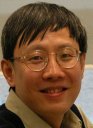
 Jimmy Huang
· 3 previous affiliations
- York UniversitySince 2003
- Tier I York Research Chair Professor · Since 2016
- Full Professor · Since 2010
- Associate Professor · 2006–2010
- Assistant Professor · 2003–2006
- University of Waterloo2001–2003
- Postdoc · 2001–2003
- City University1994–2001
- PhD student · 1994–2001
Research Overview
Jimmy Huang focuses on information retrieval, natural language processing, and recommender systems. His early work addressed foundational challenges in search result diversification and query-focused summarization, particularly in specialized domains like biomedicine. More recently, his research investigates the rigorous evaluation of large language models and the application of generative diffusion models to complex recommendation tasks.
Research Trajectory
Huang’s early research addressed core problems in multilingual and domain-specific information retrieval. In the early 2000s, he contributed to the development of unsupervised techniques for processing non-alphabetic languages, participating in work such as Using self-supervised word segmentation in Chinese information retrieval. This approach bridged the gap between traditional dictionary-based and character-based methods, offering a language-independent avenue for adaptive retrieval systems. Building on these retrieval foundations, his focus expanded to search result diversification in specialized, high-stakes domains. He collaborated on A survival modeling approach to biomedical search result diversification using wikipedia, which introduced a probabilistic survival model to measure aspect novelty, effectively re-ranking documents to balance query-relevance and diversity in biomedical search.
By the early 2020s, Huang’s research group shifted toward the challenges of abstractive text summarization, specifically addressing the data scarcity inherent in query-focused multi-document tasks. To bypass the need for large, human-annotated datasets, his lab developed weakly supervised approaches. In WSL-DS: Weakly Supervised Learning with Distant Supervision for Query Focused Multi-Document Abstractive Summarization, his team leveraged pre-trained models and distant supervision to automatically generate training data, enabling highly effective abstractive summarization. They expanded on this methodology in Domain Adaptation with Pre-trained Transformers for Query Focused Abstractive Text Summarization, exploring domain adaptation techniques to tailor pre-trained transformers for both single- and multi-document scenarios. Together, these projects made significant contributions to the broader research direction of Scaling Training Data via Distant Supervision.
As large language models (LLMs) became central to natural language processing, Huang’s focus pivoted toward the critical problem of model evaluation and alignment. Recognizing the inconsistencies in how foundation models were being assessed, his group published A Systematic Survey and Critical Review on Evaluating Large Language Models: Challenges, Limitations, and Recommendations, which mapped the vulnerabilities across the LLM evaluation pipeline—from reproducibility to robustness—and proposed a framework for more trustworthy assessments.
This critical perspective on evaluation naturally led to empirical investigations of the "LLM-as-a-judge" paradigm. In specialized fields, his team explored automated evaluation methodologies with Improving Automatic Evaluation of Large Language Models (LLMs) in Biomedical Relation Extraction via LLMs-as-the-Judge, demonstrating how automated judges could reliably replace costly human evaluation in zero-shot biomedical tasks. They simultaneously extended this paradigm to multimodal models. In Judging the Judges: Can Large Vision-Language Models Fairly Evaluate Chart Comprehension and Reasoning?, Huang and his collaborators investigated the viability of using open-source Large Vision-Language Models (LVLMs) to evaluate chart comprehension, identifying persistent systematic biases such as length and positional preferences. To make these automated evaluation systems more practical for resource-constrained environments, his lab subsequently developed ChartJudge-2B, detailed in Deploying Tiny LVLM Judges for Real-World Evaluation of Chart Models: Lessons Learned and Best Practices. This work demonstrated that domain-adaptive fine-tuning and multi-criteria prompting could allow a compact, 2-billion-parameter model to perform robust evaluations. Alongside these evaluation frameworks, Huang has also investigated the broader dynamics of human-AI interaction, overseeing the taxonomy and formalization of collaborative systems in How to Enable Effective Cooperation Between Humans and NLP Models: A Survey of Principles, Formalizations, and Beyond.
Parallel to his work in natural language and multimodal evaluation, Huang maintains an active research agenda in advanced recommender systems, particularly focusing on bundle recommendation and machine unlearning. Bundle recommendation—suggesting groups of items rather than individual products—suffers from severe cold-start problems and dynamic inventory shifts. To address the cold-start challenge, his group introduced a Mixture of Diffusion Experts (MoDiffE) framework in Divide-and-Conquer: Cold-Start Bundle Recommendation via Mixture of Diffusion Experts, utilizing a divide-and-conquer strategy to model complex, dual-level multi-view interactions. To handle the temporal instability of bundles, they developed a residual diffusion process in Modeling Item-Level Dynamic Variability with Residual Diffusion for Bundle Recommendation, which reconstructs stable bundle embeddings even when constituent items change due to seasonality. Most recently, his lab has tackled the emerging requirement of recommendation unlearning. In Learning to Fast Unrank in Collaborative Filtering Recommendation, they proposed a novel "unranking" paradigm that efficiently reduces the rank of target items without requiring complete data removal or costly model retraining, achieving significant computational speedups while preserving overall recommendation quality.
Current Directions
Huang’s most recent work operates at the intersection of foundation model evaluation and generative recommender systems. A major ongoing theme is the rigorous, automated assessment of complex AI systems. Recent papers investigate the "LLM-as-a-judge" and "LVLM-as-a-judge" paradigms, focusing on how to mitigate systematic biases in automated evaluators and how to distill evaluation capabilities into highly efficient, domain-specific small models (such as tiny vision-language models for chart comprehension).
In parallel, his research in collaborative filtering and personalization increasingly leverages diffusion models to handle complex, multi-item recommendation scenarios. Current directions in this area address the dynamic nature of user preferences and inventory, utilizing generative frameworks to solve cold-start problems in bundle recommendation. Furthermore, his recent introduction of "unranking" techniques points to a growing focus on machine unlearning within recommender systems, aiming to build models that can efficiently forget specific data points or user interactions to satisfy privacy and compliance requirements without sacrificing predictive accuracy.
Profile updated
Loading new papers…
Other researchers whose papers cluster into the same research directions — a proxy for overlapping technical interests and shared intellectual neighborhoods.
See something wrong? Report a mistake