

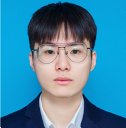
 Jikai Wang
1 previous affiliation
- Soochow University2019–2026
- MS student · 2023–2026
- Undergrad student · 2019–2023
2 other authors named Jikai Wang: Jikai Wang (6 papers), Jikai Wang (The University of Texas at Dallas · 3 papers)
Research Overview
Jikai Wang focuses on natural language processing, specifically targeting the computational efficiency and representation alignment of large language models. Early work addressed zero-shot cross-lingual transfer and early exit mechanisms, while recent research emphasizes accelerating model training and inference. Current efforts center on speculative decoding and adaptive draft structures to optimize autoregressive generation.
Research Trajectory
Jikai Wang’s research trajectory demonstrates a consistent focus on optimizing the performance and efficiency of natural language processing systems, evolving from representation learning in multilingual contexts to the structural acceleration of large language models (LLMs).
In 2023, Wang's collaborative work explored methods to improve both the accuracy and inference speed of language models. As a second author, Wang contributed to Isotropic Representation Can Improve Zero-Shot Cross-Lingual Transfer on Multilingual Language Models. This research addressed a critical bottleneck in multilingual pre-trained language models: representation misalignment caused by the anisotropic distribution of contextual representations. By proposing enhanced isotropy and constrained code-switching, the work demonstrated how to alleviate this misalignment while preserving essential syntactic structural knowledge across languages. In parallel, Wang co-authored Early Exit with Disentangled Representation and Equiangular Tight Frame, which investigated early exit mechanisms—a technique designed to reduce computational overhead by allowing simpler inputs to bypass deeper layers of a neural network during inference.
By 2024, Wang’s focus shifted toward the pressing computational challenges associated with scaling large language models, taking a leading role in developing novel training and inference algorithms. As first author of When and How to Grow? On Efficient Pre-training via Model Growth, Wang tackled the prohibitive costs of LLM pre-training. The paper investigated progressive pre-training, a paradigm that leverages the faster convergence rates of smaller models before expanding them to save computing overhead. Wang's work provided theoretical estimations for optimal growth points and demonstrated empirically that executing growth operations after a model enters its convergence stage yields significant speed-up ratios.
During this period, Wang also participated in broader collaborative efforts aimed at model compression. As a contributing middle author to OpenBA-V2: Reaching 77.3% High Compression Ratio with Fast Multi-Stage Pruning, Wang was part of a large research team that developed a 3.4-billion parameter model from a 15-billion parameter baseline. This work utilized layer, neural, and vocabulary pruning techniques alongside continual pre-training to achieve a massive compression rate while minimizing performance degradation, highlighting Wang's engagement with diverse strategies for reducing LLM deployment requirements.
The most prominent theme in Wang's recent trajectory is the acceleration of autoregressive generation during inference. Traditional LLM inference is limited by a one-step-one-word generation mode, which becomes increasingly inefficient as model size grows. To address this, Wang led the development of OPT-Tree, introduced in the preprint OPT-Tree: Speculative Decoding with Adaptive Draft Tree Structure and subsequently published in the Transactions of the Association for Computational Linguistics as OPT-Tree: Speculative Decoding with Adaptive Draft Tree Structure in 2025. This first-author work advances the "draft and then verify" mechanism of speculative decoding. Unlike prior methods that relied on fixed heuristic draft structures, OPT-Tree constructs adaptive and scalable draft trees tailored to different generation contexts, maximizing the acceptance length during the verification phase. This research aligns closely with the broader research direction of Parallel Token Tree Verification for Speculative Decoding and contributes to the area of Aligning Draft and Target Distributions in Speculative Decoding, offering a robust solution for lossless acceleration in large-scale models.
Current Directions
The most recent papers in the evidence indicate a strong ongoing focus on inference optimization for large language models, particularly through speculative decoding. Because autoregressive generation remains fundamentally memory-bound—requiring massive parameter loads for single-token generation—Wang's current work investigates how dynamic, adaptive structures can alleviate this bottleneck without sacrificing output quality. By moving away from static heuristics and toward context-aware draft trees, this research aims to maximize the efficiency of parallel verification steps. The overarching goal of these recent efforts is to make the deployment of massive language models more computationally tractable, ensuring that inference speeds can scale effectively alongside increasing parameter counts.
Profile updated
Loading new papers…
Other researchers whose papers cluster into the same research directions — a proxy for overlapping technical interests and shared intellectual neighborhoods.
See something wrong? Report a mistake