

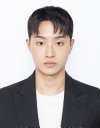
 Jihyong Oh
· 4 previous affiliations
- ChungAng UniversitySince 2023
- Assistant Professor · Since 2023
- Post-doctoral Researcher · 2023
- Ph.D., Electrical Engineering - Low-level Computer Vision · 2019–2023
- Research Assistant (MS/PhD) · 2017–2023
- Master's degree, Electrical Engineering - Low-level Computer Vision · 2017–2019
- Undergrad student · 2012–2017
- AI Research Scientist Intern · 2022
- Intern · 2016
Research Overview
Jihyong Oh focuses on low-level computer vision, dynamic 3D scene reconstruction, and generative artificial intelligence. His trajectory spans foundational work in video super-resolution, deblurring, and frame interpolation to recent advances in neural radiance fields and 3D Gaussian splatting for dynamic environments. Currently, his research emphasizes motion-adaptive rendering and training-free spatial control in generative diffusion models.
Research Trajectory
Oh's early research concentrated on the area of Efficient Temporal Alignment for High Fidelity Video Restoration, specifically addressing the simultaneous enhancement of resolution and dynamic range in video. He introduced Deep SR-ITM: Joint Learning of Super-Resolution and Inverse Tone-Mapping for 4K UHD HDR Applications, a neural network framework that decomposes images into base and detail layers. By utilizing modulation blocks to adapt to local contrast, the model converts standard-definition content into 4K HDR video while minimizing visual artifacts. Building on this foundation, he developed JSI-GAN: GAN-Based Joint Super-Resolution and Inverse Tone-Mapping with Pixel-Wise Task-Specific Filters for UHD HDR Video, which utilized task-specific subnets and a novel generative adversarial loss function to produce sharper textures and realistic local contrast compared to monolithic convolutional approaches.
Expanding his focus to temporal dynamics, Oh addressed challenges in extreme motion and blur. After a brief exploration of synthetic aperture radar with SPAM-Net: A CNN-Based SAR Target Recognition Network With Pose Angle Marginalization Learning, he tackled high-frame-rate video synthesis. He presented XVFI: eXtreme Video Frame Interpolation, proposing a recursive multi-scale network and a complementary flow reversal technique to handle large displacements in 4K videos, alongside the introduction of the high-resolution X4K1000FPS dataset. This work naturally progressed into the research direction of Joint Deblurring and Video Frame Interpolation and the related area of Unified Video Deblurring and Frame Interpolation. In this domain, he developed DeMFI: Deep Joint Deblurring and Multi-frame Interpolation with Flow-Guided Attentive Correlation and Recursive Boosting, a framework utilizing a flow-guided attention mechanism and a recursive boosting stage to transform low-frame-rate, blurry footage into sharp sequences, uniquely supporting interpolation at arbitrary time points.
Oh continued to refine joint restoration tasks, contributing significantly to the broader area of Beyond Translation in Motion Estimation. He introduced FMA-Net: Flow-Guided Dynamic Filtering and Iterative Feature Refinement with Multi-Attention for Joint Video Super-Resolution and Deblurring, which combined flow-guided dynamic filtering with iterative refinement to address the dual challenges of low resolution and motion blur in a parameter-efficient manner. He subsequently extended this architecture with FMA-Net++: Motion- and Exposure-Aware Real-World Joint Video Super-Resolution and Deblurring, explicitly accounting for dynamically varying camera exposure through feature modulation to improve restoration quality and inference speed. Concurrently, he advanced frame interpolation for complex, non-uniform motions with BiM-VFI: Bidirectional Motion Field-Guided Frame Interpolation for Video with Non-uniform Motions, incorporating both magnitude and angular information into motion estimation to resolve time-to-location ambiguities.
As a principal investigator, Oh has also guided research in generative artificial intelligence, focusing on localized editing and spatial control. His group developed MIVE: New Design and Benchmark for Multi-Instance Video Editing, a zero-shot framework that redistributes attention probabilities and employs a disentangled sampling strategy to enable precise, multi-object video editing without cross-object leakage. Expanding into text-to-image manipulation, his lab introduced OmniText: A Training-Free Generalist for Controllable Text-Image Manipulation, which manipulates cross- and self-attention maps within frozen diffusion models to perform tasks ranging from object repositioning to style-accurate text insertion without requiring architectural fine-tuning.
Most recently, Oh's trajectory has expanded into 3D vision, particularly focusing on the research direction of Continuous Time Trajectory Modeling for Dynamic Motion Estimation and work in Continuous Time Neural Motion Fields. He proposed SplineGS: Robust Motion-Adaptive Spline for Real-Time Dynamic 3D Gaussians from Monocular Video, utilizing a motion-adaptive spline approach to model dynamic 3D Gaussians for real-time novel view synthesis. This method adaptively prunes control points and jointly optimizes camera parameters without relying on traditional structure-from-motion pipelines like COLMAP. Addressing the specific challenge of motion blur in 3D reconstruction, he developed MoBluRF: Motion Deblurring Neural Radiance Fields for Blurry Monocular Video, a two-stage framework that initializes robust base rays and decomposes motion blur into global and local components to synthesize sharp novel views. In a collaborative effort, he also participated in the development of MoBGS: Motion Deblurring Dynamic 3D Gaussian Splatting for Blurry Monocular Video, which integrates blur-adaptive camera pose estimation and exposure time modeling to improve dynamic novel view synthesis under heavy motion blur.
Current Directions
The most recent papers in the evidence address the intersection of dynamic 3D scene representation and motion blur degradation. Recent work investigates how to synthesize sharp, high-fidelity novel views from blurry monocular videos using both Neural Radiance Fields (NeRFs) and 3D Gaussian Splatting. This involves developing motion-adaptive splines to model continuous trajectories and explicitly modeling exposure time alongside blur-adaptive camera poses. Additionally, ongoing research explores training-free spatial control in generative diffusion models, focusing on precise, multi-modal image and video manipulation through the strategic steering of self- and cross-attention mechanisms.
Profile updated
Loading new papers…
Other researchers whose papers cluster into the same research directions — a proxy for overlapping technical interests and shared intellectual neighborhoods.
See something wrong? Report a mistake