

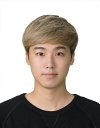
 Jihwan Kim
· 3 previous affiliations
- Samsung (South Korea)Since 2025
- Researcher · Since 2025
- Current
- Seoul National University2015–2025
- PhD student · 2019–2025
- Undergrad student · 2015–2019
5 other authors named Jihwan Kim: Jihwan Kim (삼성전자 · 7 papers), Jihwan Kim (Korea Advanced Institute of Science and Technology · Seoul National University · 2 papers), Jihwan Kim (Seoul National University · Google (United States) · Google DeepMind (United Kingdom) · 2 papers), Jihwan Kim (NAVER Cloud (South Korea) · Korea Advanced Institute of Science and Technology · 1 paper), Jihwan Kim (1 paper)
Research Overview
Jihwan Kim focuses on the intersection of autonomous robot intelligence, geometric deep learning, and generative modeling. His research addresses the computational and geometric challenges inherent in robot motion planning, 6-DoF grasp pose generation, and the synthesis of structured temporal content. Currently, his work explores the integration of equivariant representations and generative flows to enhance the robustness and controllability of autonomous systems, with a particular emphasis on overcoming the memory and VRAM bottlenecks associated with high-dimensional spatiotemporal data.
Research Trajectory
Kim’s research trajectory reflects a systematic progression from low-level geometric primitives for robot safety toward high-level generative frameworks for complex spatiotemporal tasks. In 2023, his work was primarily concerned with the fundamental problem of collision distance estimation for high-degree-of-freedom (DOF) robot systems. This research addressed the computational bottlenecks of traditional motion planning by proposing data-driven methods that could generalize across changing environments without the need for constant retraining.
By 2024, Kim’s focus expanded into the broader field of geometric deep learning, specifically investigating how latent spaces can be regularized to preserve the underlying manifold geometry of graph data. This period marked a shift toward Multi-Scale Fusion for Hierarchical Graph Representation, where the goal was to maintain structural nuance in deep networks that often suffer from information loss in final-layer representations. Simultaneously, Kim participated in research applying equivariant generative models to robot manipulation. By leveraging SO(3) and SE(3) equivariance, this work sought to ensure that generated grasp poses transform consistently with object rotations and translations, thereby improving the data efficiency and robustness of robotic systems.
In 2025, the research scope further broadened to include the generative synthesis of animated layouts and video content. This transition addressed the need for Trajectory Controllable Video Diffusion, moving beyond unconstrained video generation toward systems that allow for fine-grained control over temporal dynamics and hierarchical visual elements. This evolution highlights a consistent interest in how structured representations can be used to manage the complexity of autonomous and generative systems.
Current Directions
Kim’s current research efforts are increasingly directed toward the efficiency and scalability of generative models. As these models move toward generating longer and higher-resolution sequences, they encounter a "memory wall" where hardware constraints limit performance. Kim’s work explores methods for Scaling High Resolution Video Generation Beyond Memory Bottlenecks, seeking to make state-of-the-art generative tools accessible on consumer-grade hardware.
A key component of this effort involves Parallel Temporal Modeling for Efficient Video Processing. By moving away from sequential dependencies that cause temporal drift and computational bottlenecks, Kim investigates architectures that can process time more efficiently. This is closely linked to the development of Constant Memory Streaming for Infinite Generative Sequences, which aims to bypass the linear or quadratic memory scaling of standard attention-based models.
Furthermore, Kim continues to investigate the balance between spatial fidelity and temporal continuity in synthesis tasks. This involves the application of Dual Discriminators for Spatiotemporal Video Synthesis to ensure that generated motion remains smooth without sacrificing the high-resolution detail of individual frames. These directions converge on the goal of creating autonomous systems that are not only intelligent and reactive but also capable of generating and interpreting complex, structured temporal data.
Representative Work
In PairwiseNet: Pairwise Collision Distance Learning for High-dof Robot Systems, Kim (as first author) proposed a model to estimate the minimum distance between two geometric shapes, addressing the limitations of existing data-driven collision detection methods. While traditional models often degrade when applied to complicated multi-arm robots or require retraining for minor environmental changes, PairwiseNet leverages a pairwise learning approach to maintain performance and generalizability in high-DOF systems.
The work on Graph Geometry-Preserving Autoencoders introduced a regularization framework designed to ensure that the latent space of an autoencoder faithfully mirrors the true geometry of the data manifold. By utilizing similarity graphs and a Riemannian geometric distortion measure, this research provides a method for learning accurate latent structures that are robust to noisy or sparse graph data, which is critical for downstream tasks in robot perception and representation learning.
Kim participated in the development of EquiGraspFlow: SE(3)-Equivariant 6-DoF Grasp Pose Generative Flows, a flow-based model for synthesizing grasp poses from 3D observations. This research addressed the failure of traditional generative methods to achieve SE(3)-equivariance, ensuring that grasp candidates transform correctly with the object's position and orientation in space. This theme was further explored in Leveraging Equivariant Representations of 3D Point Clouds for SO(3)-Equivariant 6-DoF Grasp Pose Generation, which utilized Equivariant Conditional Manifold Flows (GraspECMF) to learn invariant distributions of grasp poses, resulting in enhanced accuracy and robustness in robot manipulation tasks.
Most recently, in Generating Animated Layouts as Structured Text Representations, Kim contributed to the development of VAKER (Video Ad maKER). This pipeline addresses the challenge of achieving precise control over text elements and animated graphics in text-to-video models. By proposing a structured text representation for hierarchical visual elements, the work enables the extension of static graphic layouts with complex temporal dynamics, facilitating more directable and professional-grade video synthesis.
Profile updated
| Title | Venue | Year |
|---|---|---|
| Generating Animated Layouts as Structured Text Representations | AI for Content Creation (AI4CC @ CVPR | 2025 |
| Leveraging Equivariant Representations of 3D Point Clouds for SO(3)-Equivariant 6-DoF Grasp Pose Generation | 3D Manipulation @ ICRA | 2024 |
| EquiGraspFlow: SE(3)-Equivariant 6-DoF Grasp Pose Generative FlowsGitHub resource | CoRL | 2024 |
| Graph Geometry-Preserving AutoencodersGitHub resource | ICML | 2024 |
| PairwiseNet: Pairwise Collision Distance Learning for High-dof Robot SystemsGitHub resource | CoRL | 2023 |
Loading new papers…
Other researchers whose papers cluster into the same research directions — a proxy for overlapping technical interests and shared intellectual neighborhoods.
See something wrong? Report a mistake