

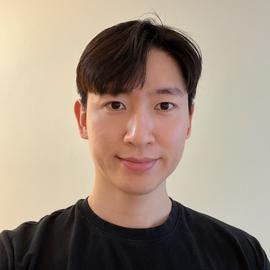
 Jihwan Jeong
· 5 previous affiliations
- Google (United States)Since 2023
- Researcher · Since 2025
- Current
- Student Researcher · 2023–2024
- Intern · 2023
- University of Toronto2019–2024
- Ph.D, Information Engineering · 2019–2024
- Course Instructor · 2023
- Graduate Teaching Assistant · 2019–2023
- Vector Institute2022
- Research Internship · 2022
- Research Internship · 2021
- Master of Science - MS, Industrial and Systems Engineering · 2017–2019
- Undergrad student · 2009–2015
Research Overview
Jihwan Jeong focuses on offline model-based reinforcement learning, decision-aware predictive modeling, and uncertainty quantification in neural networks. His trajectory spans from symbolic dynamic programming and continual learning to integrating reinforcement learning with large language models. Currently, his work addresses the complexities of using imperfect models for robust decision-making and planning under uncertainty.
Research Trajectory
Jeong’s early research addressed optimization and continual learning in dynamic environments. In 2021, he developed methods for optimizing multiple-component systems in Bayesian optimization for a multiple-component system with target values. Concurrently, he contributed to the area of Mitigating Catastrophic Forgetting in Single-Pass Data Streams and the broader direction of Anchoring Decision Boundaries in Continual Learning. This included participation in developing the ASER method in Online Class-Incremental Continual Learning with Adversarial Shapley Value, which uses game-theoretic metrics to protect prior knowledge while learning new boundaries, and later contributing to an empirical evaluation of the field in Online continual learning in image classification: An empirical survey.
A major theme in his trajectory is the integration of predictive modeling with decision-making and planning. He advanced symbolic dynamic programming (SDP) to handle complex state spaces, introducing a novel argmax operator in Symbolic Dynamic Programming for Continuous State MDPs with Linear Program Transitions. He also addressed risk-sensitive planning, proposing a framework that moves beyond expected return to account for unacceptable risks in A Distributional Framework for Risk-Sensitive End-to-End Planning in Continuous MDPs. Expanding on the intersection of machine learning and optimization, he contributed to the research direction of Decision Regret Minimization for Integrated Predictive Modeling by developing an exact closed-form reduction for the Smart Predict+Optimize framework in An Exact Symbolic Reduction of Linear Smart Predict+Optimize to Mixed Integer Linear Programming. He later applied similar symbolic variable elimination techniques to disjointly constrained bilinear programs in A Mixed-Integer Linear Programming Reduction of Disjoint Bilinear Programs via Symbolic Variable Elimination.
Moving into offline reinforcement learning, Jeong focused on managing the uncertainty inherent in learned dynamics models. In Conservative Bayesian Model-Based Value Expansion for Offline Policy Optimization, he introduced an algorithm that balances the uncertainty of dynamics models with value functions via Bayesian posterior estimation. This work aligns with the broader area of Predictive Variance as a Reliability Metric in Deep Learning. During an internship at Google Research, his focus expanded to integrating reinforcement learning with large language models. This resulted in Factual and Tailored Recommendation Endorsements using Language Models and Reinforcement Learning, which applies reinforcement learning with AI feedback to generate personalized and factual recommendation explanations.
His subsequent work continues to refine offline planning, representation learning, and transfer learning. In Reflect-then-Plan: Offline Model-Based Planning through a Doubly Bayesian Lens, he proposed a framework that combines real-time belief updates with probabilistic inference, allowing offline-trained agents to adapt to out-of-distribution states. To address partially observable environments, he introduced Descriptive History Representations in Descriptive History Representations: Learning Representations by Answering Questions, a multi-agent framework that compresses interaction histories into sufficient statistics for optimal control. He also returned to symbolic dynamic programming to tackle negative transfer in deep reinforcement learning, presenting a model-aware policy transfer approach in ModelDiff: Symbolic Dynamic Programming for Model-Aware Policy Transfer in Deep Q-Learning. Finally, he participated in evaluating LLM-based user simulators, contributing to ConvApparel: A Benchmark Dataset and Validation Framework for User Simulators in Conversational Recommenders.
Current Directions
The most recent papers in the evidence indicate a strong focus on robust decision-making under uncertainty, particularly in offline model-based reinforcement learning and conversational AI. Recent work investigates how to equip offline-trained agents to handle out-of-distribution states and shifting environment dynamics through Bayesian inference and real-time belief updates. Additionally, Jeong is exploring representation learning in partially observable environments by compressing long interaction histories into queryable statistics that preserve task-relevant information. His recent collaborative efforts also address the evaluation of large language models as user simulators in conversational recommendation systems, aiming to close the realism gap in simulated interactions and improve generalization to unseen scenarios.
Profile updated
Loading new papers…
Other researchers whose papers cluster into the same research directions — a proxy for overlapping technical interests and shared intellectual neighborhoods.
See something wrong? Report a mistake