

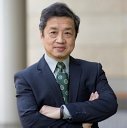
 Jie Wu
· 3 previous affiliations
- Temple UniversitySince 2007
- Full Professor · Since 2007
- China TelecomSince 2024
- Full Professor · Since 2024
- Florida Atlantic University1989–2006
- Full Professor · 1998–2006
- Associate Professor · 1994–1998
- Assistant Professor · 1989–1994
6 other authors named Jie Wu: Jie Wu (37 papers), Jie Wu (Tsinghua University · 9 papers), Jie Wu (Wuhan University · 4 papers), Jie Wu (Atlassian (United Kingdom) · Atlassian Corporation · 4 papers), Jie Wu (4 papers), and 1 more
Research Overview
Jie Wu focuses on the intersection of machine learning, computer vision, and systems optimization, with a particular emphasis on developing robust frameworks for autonomous systems and large-scale data processing. Their work addresses the challenges of multi-modal perception in degraded environments, the efficiency of decentralized optimization algorithms, and the application of reinforcement learning to complex scheduling problems in streaming architectures.
Research Trajectory
The available evidence indicates a research trajectory centered on enhancing the reliability and efficiency of AI-driven systems through both algorithmic innovation and structural modeling. In 2025, Wu’s work focused on the domain of computer vision for Unmanned Aerial Vehicles (UAVs), specifically addressing the limitations of visible-light sensors in adverse atmospheric conditions. This research emphasized the use of Pixel-wise Adversarial Feedback for Generative Models and cross-modal fusion to recover fine-grained details from obscured visual data. By integrating infrared and visible modalities, Wu developed methods to overcome the information bottlenecks inherent in traditional single-modality dehazing approaches.
In 2026, the research scope expanded to include fundamental problems in optimization and systems engineering. This period saw a shift toward the mathematical foundations of decentralized learning and the practical challenges of job scheduling in data analytics. Wu’s contributions to decentralized optimization focused on reducing the computational and communication overhead of stochastic bilevel problems, which are critical for multi-agent systems and meta-learning. Simultaneously, Wu addressed the problem of scheduling Directed Acyclic Graph (DAG) structured jobs, utilizing Bidirectional Feedback Loops for Joint Multi-Task Learning principles to manage the complex interdependencies between execution stages in real-time streaming environments.
Current Directions
Wu’s current research efforts are concentrated on two primary pillars: the development of memory-augmented reinforcement learning models for system scheduling and the refinement of first-order algorithms for nonconvex optimization.
In the realm of systems, the focus is on capturing execution-critical structures within large-scale data jobs. By employing reinforcement learning, Wu aims to move beyond heuristic-based scheduling, creating policies that adapt to the historical context of job arrivals and the specific precedence constraints of complex workflows. This work is particularly relevant for streaming settings where throughput and latency are paramount.
In optimization, the focus remains on decentralized architectures. Wu is investigating algorithms that avoid the high costs of second-order derivatives (such as Hessians and Jacobians) while maintaining fast convergence rates. This research is aimed at making large-scale, nonconvex stochastic optimization more accessible for distributed environments where worker communication is a primary bottleneck.
Representative Work
Wu has served as a senior researcher and principal investigator on several key projects involving multi-modal fusion and neural scheduling.
In the field of autonomous perception, Wu led the development of HDCFN: Haze Distribution-aware Cross-modal Fusion Network for Infrared-guided Dense Haze Removal in UAVs. This work addresses the problem of dense haze obscuring small ground-level objects in UAV applications. The proposed HDCFN framework utilizes an infrared-guided multiscale feature enhancement module to integrate haze-resistant structural cues from infrared imaging with the color and texture information of visible features. By adaptively fusing these modalities based on haze distribution, the system significantly improves the recovery of fine details and the detection of small objects in challenging environments.
In the area of systems optimization, Wu served as the senior author for Toward Neural Streaming Scheduling: A Memory-Augmented Reinforcement Learning Model with Critical Structure Encoding. This research tackles the problem of executing jobs structured as Directed Acyclic Graphs (DAGs) in streaming settings. The paper introduces MACE, a reinforcement learning model that incorporates memory-augmented components and critical structure encoding. MACE is designed to capture the precedence constraints and historical scheduling context of diverse, continuously arriving jobs, thereby maximizing system throughput and providing a more flexible alternative to traditional heuristic-based scheduling methods.
Wu also participated in the development of algorithmic foundations for decentralized systems, contributing to the Convergence Analysis of Decentralized Hessian-/Jacobian-Free Algorithm for Nonconvex Stochastic Bilevel Optimization. This work introduces FO-DSVRBGD, a decentralized first-order algorithm designed for stochastic bilevel optimization. The research demonstrates that it is possible to achieve efficient convergence in nonconvex settings—specifically those satisfying the Polyak–Łojasiewicz condition—without the need for expensive second-order derivative computations. This contribution facilitates faster and more communication-efficient optimization across distributed networks of workers.
The current body of work, while concentrated in the 2025-2026 period, establishes a clear focus on the synergy between advanced machine learning architectures and the practical constraints of hardware and system environments.
Profile updated
Loading new papers…
Other researchers whose papers cluster into the same research directions — a proxy for overlapping technical interests and shared intellectual neighborhoods.
See something wrong? Report a mistake