

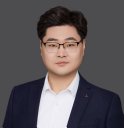
 Jie Wang
· 4 previous affiliations
- Full Professor · Since 2017
- University of Michigan2015–2017
- Assistant Professor · 2015–2017
- Arizona State University2012–2015
- Postdoc · 2012–2015
- Florida State University2007–2011
- PhD student · 2007–2011
17 other authors named Jie Wang: Jie Wang (Shenzhen Research Institute of Big Data · Chinese University of Hong Kong · 117 papers), Jie Wang (Beijing Institute of Technology · 13 papers), Jie Wang (University of Glasgow · 12 papers), Jie Wang (10 papers), Jie Wang (PingAn Technology · 8 papers), and 12 more
Research Overview
Jie Wang focuses on mathematical optimization, sparse learning, and the application of machine learning to complex reasoning and systems design. His early work established foundational safe screening rules that significantly accelerate high-dimensional sparse supervised learning. More recently, his research has expanded to include graph neural networks for mixed-integer programming, large-scale multimorbidity frameworks, and efficient inference techniques for large language models.
Research Trajectory
Wang's early research addressed computer vision tasks, where he introduced An Edge-Weighted Centroidal Voronoi Tessellation Model for Image Segmentation to improve the accuracy of image partitioning.
Following this, his focus shifted toward the optimization of high-dimensional models, specifically contributing to the research direction of Safe Screening Rules for Sparse Optimization. With collaborators, he developed Safe Screening with Variational Inequalities and Its Application to Lasso, which utilized variational inequalities to identify and discard inactive features prior to optimization. He subsequently introduced a novel family of rules in Lasso screening rules via dual polytope projection, offering an Enhanced Dual Polytope Projection (EDPP) method that provides more accurate estimations of dual solutions to further accelerate large-scale computations. Expanding on this foundation, he proposed TLFre in Two-Layer Feature Reduction for Sparse-Group Lasso via Decomposition of Convex Sets. This method efficiently removes both inactive groups and individual features, demonstrating applicability to complex sparse models with multiple sparsity-inducing regularizers.
In recent years, Wang's work has increasingly integrated machine learning with structured reasoning and combinatorial optimization. In the context of knowledge graphs, he addressed entity-independent inductive link prediction by modeling edge-level semantic correlations in Learning Complete Topology-Aware Correlations Between Relations for Inductive Link Prediction. His research group also explored scientific machine learning, developing methods for Accelerating PDE Data Generation via Differential Operator Action in Solution Space.
A major theme in this period is the application of learning-based methods to mathematical solvers, particularly within the broader area of Bipartite Graph Representations for Mathematical Optimization. To improve the efficiency of Mixed-Integer Linear Programming (MILP) solvers, his lab formulated the problem of when to halt cutting plane generation as a reinforcement learning task in Learning to Stop Cut Generation for Efficient Mixed-Integer Linear Programming, introducing a hybrid graph representation model. He further advanced this domain by designing a hierarchical sequence and set model to optimize both the selection and ordering of cuts in Learning to Cut via Hierarchical Sequence/Set Model for Efficient Mixed-Integer Programming.
Moving into 2025 and 2026, Wang's trajectory expanded into large-scale systems and the mechanics of large language models (LLMs). In the medical domain, he presented UKB-MDRMF: a multi-disease risk and multimorbidity framework based on UK biobank data, integrating multimodal data to predict the risk of over a thousand diseases simultaneously. Concurrently, his work on LLM efficiency addressed the challenges of long-context generation. He introduced AttentionPredictor: Temporal Pattern Matters for Efficient LLM Inference, a learning-based method that predicts attention patterns for Key-Value (KV) cache compression. This was complemented by a theoretical analysis in Why Attention Patterns Exist: A Unifying Temporal Perspective Analysis, which provided a temporal framework based on query self-similarity to explain the emergence of specific attention structures.
He has also explored the intersection of LLMs and formal verification. With collaborators, he developed Opt-Verifier: Unleashing the Power of LLMs for Optimization Modeling via Dual-Side Verification, a framework that verifies LLM-generated mathematical optimization models from both structural and solution perspectives. Additionally, contributing to the research area of Synthesizable Hardware Generation with Physical Awareness, he co-authored Evolving Graph Structured Programs for Circuit Generation with Large Language Models, which embeds LLMs within an evolutionary loop to automate logic synthesis and produce highly compact digital circuits. Extending his group's work in circuit representation learning, Wang oversaw the design of FuncFormer: Circuit Representation Learning via the Flow of Functional Propagation, a Graph Transformer that encodes functional simulation traces to preserve Boolean logic consistency across combinational and sequential circuits. He also collaborated on SteadyThought: Mitigating LLM Under-Thinking via Thought-Level Preference Optimization, introducing a preference optimization method to curb excessive thought switching in large reasoning models.
Current Directions
The most recent papers in the evidence indicate a dual focus on the operational efficiency of large language models and their application to complex, structured generation tasks. Wang is actively investigating the temporal dynamics of attention mechanisms and preference optimization techniques to reduce reasoning token redundancy and improve long-context LLM inference. Alongside this, his current work addresses the reliability of LLMs in specialized domains, utilizing dual-side verification to ensure the accuracy of generated mathematical optimization models and employing evolutionary frameworks to automate the synthesis of compact digital circuits.
Profile updated
Loading new papers…
Other researchers whose papers cluster into the same research directions — a proxy for overlapping technical interests and shared intellectual neighborhoods.
See something wrong? Report a mistake