

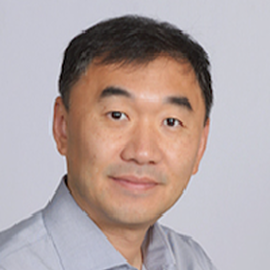
 Jie Liu
· 5 previous affiliations
- Harbin Institute of TechnologySince 2019
- Full Professor · Since 2019
- Microsoft (United States)2004–2019
- Principal Researcher · 2004–2019
- Xerox (United States)2001–2004
- Researcher · 2001–2004
- PhD student · 1996–2001
- Tsinghua University1988–1996
- MS student · 1993–1996
- Undergrad student · 1988–1993
14 other authors named Jie Liu: Jie Liu (National University of Defense Technology · 262 papers), Jie Liu (City University of Hong Kong · 141 papers), Jie Liu (Chinese University of Hong Kong · 55 papers), Jie Liu (Chinese Academy of Sciences · 39 papers), Jie Liu (University of Michigan · 12 papers), and 9 more
Research Overview
Jie Liu focuses on cyber-physical systems, energy-efficient edge computing, and the integration of artificial intelligence with the Internet of Things (AIoT). His trajectory spans foundational work in sensor networks and data center monitoring to recent advancements in hardware-aware neural architecture search and federated learning. Currently, he investigates intelligent agricultural systems and optimized deep learning inference for resource-constrained environments.
Research Trajectory
Jie Liu’s early research addressed the complexities of embedded systems and hardware-software co-design. In the late 1990s, he investigated timing analysis methodologies, detailing approaches in Software timing analysis using HW/SW cosimulation and instruction set simulator. As embedded computing systems grew increasingly heterogeneous, he participated in developing structured modeling frameworks to manage diverse communication mechanisms, an effort outlined in Taming heterogeneity - the Ptolemy approach.
By the early 2000s, his focus expanded to distributed sensor networks. He co-developed information-directed approaches for collaborative signal processing, formulating target tracking as a distributed constrained optimization problem in Collaborative signal and information processing: an information-directed approach. This expertise in sensor networks was later applied to large-scale infrastructure monitoring. With collaborators, he introduced RACNet: a high-fidelity data center sensing network, which utilized a novel token-passing protocol to ensure reliable environmental data acquisition in the harsh radio-frequency environments of data centers.
Continuing the theme of energy-efficient sensing, Liu directed research toward mobile platforms. He oversaw the development of LittleRock: Enabling Energy-Efficient Continuous Sensing on Mobile Phones, which examined the energy overhead of continuous sensor sampling and proposed system-level designs to extend battery life. His work on infrastructure and localization also included empirical analyses of storage reliability, as seen in SSD Failures in Datacenters: What? When? and Why?, and comprehensive benchmarking of indoor tracking technologies in The Microsoft Indoor Localization Competition: Experiences and Lessons Learned.
In the late 2010s, Liu’s research incorporated machine learning optimization, specifically focusing on deploying complex models to resource-constrained devices. He contributed to the development of differentiable search methods in Single-Path NAS: Designing Hardware-Efficient ConvNets in less than 4 Hours. He subsequently expanded on this methodology in Single-Path Mobile AutoML: Efficient ConvNet Design and NAS Hyperparameter Optimization, which utilized an over-parameterized superkernel to drastically reduce search costs while maintaining high accuracy under mobile latency constraints. This body of work advances the broader research areas of Overcoming the Memory Bottleneck in Differentiable Architecture Search and Scaling Neural Architecture Search to Global Macro Topologies.
Entering the 2020s, Liu’s work has increasingly addressed edge AI, federated learning, and spatial perception. He guided research on 3D sound source localization, addressing the implicit capture of spatial information across audio channels in Delay-and-Sum Beamforming-Based Spatial Mapping for Multisource Sound Localization. In the realm of distributed machine learning, he explored predictive modeling in Federated Learning for Vehicle Trajectory Prediction: Methodology and Benchmark Study and tackled the challenge of model performance on unseen data in Advocating for the Silent: Enhancing Federated Generalization for Nonparticipating Clients.
His recent systems research focuses heavily on inference optimization across edge and cloud environments. He developed adaptive methods for distributed computer vision in Edge-Cloud Collaborated Object Detection via Bandwidth Adaptive Difficult-Case Discriminator. To address the complexities of asynchronous deep learning workloads, his lab proposed TOP: Task-Based Operator Parallelism for Asynchronous Deep Learning Inference on GPU, optimizing computation graphs for dynamic task pipelines. Additionally, he oversaw the creation of the E4 framework in E4: Energy-Efficient DNN Inference for Edge Video Analytics via Early Exiting and DVFS, which dynamically scales hardware frequencies and halts inference early for simpler video frames to maximize energy savings.
Most recently, Liu has explored ultra-low bit-width model compression and the deployment of autonomous agents in physical systems. He supervised the development of a non-uniform quantization framework in No outlier channels but with outlier blocks, which manages localized outlier blocks to achieve near-lossless performance at 2-bit and 3-bit precision. Bridging his expertise in AI and cyber-physical systems, he also directed an evaluation of large language model architectures in agricultural settings, demonstrating the necessity of human-expert context for complex, long-term planning in Full-Season Agent Evaluation in Soybean Farm Operations under Real-World Agricultural Process Dynamics.
Current Directions
Recent work investigates the optimization of deep learning models for highly constrained edge environments and the deployment of autonomous agents in complex physical systems. In the domain of model compression, ongoing research explores non-uniform quantization frameworks that manage localized outlier blocks to achieve high performance at ultra-low bit-widths without extensive fine-tuning. Concurrently, work in distributed AI focuses on edge-cloud collaborative inference, task-based operator parallelism for asynchronous GPU workloads, and improving federated learning generalization for nonparticipating clients. Finally, the most recent papers in the evidence address the application of large language model agents to real-world agricultural process dynamics, evaluating their capacity to manage full-season farm operations within high-fidelity digital twins.
Profile updated
Loading new papers…
Other researchers whose papers cluster into the same research directions — a proxy for overlapping technical interests and shared intellectual neighborhoods.
See something wrong? Report a mistake